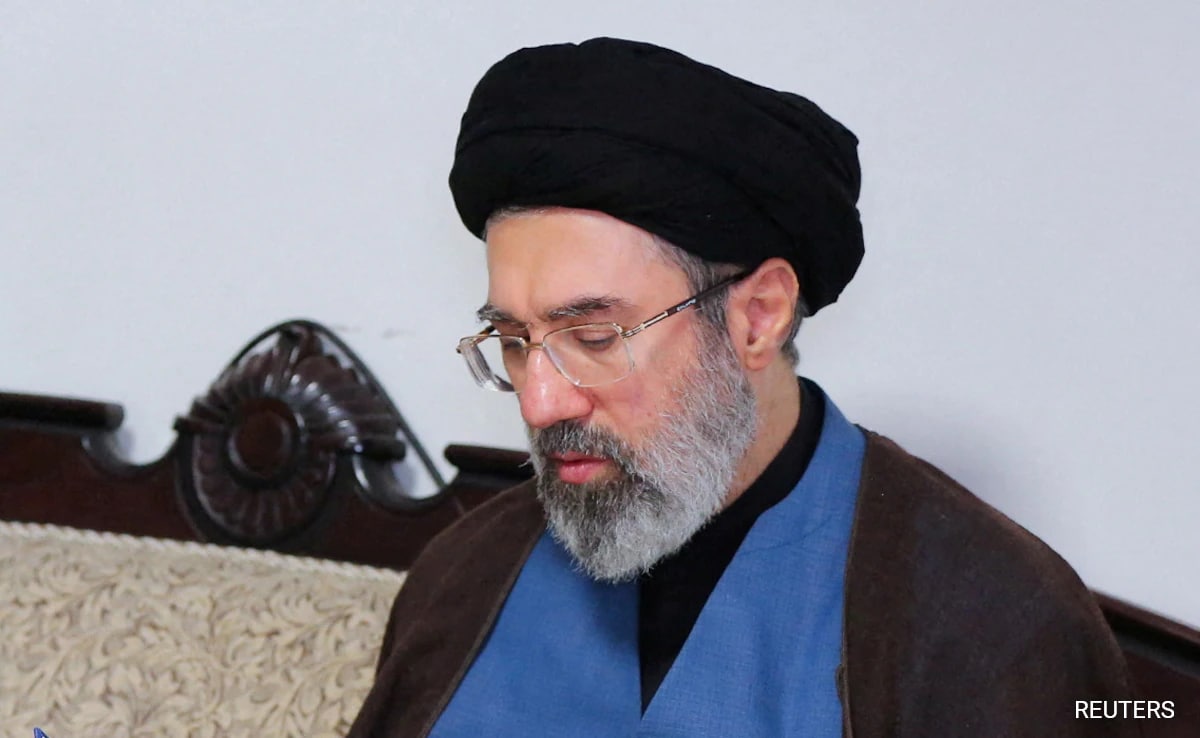
Iranian state TV said military central command head Ali Abdollahi met with supreme leader Mojtaba Khamenei, who has not been seen publicly since his March appointment. The report says he issued new directives for continuing operations against the enemy, reinforcing signs of ongoing Middle East conflict. The article also notes Khamenei was reportedly wounded in the initial strikes and has only released written statements since taking office.
This is less about one command-and-control meeting and more about the regime signaling that the conflict is still being centrally managed despite degraded leadership transparency. When a wounded, low-visibility leader starts issuing fresh directives, the market should infer a higher probability of continued asymmetric response rather than de-escalation; that tends to extend the risk premium in energy, shipping, and regional defense logistics for weeks, not days.
The second-order effect is escalation ambiguity. Anonymous or partially obscured command structures usually increase mispricing because they reduce confidence in deterrence read-throughs; that can keep implied volatility elevated across crude and freight even if headline intensity pauses. Infrastructure exposure matters too: any attack-response cycle that broadens to ports, pipelines, or air defense nodes creates a nonlinear impact on insurers, rerouting costs, and emergency restocking demand for munitions and sensors.
The more interesting market setup is that consensus may be overfitting to visible leadership fragility as a precursor to restraint. Historically, wounded regimes often become more—not less—willing to validate internal cohesion through external action, especially when succession is unresolved. That raises tail risk over the next 2-8 weeks for surprise kinetic events, while the downside reversal requires either a verifiable command break or a credible diplomatic off-ramp, neither of which is easy to price from public statements alone.
AI-powered research, real-time alerts, and portfolio analytics for institutional investors.
Request DemoOverall Sentiment
strongly negative
Sentiment Score
-0.60
