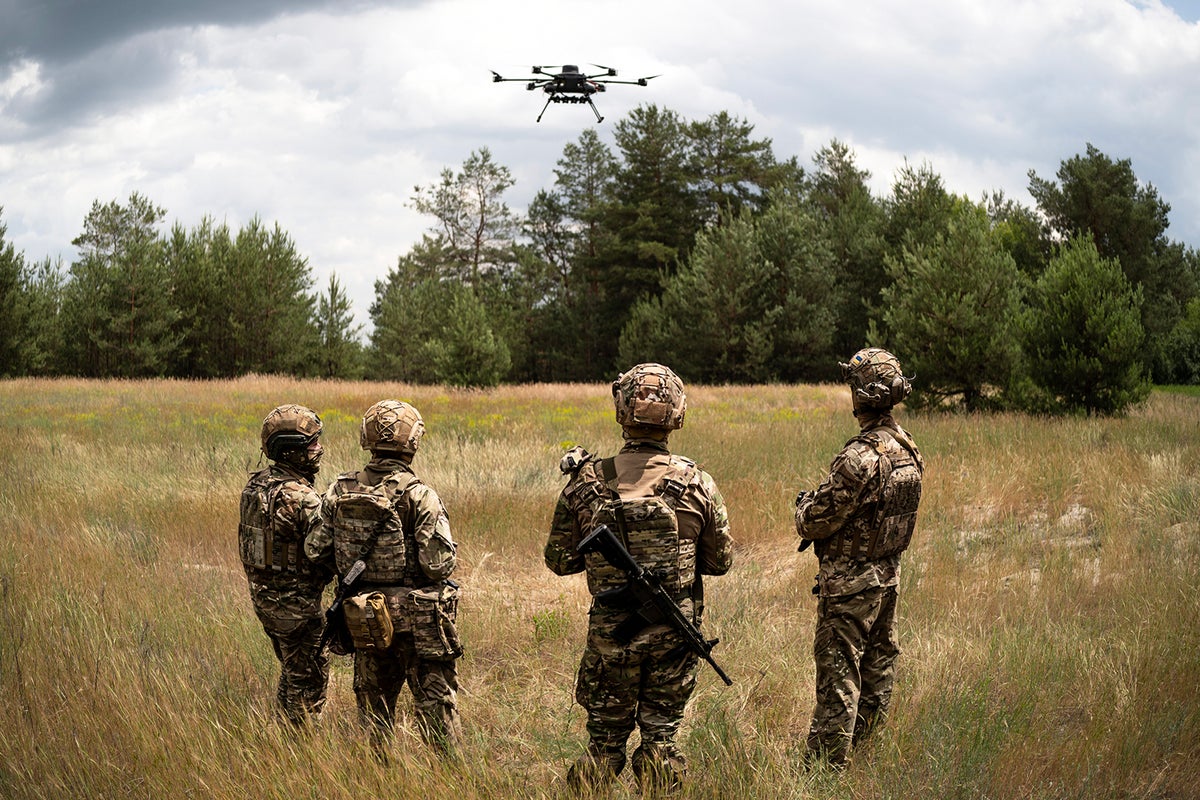
Ukraine said its frontline position is the strongest in a year, helped by drone warfare and air defence, even as Russia continued drone strikes that killed one civilian in Zhytomyr. The EU approved a €90bn loan for Ukraine backed by frozen Russian assets after Hungary dropped its veto, while peace talks remain stalled with Moscow insisting Putin will only meet to finalize an agreed deal. Separately, a woman in Russian-controlled Zaporizhzhia received a 14-year treason sentence for buying Ukrainian war bonds.
The near-term market implication is not a binary peace-trade headline but a gradual re-pricing of Ukraine survivability. Better air defense and drone attrition reduce the probability of a rapid battlefield collapse, which matters more for credit than for equities: it lowers the odds of a disorderly fiscal funding gap and makes any restructuring narrative look farther out on the curve. That supports the front end of Ukraine-related risk assets indirectly, while leaving the long end vulnerable to headline volatility and donor fatigue.
The EU funding step is more important as a sanctions architecture signal than as cash flow. Repayment via immobilized Russian assets increases the political optionality of continuing support without immediate taxpayer pain, but it also raises legal tail risk: any adverse court ruling or member-state resistance would likely widen sovereign spreads and weaken sentiment toward European risk proxies tied to the conflict. The longer this mechanism persists, the more it resembles a quasi-permanent transfer, which is supportive for Ukraine’s 2025-26 financing runway but negative for reconciliation probability.
The military data point has a second-order supply-chain effect: sustained drone dominance is a cheap-force multiplier that favors EW, interceptors, sensors, and low-cost munitions over heavy platforms. That tends to extend the defense procurement cycle for years, but not uniformly; names exposed to air-defense replenishment and drone countermeasures should outperform legacy armored or artillery-heavy suppliers. The contrarian risk is that improving battlefield resilience can prolong the war, keeping energy/infrastructure risk premia embedded in European assets longer than consensus expects.
AI-powered research, real-time alerts, and portfolio analytics for institutional investors.
Request TrialOverall Sentiment
mildly negative
Sentiment Score
-0.15
