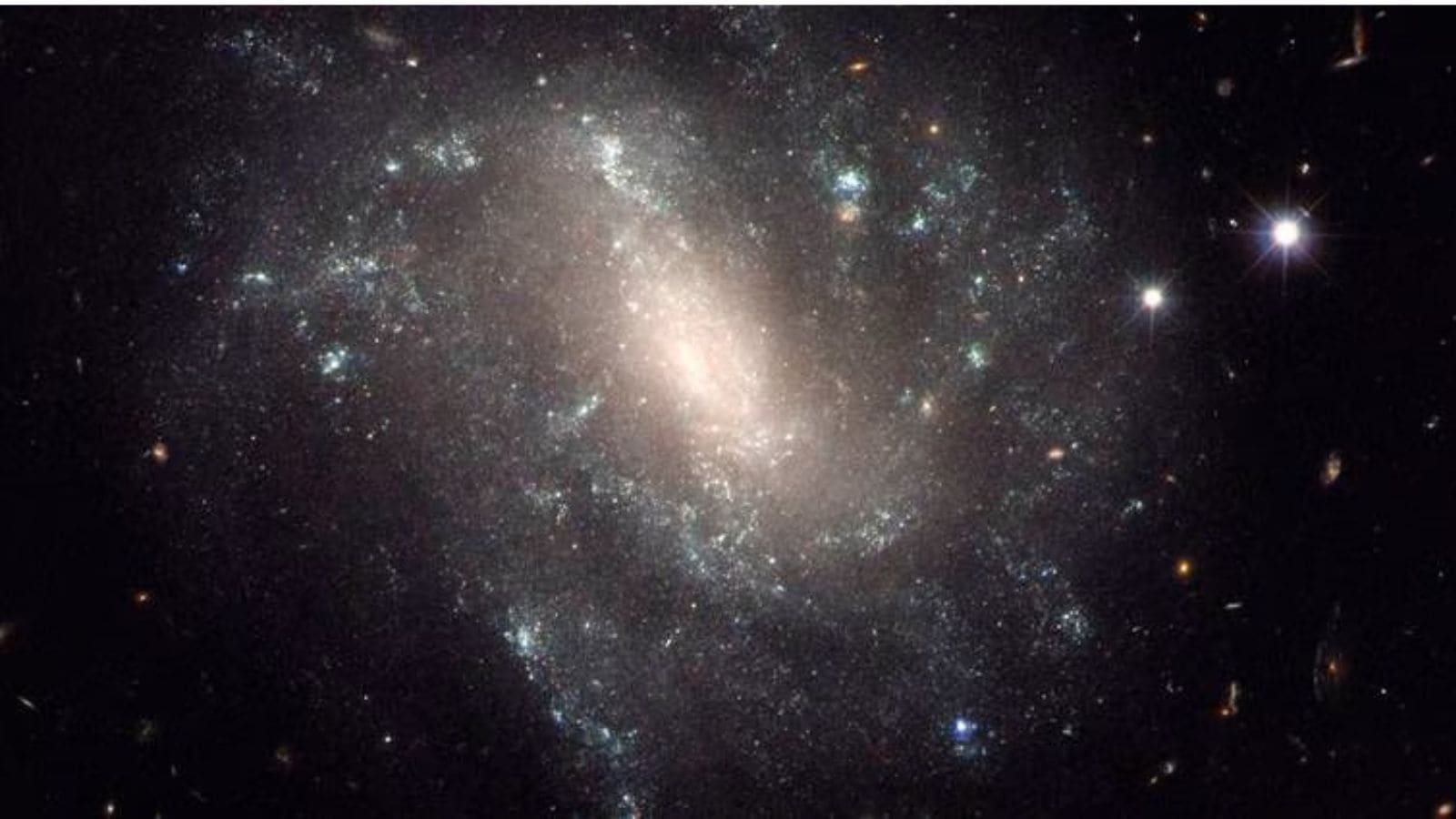
Astronomers including IUCAA faculty reported the most precise direct measurement of the Hubble constant to date at 73.50 ± 0.81 km/s/Mpc, with just over 1% precision. The result is about 10% higher than early-Universe CMB-based estimates under ΛCDM, reinforcing the Hubble tension and suggesting the discrepancy is unlikely to be due to a single local measurement error. The article is primarily scientific in nature and has limited near-term market impact.
This is not a tradable macro print, but it is a meaningful epistemic event: the market now has a cleaner benchmark for a parameter that sits underneath a lot of cosmology-linked inference. The practical second-order effect is that the “measurement error” escape hatch in the Hubble-tension debate is getting narrower, which increases the probability that capital flows toward instruments exposed to scientific-infrastructure spend, precision instrumentation, and data-heavy astronomy tooling rather than toward any direct GDP sensitivity.
The nearer-term beneficiaries are the picks-and-shovels of precision science: sensor manufacturers, optics, detectors, calibration software, and cloud/data workflow providers used in large distributed collaborations. If this line of work continues to converge on open, multi-method frameworks, the competitive advantage shifts from single-pipeline proprietary analysis to companies that can sell interoperability, reproducibility, and archivable data products. That is a subtle but important tailwind for firms with recurring software revenue and high-margin scientific workflow stacks.
The market risk is that the result gets overread as “new physics is imminent,” which is a years-long research process, not a days-to-weeks catalyst. The contrarian read is actually the opposite: if a percent-level consensus framework reduces uncertainty without forcing model revision, the headline may be more useful for validation than for upheaval, and the tradeable impact on public equities may be limited. Any real monetization likely comes through grant cycles, telescope/program budgets, and AI-enabled scientific computing demand over the next 12-36 months, not through a direct repricing of listed names overnight.
AI-powered research, real-time alerts, and portfolio analytics for institutional investors.
Overall Sentiment
neutral
Sentiment Score
0.15
