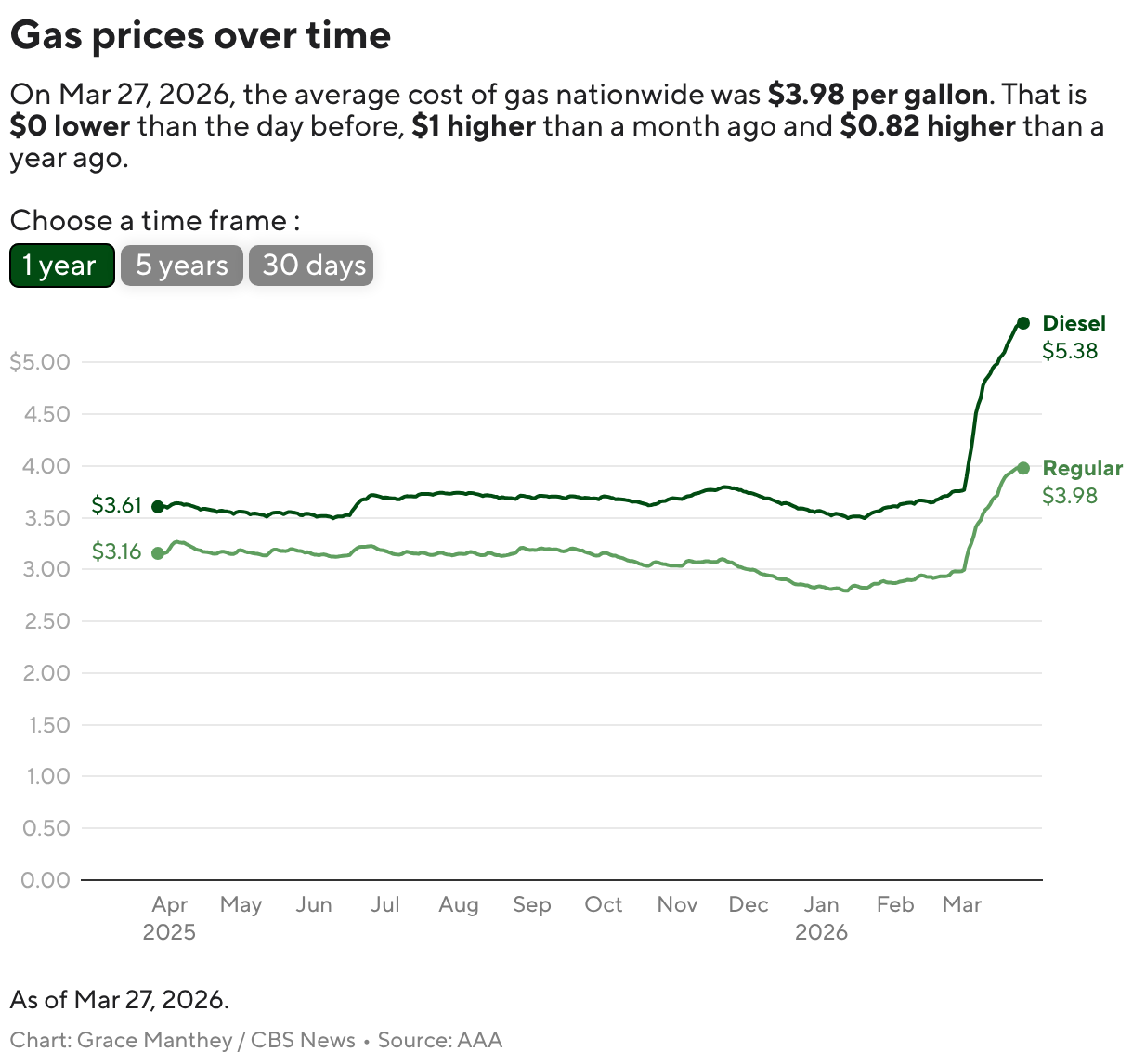
Brent crude jumped $7.15, or 7.5%, to $102.30 a barrel and WTI rose more than 7% to $104.20 as the U.S. prepares to blockade Iran's ports and partially block the Strait of Hormuz. U.S. stock futures fell, with Dow futures down 477 points (1%) and S&P 500/Nasdaq futures off about 0.7%, reflecting heightened geopolitical and energy-supply risk. The strait handles about 20% of global energy shipments, and traffic has already been sharply curtailed since late February.
This is a classic inflation shock with an unusually asymmetric market response: energy up, cyclicals down, and the first-order move likely understates the second-order damage to margin-sensitive sectors. The biggest near-term transmission is not just gasoline; it is diesel, bunker fuel, and feedstock costs, which hit transportation, industrials, chemicals, and food/logistics margins within days to weeks. That creates a setup where headline energy inflation can remain elevated even if crude retraces, because freight and insurance premia tend to lag and stick. The market is likely underestimating how quickly this can become a liquidity event for crowded risk assets. Higher oil tightens financial conditions, pushes breakevens up, and raises the probability that rate-cut expectations get pushed out, which is especially painful for long-duration equities and high-beta cyclicals. If shipping disruption persists for even 2-4 weeks, expect inventory hoarding and working-capital stress to spread through import-dependent supply chains, creating follow-on earnings risk into the next reporting cycle. The contrarian read is that the immediate equity selloff may be too shallow if the blockade remains targeted rather than total. A narrower interdiction still leaves room for escalation ambiguity, which is exactly the kind of regime investors dislike most because it keeps vol bid without giving commodities a clean resolution. That said, if authorities visibly avoid direct confrontation with non-Iranian traffic, crude could fade from the spike as positioning unwinds; the trade is therefore more compelling in relative value than outright index shorts.
AI-powered research, real-time alerts, and portfolio analytics for institutional investors.
Overall Sentiment
strongly negative
Sentiment Score
-0.70
Ticker Sentiment
