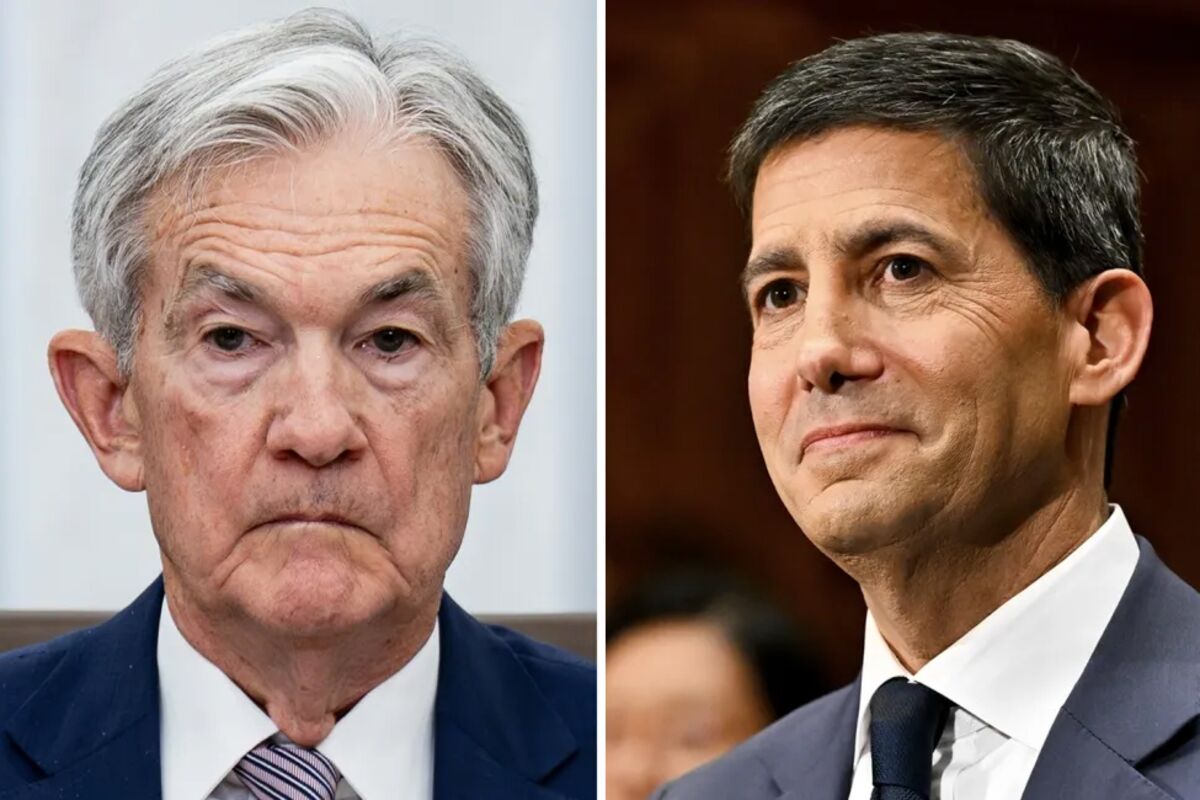
The Fed is expected to hold interest rates steady at Jerome Powell’s likely final meeting as chair, with markets doubting President Trump will secure rapid cuts even after his chosen successor takes over. The piece highlights uncertainty around the post-Powell policy path and the political implications for the White House rather than any immediate shift in rates. Market impact is high because the article centers on the Federal Reserve’s near-term and forward-looking policy stance.
This is less about tomorrow’s meeting and more about how quickly the market will have to reprice a likely slower easing path than the political narrative has been promising. The key second-order effect is term-premium reacceleration: if investors conclude the next chair is constrained by inflation credibility, the front end may stay anchored while the belly of the curve cheapens, favoring a bear-steepener rather than the clean bull-flattening that rate-cut hopes imply.
The market’s current setup leaves complacent positioning vulnerable. Crowded longs in duration and rate-sensitive growth could get squeezed if the new policy regime is framed as data-dependent rather than politically responsive, especially over a 1-3 month horizon when expectations can unwind faster than the Fed can cut. That matters most for sectors whose equity multiples are built on lower discount rates, not just lower policy rates.
The contrarian angle is that a delayed-cut narrative may actually be constructive for risk assets if it keeps financial conditions tighter for longer without breaking growth. In that world, credit spreads remain contained, bank net interest margins stay supported, and the eventual easing cycle becomes more valuable once it finally arrives. The market may be overpricing the speed of cuts and underpricing the possibility that “higher for longer” extends well into the next chair’s first few meetings.
The cleanest tactical expression is to fade rate-cut exuberance rather than bet on a macro recession. If the political transition triggers a steeper curve and a higher term premium, the losers are long-duration equities and levered rate proxies, while banks and value/financials should outperform on relative earnings durability. The key catalyst window is the next 2-8 weeks, when guidance from the Fed and incoming political signals can force a reassessment before positioning has time to repair.
AI-powered research, real-time alerts, and portfolio analytics for institutional investors.
Request DemoOverall Sentiment
neutral
Sentiment Score
-0.05
