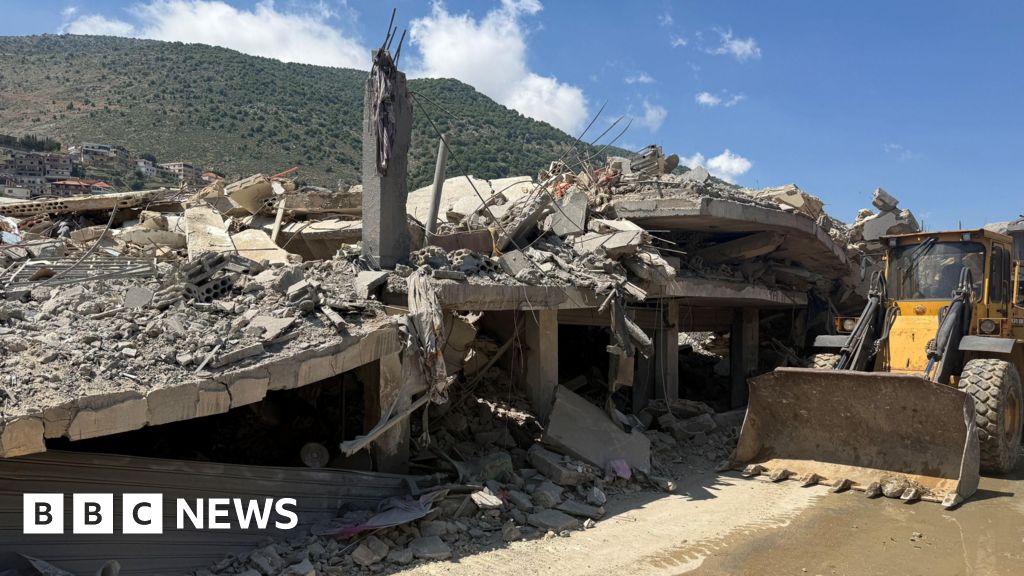
Israel intensified strikes across southern and eastern Lebanon, with more than 100 Hezbollah-related targets hit overnight and at least 11 killed in Mashghara, including two children. Lebanon's health ministry said the broader conflict has now killed at least 3,185 people from Israeli strikes, while Israel said a soldier was killed in combat on Sunday, bringing its losses there to 23 military personnel plus one civilian contractor. The escalation and new evacuation orders raise the risk of further regional spillover and renewed market risk aversion.
The market implication is less about the immediate casualty count and more about the regime shift from contained skirmishes to a broader campaign designed to degrade launch capacity and command-and-control depth. That raises the probability of spillover into regional logistics: rerouting of air cargo, higher marine insurance for eastern Med transits, and intermittent disruption to cross-border trucking in an already fragile EM corridor. The second-order beneficiary is the defense stack, but the more durable trade is in firms tied to airborne ISR, air defense interceptors, and replenishment munitions rather than headline-platform names.
The near-term risk window is days to weeks: escalation can remain market-unfriendly even without a formal collapse in the ceasefire because each new strike expands the “unknown unknowns” premium for shipping, tourism, and local currency assets in the Levant. Over months, the bigger variable is whether the conflict becomes an inventory problem for precision munitions and air defenses, forcing procurement acceleration across the US and allied supply chain. That would support select defense primes and certain lower-tier components suppliers, while pressuring contractors with heavy exposure to delayed government payments or fixed-price legacy programs.
Consensus may be underpricing how quickly regional volatility can leak into broader EM beta. Lebanon is not a large direct market exposure, but repeated escalation raises the odds of risk-off flows into Egypt, Jordan, and Gulf frontier assets, and can tighten financing conditions for any project-dependent balance sheets in the region. Conversely, if the escalation remains geographically bounded and no energy infrastructure is hit, the move may be overdone in sovereign-risk terms; the key tell is whether attacks expand toward critical transport corridors or remain tactical and localized.
AI-powered research, real-time alerts, and portfolio analytics for institutional investors.
Request DemoOverall Sentiment
extremely negative
Sentiment Score
-0.88
