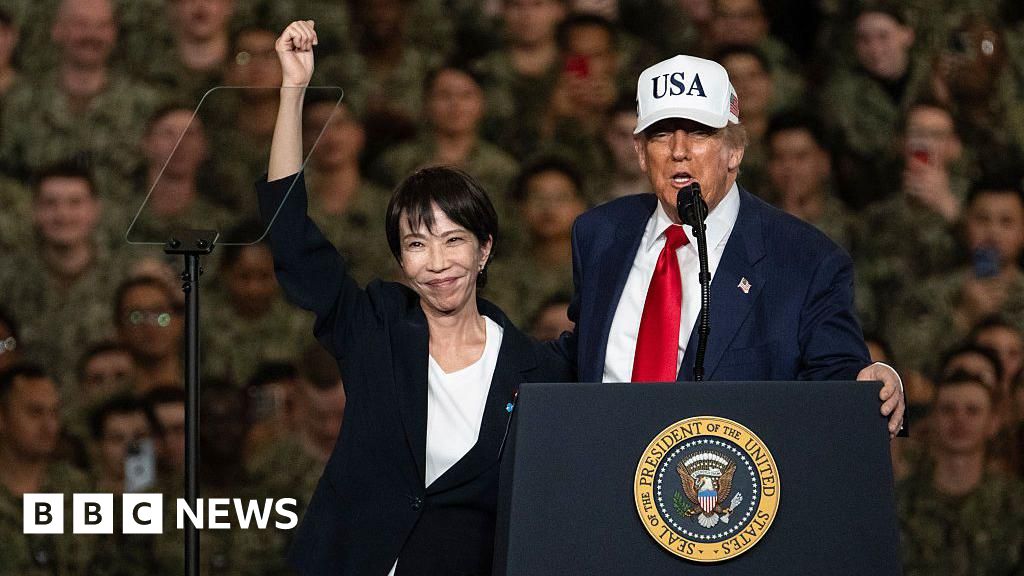
Japan PM Sanae Takaichi's three-day Washington meeting with President Trump will be overshadowed by the Iran war and Strait of Hormuz security concerns, with nearly 95% of Japan's oil transiting the strait and 82% public disapproval of the war. Key commercial items at stake include Japan's participation in the US 'Golden Dome' missile defence (initially $25bn) and expected announcement of ~ $100bn additional US investment projects under a prior $550bn pledge, while Washington has launched an unfair trade practices investigation that could lead to new tariffs. The visit raises political and economic risk for Japan (rising inflation, weak yen, sluggish consumer spending) and creates potential sectoral volatility in energy, defense, autos and FX.
This meeting is a potential inflection point that will re-price alliance economics rather than just headline diplomacy: if Tokyo signals even partial willingness to deepen joint procurement or hosting arrangements, expect a 6–18 month procurement cycle to accelerate demand for US defense systems and high-tech subsystems (radars, guidance, electronics). That creates a cascade into specialty suppliers whose margins re-rate faster than large primes — think high-single-digit revenue uplifts into free cash flow within 12–24 months for niche vendors with export capacity.
Concurrently, trade-policy noise remains the highest-probability market shock in the near term: a tougher US posture or investigation outcomes over the next 30–90 days can trigger tariff-related P&L rotations that disproportionately hit export-dependent Japanese autos and parts tiers. FX is the transmission mechanism — a swing in USD/JPY of 5–10% over a quarter materially alters reported earnings for multinational exporters and can amplify index-level moves even if the underlying businesses don’t change fundamentals.
Energy and shipping risk are the highest-short-term volatility drivers: even a limited but sustained rise in regional insurance and freight premia (weeks to months) would push refiners’ input costs and result in margin compression for import-heavy conglomerates, while lifting insurance and security contractors. The overall consensus underprices the optionality in procurement and investment: markets treat this as a 1-off bilateral meeting, but policy shifts enacted here have multi-year capital allocation consequences across defense, semiconductors, and FX-sensitive exporters.
AI-powered research, real-time alerts, and portfolio analytics for institutional investors.
Request DemoOverall Sentiment
mildly negative
Sentiment Score
-0.20
