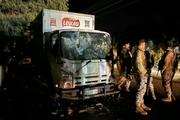
Israel said it will suspend from Jan. 1 the licences of several international NGOs operating in Gaza that failed to provide lists of Palestinian staff, alleging Doctors Without Borders employed two individuals linked to Hamas and Palestinian Islamic Jihad; affected groups must cease activities by March 1. The ministry said fewer than 15% of organisations were found in violation after a 10-month compliance window, and the announcement comes amid constrained aid flows — a ceasefire target of 600 trucks per day has seen only 100–300 humanitarian trucks per NGOs/UN, while COGAT reports ~4,200 weekly (~600/day). The move tightens regulatory oversight and risks further disrupting Gaza aid logistics and raising geopolitical tensions, with limited direct market implications.
Market structure: The immediate winners are defense & security contractors (e.g., RTX, LMT, GD) and specialty insurers/reinsurers that underwrite conflict risk; losers include Israel-exposed equities (iShares MSCI Israel ETF EIS), regional carriers/tourism (JETS), and logistics providers with southern Israel exposure (FDX, UPS indirectly). With <15% of NGOs flagged but enforcement starting Jan 1 and full cessation by Mar 1 for non-compliant groups, expect localized service bottlenecks (medical, food distribution) that compress humanitarian ‘supply’ even if headline weekly truck counts (c.4,200/week) are maintained.
Risk assessment: Tail risks include escalation to a wider regional conflict (low-probability but high-impact) that would push Brent >$100/bbl and spike CDS for Israel and regional sovereigns; another tail: retaliatory cyber disruption to ports/transport. Immediate window (days–weeks) is heightened volatility in FX (ILS down >2% vs USD on shock), short-term (weeks–months) sees credit spread widening for Israeli sovereign/corporates, long-term (quarters) could re-rate defense sector margins and sustained logistic route reconfiguration. Hidden dependencies: NGOs are critical information conduits—suspensions raise operational opacity that can amplify political risk and sanctions timelines.
Trade implications: Tactical long-convict positions: establish 1–2% long in RTX/LMT (6–12 month horizon) and buy 3–6 month EIS puts (strike ~5–10% OTM) as a hedge until March 1 revocation window closes. Hedge macro exposure by adding 1–2% TL H/TLT or 0.5–1% GLD as tail hedges; consider short small position in JETS or selective Israeli tourism names if truck counts stay <300/day for two consecutive weeks. Key catalysts: Jan 1 enforcement, March 1 cessation, UN/NGO weekly truck-report thresholds (watch <300/day sustained for 7–14 days).
Contrarian angles: Consensus underprices the operational knock-on effects—temporary NGO suspensions can reduce on-ground intelligence, increasing insurance premiums and contractor margins for years, not weeks; conversely, markets may overreact on headline risk and overshoot defensive names. Historical parallels (localized suspensions in conflict zones 2014–2021) show defense stocks often price in only part of revenue upside; favor long-dated calls or buy-on-dip rather than full valuation resets. Watch for unintended consequence: heavier militarization of aid logistics could accelerate private contracting firms’ revenue, creating pair trades long mercenary/logistics contractors vs short traditional aid-dependent local service providers.
AI-powered research, real-time alerts, and portfolio analytics for institutional investors.
Request DemoOverall Sentiment
moderately negative
Sentiment Score
-0.35
