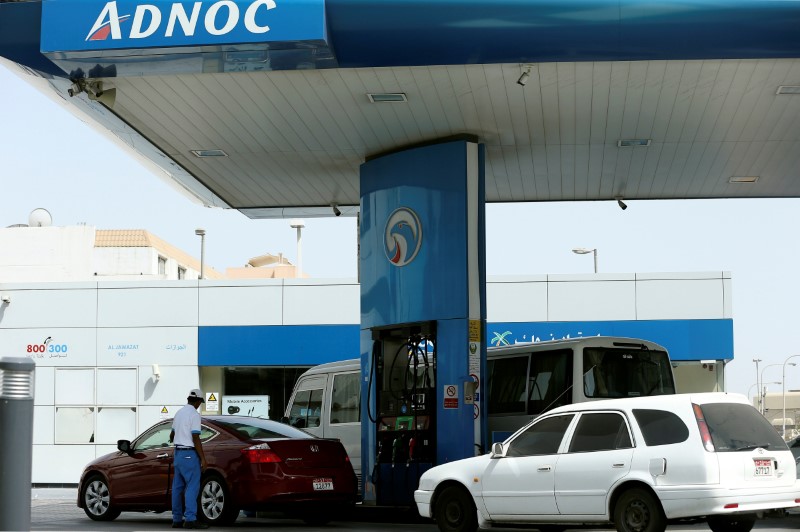
Fujairah port resumed crude loading after a drone strike briefly suspended operations, restoring a critical Hormuz-bypass terminal that supports UAE exports. The facility underpins exports for the UAE — roughly 3.2 million barrels per day of production — and helps contain upside pressure while Brent trades near $100/barrel. The attack highlights escalating U.S.-Israel-Iran hostilities and asymmetric risks to Gulf energy infrastructure even as markets are being partially cushioned by a record 400-million-barrel IEA reserve release (including 80 million barrels from Japan). Continued disruption would pose market-wide supply stress and fiscal risk for the region.
Attacks on single-point export and transit infrastructure reprice the marginal cost of moving barrels far more than headline inventories. Expect spot voyage lengths to elongate and time-charter (TC) rates to spike in the near term, which shifts profits toward owners of tankers and floating storage while increasing delivered feedstock cost for coastal refiners by a material percentage over weeks. Insurance and war-risk premia act as binary multipliers: a sustained elevation in premium levels (weeks–months) amplifies charter volatility and makes short-duration physical bottlenecks profitable to arbitrage.
On a 3–9 month horizon the market is set up for sharp episodic moves rather than a steady grind; diplomatic interventions or coordinated reserve releases can remove 50–75% of the immediate price premium in a matter of days, while true supply re-routing or new export infrastructure takes 12–36 months and permanently reallocates margin pools. That creates a two-layer opportunity: tactical volatility plays that monetize immediate dislocations, and selective structural longs in firms exposed to logistics, storage, and security capex that benefit from multi-year spending cycles. Conversely, businesses whose margins are a function of cheap, short-haul crude deliveries are the most exposed to a protracted premium on logistics.
The consensus currently prices elevated geopolitical risk as persistent supply destruction; that overstates the permanence of the shock absent an uninterrupted blockade. If transport corridors remain contestable but not closed, the most attractive trades are short-duration volatility plays plus selective exposure to asset owners that capture the convexity of longer voyages and charged insurance markets. Protect positions against the primary reversal catalysts: rapid de-escalation, large-scale coordinated releases from strategic reserves, or a sudden drop in war-risk insurance costs.
AI-powered research, real-time alerts, and portfolio analytics for institutional investors.
Request DemoOverall Sentiment
mildly negative
Sentiment Score
-0.30
Ticker Sentiment
