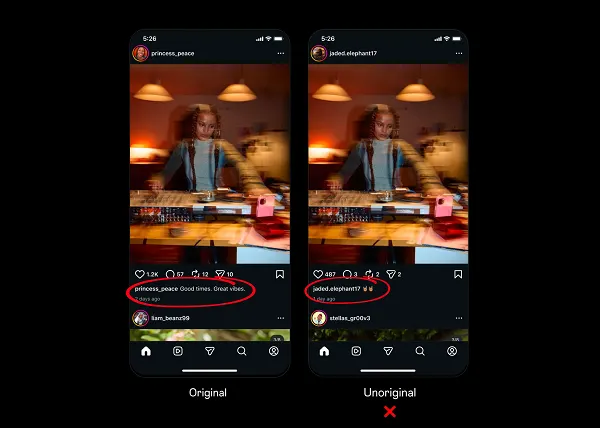
Instagram is rolling out a major algorithm update this week that will stop recommending photos and carousel posts from aggregator accounts across Explore and other surfaces, while prioritizing original creators. Meta said original Reels views and watch time on Facebook approximately doubled year over year in 2H 2025, supporting the strategy to boost creator incentives and content supply. The change may improve creator engagement, but it could also reduce reach for repost-driven accounts and alter content distribution across Instagram.
This is a quiet but meaningful distribution-tax on the lowest-cost content suppliers in Meta’s ecosystem. In the near term, the biggest beneficiary is META’s own recommendation quality: by reducing recycled inventory, the feed should surface more first-party material, which tends to lift session quality, creator retention, and ultimately ad adjacency without needing more user growth. That matters more than the headline suggests because recommendation systems improve nonlinearly when the ratio of original-to-recycled content rises; even a modest shift can compound into better watch time and more reliable ad load.
The second-order effect is competitive, not just product-level. Large aggregator pages and meme pages have historically acted as low-friction trend accelerants; suppressing them may reduce virality at the margin, but it also increases the moat for creators who post natively and for brands that can produce differentiated assets. Over months, that should favor agency networks, creator tools, and editing workflows that help output “original enough” content at scale, while pressuring pure repost accounts whose economics rely on cheap engagement farming.
The AI angle is underappreciated: more original content increases the diversity and freshness of Meta’s training and ranking signals, which is useful for both recommendation quality and model pretraining. The risk is that enforcement becomes noisy—if creators game the definition of original, Meta could create a temporary chilling effect on repost-heavy formats without meaningfully improving content quality. If that happens, engagement could dip for 1-2 quarters before the system self-corrects, but the longer-duration setup still favors Meta because it owns the policy lever and can tune thresholds iteratively.
Consensus may be underestimating how asymmetric this is for META versus the broader creator economy. The downside to engagement is likely limited because users can still consume the same content via follows and stories, while the upside from better creator incentives and higher-quality supply accrues directly to Meta’s recommendation engine. In other words, this is less about protecting content rights and more about reallocating distribution away from rent-seeking intermediaries toward higher-signal supply that strengthens Meta’s flywheel.
AI-powered research, real-time alerts, and portfolio analytics for institutional investors.
Request DemoOverall Sentiment
mildly positive
Sentiment Score
0.15
Ticker Sentiment
