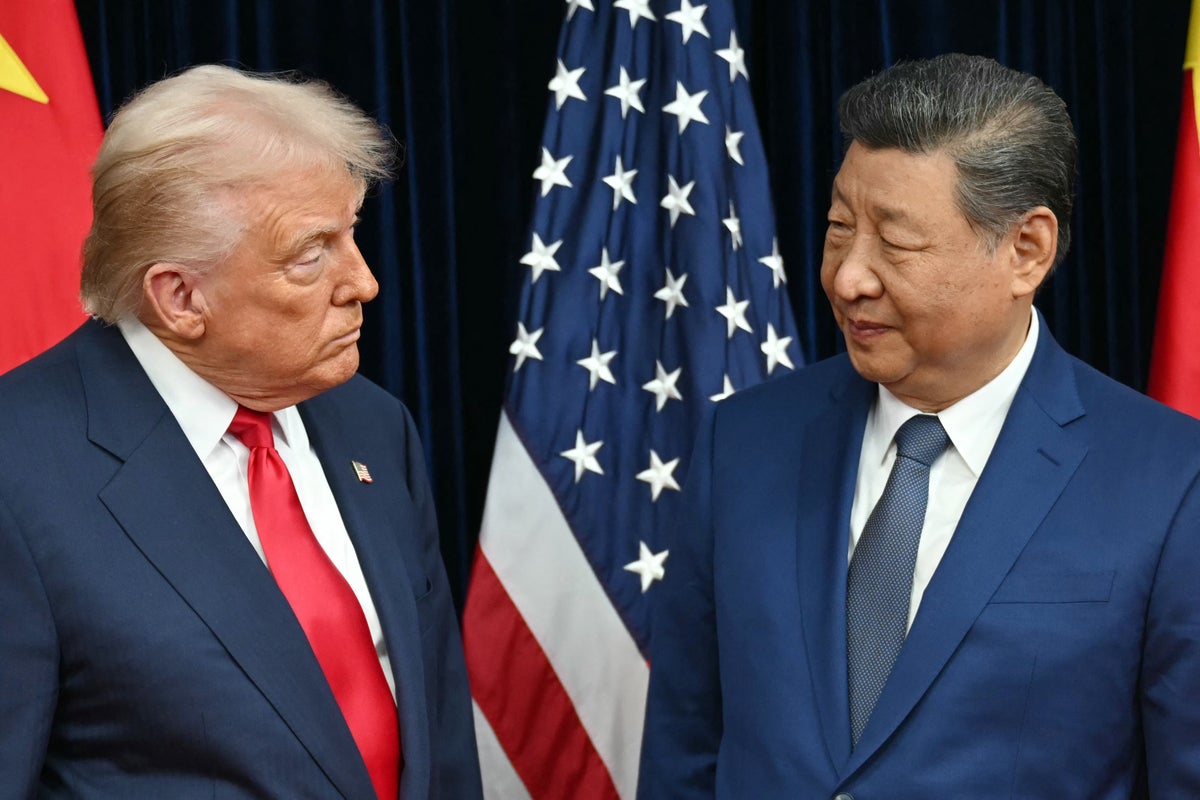
Trump's China visit is being overshadowed by the Iran war, with Beijing’s economic ties to Tehran and renewed trade tensions limiting the chance of major breakthroughs. The article points to possible discussions on tariffs, rare earths, soybeans, Taiwan, and broader security concessions, but expectations are muted and any deals appear uncertain. Market impact is likely centered on trade-sensitive sectors and China-exposed commodities rather than broad U.S. equities.
The market is underpricing how much this summit is about sequencing, not optics. Beijing can likely extract incremental concessions by using two separate clocks against Washington: the immediate need for a China deliverable to offset Iran-related political damage, and the slower midterm calendar that makes the White House more sensitive to headlines than to durable verification. That dynamic favors China in the near term because symbolic wins can be delivered quickly, while U.S. demands on sourcing, rare earths, and soybean access require enforcement mechanisms that take quarters to matter.
The key second-order effect is that any temporary de-escalation will not be broad-based relief; it will be selective and tactical. Even if the meeting reduces tariff rhetoric, the strategic decoupling regime around export controls, industrial policy, and defense supply chains should stay intact, which means semiconductor, aerospace, and critical-minerals supply chains remain vulnerable to episodic shocks. The biggest beneficiaries are likely global cyclicals and EM proxies that are sensitive to headlines on trade stability, but the real economic relief would accrue to Chinese exporters and U.S. importers with thin margins, not to either side’s strategic sectors.
Iran matters because it gives China leverage over the one issue Trump wants resolved fastest: energy security and price stability. Beijing can position itself as a necessary broker without materially changing its longer-term exposure to Tehran, creating a low-cost diplomatic win that can be traded for U.S. flexibility on tariffs or Taiwan rhetoric. The contrarian risk is that investors read a friendly handshake as durable détente; in reality, the most likely outcome is a short-lived easing in headline volatility, followed by renewed friction once the political window closes after the summit cycle.
From a timing perspective, this is a days-to-weeks catalyst for risk assets, but the months-ahead setup is more bearish for “clean” China exposure than the market admits. If the administration leans on China for help with Iran, any reciprocal concessions are likely to be undone by domestic U.S. politics or by Beijing’s own willingness to let talks stretch into election season. That makes the current setup better for tactical trades than for structural repositioning.
AI-powered research, real-time alerts, and portfolio analytics for institutional investors.
Request DemoOverall Sentiment
mildly negative
Sentiment Score
-0.15
