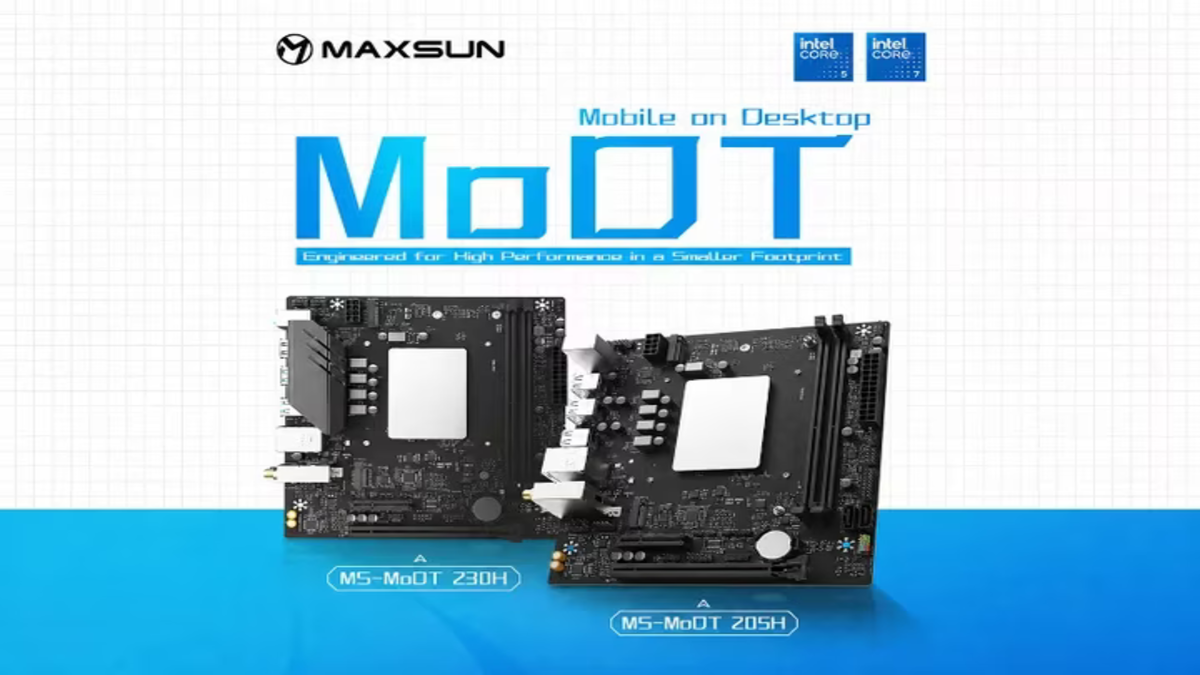
MaxSun launched two new MoDT motherboards, the MS-MoDT 230H D4 WIFI and MS-MoDT 205H D4 WIFI, targeting SFF systems and value desktop builds. The higher-end model pairs a Core 7 230H with features like Wi-Fi 6, Bluetooth 5.3, and Realtek Gigabit LAN, while pricing is estimated at under $150 for the 205H and around $200 for the 230H. The products appear to offer solid value versus buying a separate CPU and motherboard, but the article does not indicate a material company or market-moving catalyst.
This is a modestly positive signal for INTC not because of unit volume, but because it shows the company still has a monetizable long tail for previously launched mobile silicon in channels that care far more about BOM efficiency than leading-edge branding. The second-order benefit is utilization: every extra socket that keeps older mobile dies moving through OEM/ODM channels helps absorb inventory, smooths wafer demand, and reduces the risk of a sharper air pocket in legacy client demand. In that sense, the more important message is defensive—Intel is extracting value from stranded product families rather than relying solely on premium PC refresh cycles.
Competitively, the real pressure is on low-end desktop motherboard vendors and AMD-based SFF assemblers, not on Intel’s premium client roadmap. If these boards gain traction in Asia and among integrators, they could compress the addressable market for entry socketed builds by shifting buyers toward soldered CPU bundles where Intel captures the chip margin upfront and the board partner captures less differentiation. That also makes third-party cooler, motherboard chipset, and entry-level CPU pricing more competitive, especially if channel partners see MoDT as a way to clear excess DDR4-era inventory without committing to upgrade paths.
The key risk is that this is a channel-clearing event, not evidence of durable demand acceleration for Intel client. If Core 200H branding confusion creates returns, warranty issues, or weak sell-through outside China, the move could become a one-quarter inventory bridge rather than a repeatable revenue driver. The catalyst window is weeks to a few months: watch distributor commentary, board availability in Western e-tail, and whether Intel extends this rebadged mobile stack into more OEM reference designs.
Consensus may be underestimating how much these low-cost MoDT products can prolong the life of older Intel mobile dies in edge and embedded-style use cases. That said, the market should not extrapolate this into a broad recovery in client ASPs; the economics favor volume stabilization, not pricing power. The setup is more interesting as a sign that Intel can monetize legacy silicon longer than expected, which is mildly supportive for near-term gross margin elasticity but not a thesis re-rating on its own.
AI-powered research, real-time alerts, and portfolio analytics for institutional investors.
Request DemoOverall Sentiment
mildly positive
Sentiment Score
0.15
Ticker Sentiment
