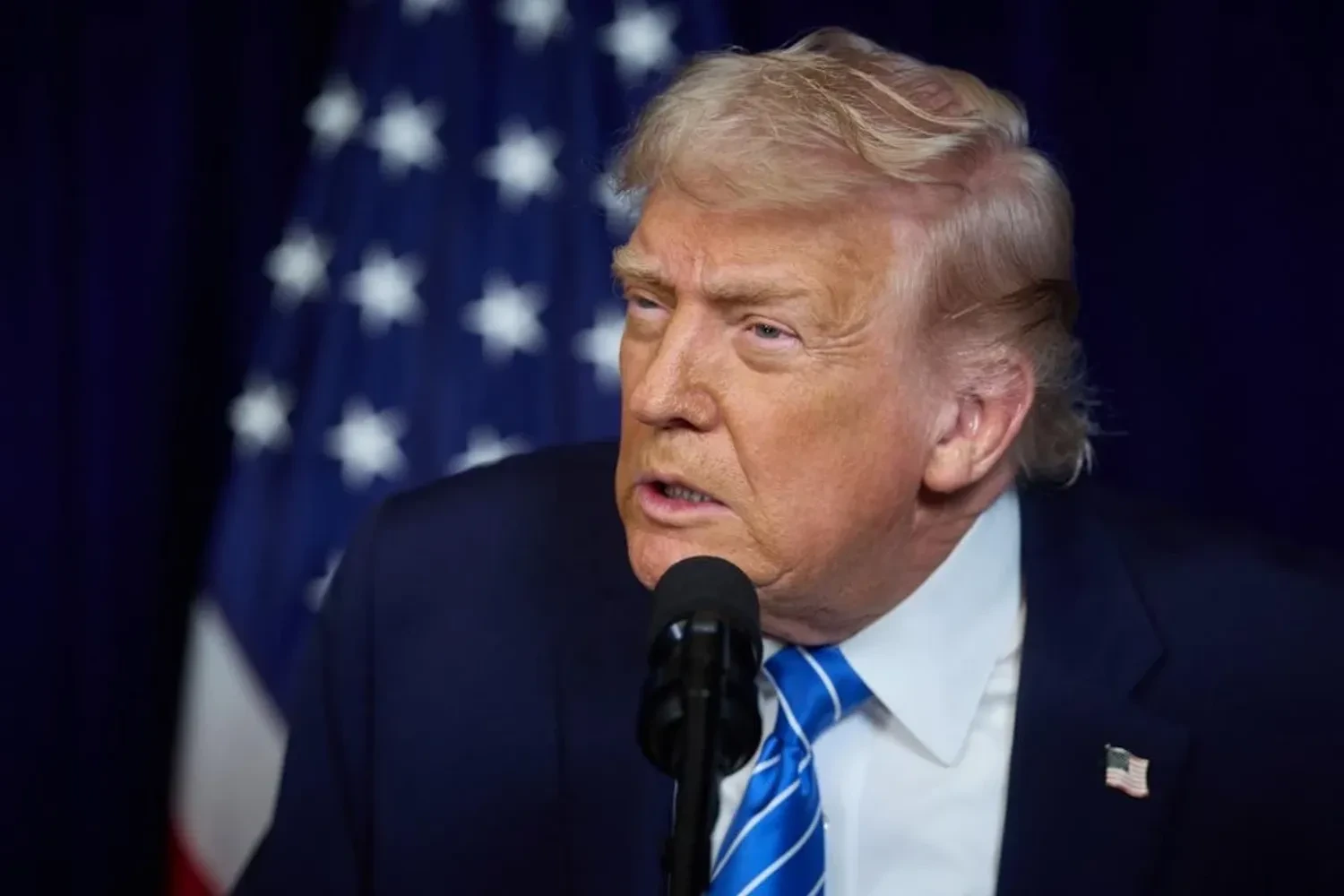
Trump-driven headlines are increasingly steering US markets, with the S&P 500 falling on tough rhetoric on Iran and rising on signals of possible negotiations. Bloomberg says this reaction is nearly instant and has also spilled into oil and commodities, implying elevated cross-asset volatility. The article frames this as an unprecedented level of influence from a single political figure on daily market moves.
The market is no longer pricing policy as a static regime; it is trading a one-man event-risk calendar. That creates a structurally higher implied-vol surface across equities, crude, and industrial metals because the distribution of outcomes is being driven by headline jumps rather than fundamentals, which is exactly where systematic strategies get forced to de-risk into air pockets. In practice, this favors option sellers only when they can isolate event windows; otherwise, realized vol may stay elevated enough to punish short-vol carry.
The biggest second-order winner is not any single sector but volatility itself: index hedges, commodity hedges, and event-driven dispersion trades should keep richening as investors pay up for protection against policy reversals. The loser is breadth—when a single narrative dominates, correlation tends to rise, making quality and low-beta diversification less effective and increasing the chance that small headline shifts trigger outsized de-grossing. Energy-linked names are especially exposed because geopolitical rhetoric can move oil faster than inventory data can justify, compressing the reaction time for both upstream producers and consumers.
The setup is vulnerable to reversal if the White House communication stream becomes less adversarial or if the market desensitizes after repeated false starts. In that case, the premium embedded in near-dated options and defensive positioning can collapse quickly over 2-6 weeks, creating a sharp relief rally in indices and a mean-reversion move lower in crude volatility. The contrarian view is that this may be less about durable policy power and more about a crowded market overreacting to a noisy signal; if so, the trade is to fade the extremes, not the narrative.
For now, the actionable edge is to own convexity into headline risk rather than direction outright, because the signal is highly asymmetric and path-dependent. The risk is paying too much for protection after the move has already occurred, so timing and structure matter more than outright exposure.
AI-powered research, real-time alerts, and portfolio analytics for institutional investors.
Request DemoOverall Sentiment
neutral
Sentiment Score
-0.10
