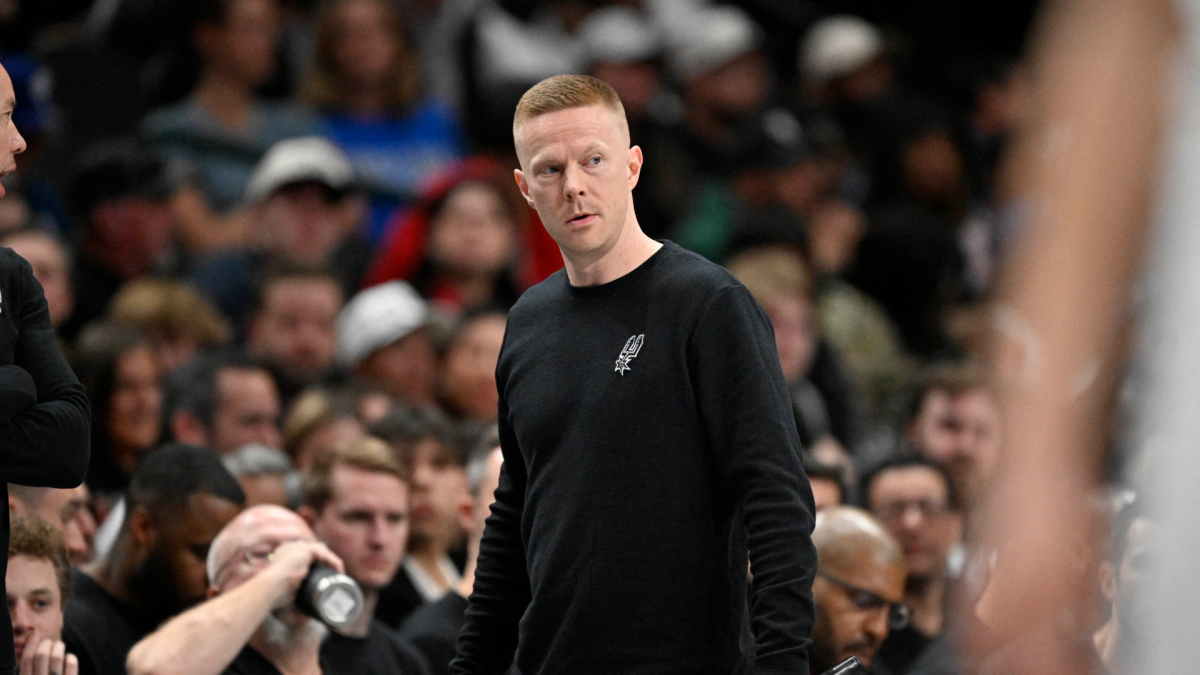
The Mavericks announced that Jason Kidd and the team mutually agreed to part ways, opening an extensive search for a new head coach under president Masai Ujiri. Ujiri said Dallas will consider candidates from the NBA, college, and Europe, with Sean Sweeney, Micah Nori, and Jared Dudley identified as early possibilities. The move is largely organizational and speculative, with limited immediate market impact.
This is less about a coaching hire than a governance reset, and the market signal is that Dallas is trying to de-risk the organization’s culture after a highly visible front-office reboot. The next coach matters because the roster is now more likely to be shaped around development and accountability than around a single veteran-star thesis; that typically increases volatility in player utilization, rotation length, and decision quality over the next 1-2 quarters, but can improve medium-term asset efficiency if the process is disciplined.
The key second-order effect is on Cooper Flagg’s development curve: a defensive-first, communication-heavy staff could accelerate his two-way value and improve on-court cohesion, which in turn raises the odds that Dallas stabilizes around a younger core rather than paying up for win-now veterans. If the hire prioritizes player development over schematic conservatism, ancillary pieces with skill overlap become more tradeable, because the organization may finally optimize for future optionality rather than sunk-cost veterans.
The biggest tail risk is that an open-ended search produces a compromise hire: respected assistant, limited authority, and no clear strategic identity. That outcome would extend uncertainty into the summer, depressing roster clarity and making it harder to assign value to older rotation players; the reversal catalyst would be an early, decisive hire with a defined style and public commitment to either development or contention. Time horizon matters: the next 30-60 days are about reputational signal, while the next 6-12 months determine whether Dallas is building a coherent pipeline or just changing faces.
Contrarian view: the market may overestimate how much a coach alone changes outcomes in a roster-transition year. If Dallas keeps just enough veteran talent to stay competitive, the hire’s main impact may be marginal wins rather than a true rebuild, which would make the current narrative too bearish on retained veterans and too bullish on immediate young-player minutes.
AI-powered research, real-time alerts, and portfolio analytics for institutional investors.
Request DemoOverall Sentiment
neutral
Sentiment Score
0.05
