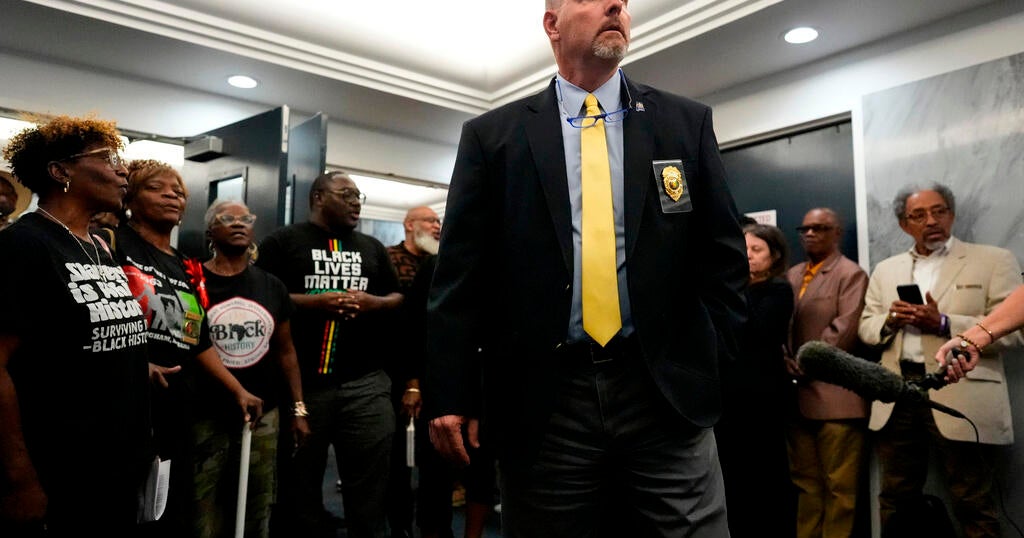
Alabama approved legislation to prepare new House primaries if courts allow a GOP-drawn congressional map, a move that could eliminate one of the state's two Democratic seats. The state is responding to the Supreme Court's Louisiana v. Callais ruling by seeking to restore a 2023 map with just one Democratic-leaning district, while Attorney General Steve Marshall asked the Supreme Court to lift the current injunction. The broader redistricting fight remains active in other southern states and could affect control of the closely divided U.S. House in the midterms.
The market impact is less about Alabama specifically and more about the accelerating probability that the House map is litigated state-by-state into late summer. That raises the odds of delayed candidate filing, voter confusion, and ultimately a lower-confidence election outcome in a handful of districts where turnout elasticity is already fragile; the second-order effect is that incumbency protection rises when campaigns can’t lock in field operations and donor commitments on schedule.
The biggest beneficiary is procedural certainty for any incumbent, not any party. If courts keep shifting the map, local ad buyers, consultants, and grassroots vendors face a compressed ramp into fall, which tends to favor better-capitalized national committees and incumbents with existing data files; challengers and smaller campaigns get penalized by administrative friction more than by ideology. The Alabama/Louisiana/Tennessee sequence also increases the probability of parallel injunctions and emergency stays, so headline risk should remain elevated over the next 2-6 weeks, not months.
The contrarian miss is that the Supreme Court narrowing may not translate into a clean Republican seat gain in this cycle. The legal path remains messy, and if courts hesitate on implementation, Republicans could spend political capital without locking in new lines before ballots are effectively set; in that case the move becomes a delayed win, not an immediate one. The real trade is volatility around any company or sector exposed to turnout-sensitive policy outcomes, not a directional bet on the court fight itself.
AI-powered research, real-time alerts, and portfolio analytics for institutional investors.
Request DemoOverall Sentiment
mildly negative
Sentiment Score
-0.15
