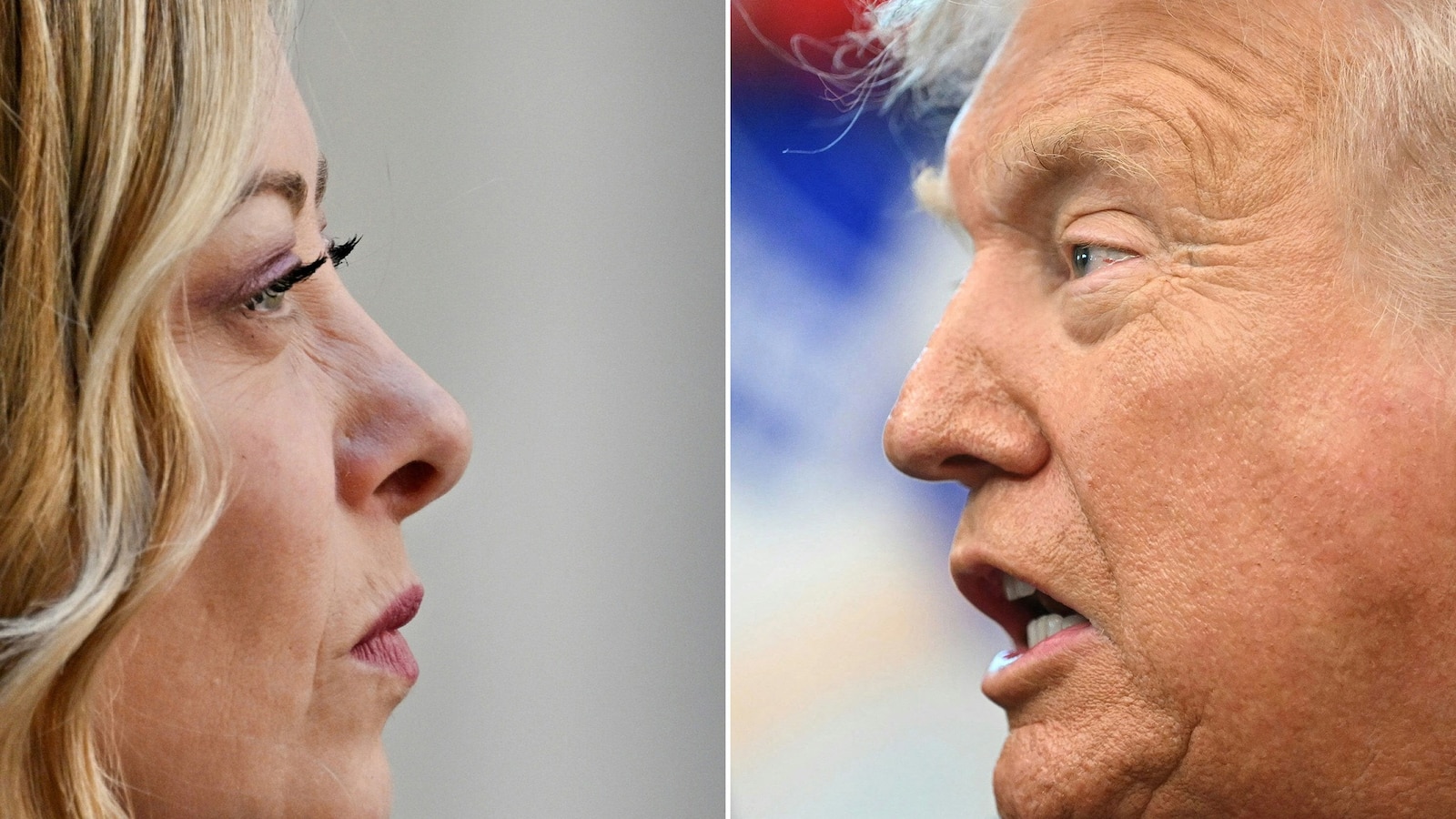
Trump and Italian Prime Minister Giorgia Meloni exchanged public attacks over a disputed G7 photo and broader disagreements on Iran and U.S.-Italy cooperation. Meloni denied Trump's claim that she "begged" for the photo, called his comments "unprovoked" and "senseless," and reaffirmed Italy's support for U.S. military bases. Italy's foreign minister said Trump's remarks were offensive enough to cancel a planned U.S. visit, but the episode is primarily diplomatic and political rather than a direct market-moving event.
The immediate market read is less about the personal feud and more about the signal it sends on transatlantic policy coordination. When a key NATO-aligned government is publicly embarrassed over security cooperation, the marginal cost of political alignment with Washington rises for other European leaders, which can slow consensus on defense, basing, and sanctions issues that require quiet coalition management. That creates a small but real headwind for European defense procurement visibility and for U.S. primes that rely on allied interoperability spend.
The second-order effect is on Italian domestic politics rather than macro fundamentals: Meloni is now incentivized to demonstrate autonomy from Washington to avoid appearing dependent, which can reduce near-term flexibility on U.S.-preferred defense or Iran-related actions. Over days to weeks, this mostly shows up as noise; over months, it can harden into a higher political discount on any Italy-linked defense or infrastructure story where U.S. cooperation is assumed. The risk is not a sudden funding cut, but slower-than-expected approvals and more cautious messaging from Rome and other EU capitals.
The contrarian view is that the episode may ultimately strengthen Meloni domestically by validating her nationalist positioning, making her a more durable partner rather than a weaker one. If that happens, the market should fade the headline volatility and focus on whether Italy still expands defense budgets and base access in practice. The larger tradable risk is not Italy-specific, but a broader deterioration in the tone of U.S.-Europe alliance management that can periodically widen defense and sovereign spread volatility.
In the near term, this is a better relative-value than outright directional setup: the headline can pressure Italy-exposed sentiment, but any actual policy change would likely take weeks to months to materialize. If the dispute escalates, the first assets to react are European defense contractors and Italian sovereign risk, not U.S. equities broadly. Conversely, if Meloni and Trump de-escalate, the move should fade quickly because there is no direct earnings impact yet.
AI-powered research, real-time alerts, and portfolio analytics for institutional investors.
Request DemoOverall Sentiment
mildly negative
Sentiment Score
-0.15
