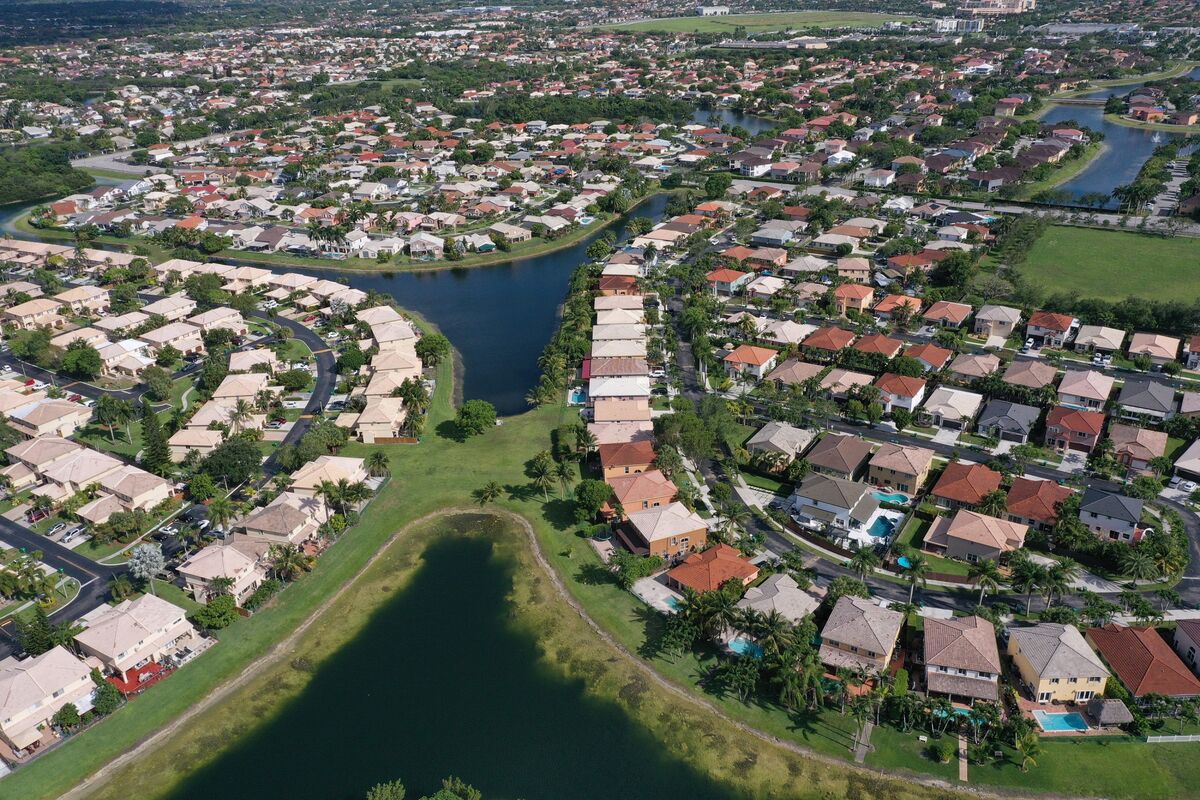
South Florida's housing market is experiencing a significant slowdown, with new contracts plummeting by 19% in the first quarter for condos and 21% for single-family homes, marking what one report calls a 'uniquely bad' period; this decline is attributed to rising insurance costs, high interest rates, and elevated home prices, potentially signaling a broader cooling trend in the previously booming region.
The South Florida housing market is demonstrating a significant contraction, as evidenced by a material decline in new home contracts during the first quarter. New contracts for condominiums decreased by 19% and single-family home contracts fell by 21%, a downturn described as 'uniquely bad.' This slump is attributed to a combination of escalating insurance costs, elevated interest rates, and persistently high home prices, which are collectively dampening buyer demand. The current market conditions, marked by strongly negative sentiment, suggest a potential broadening cooling trend for a region that previously experienced a boom, signaling a noteworthy shift in market dynamics.
AI-powered research, real-time alerts, and portfolio analytics for institutional investors.
Request DemoOverall Sentiment
strongly negative
Sentiment Score
-0.70
