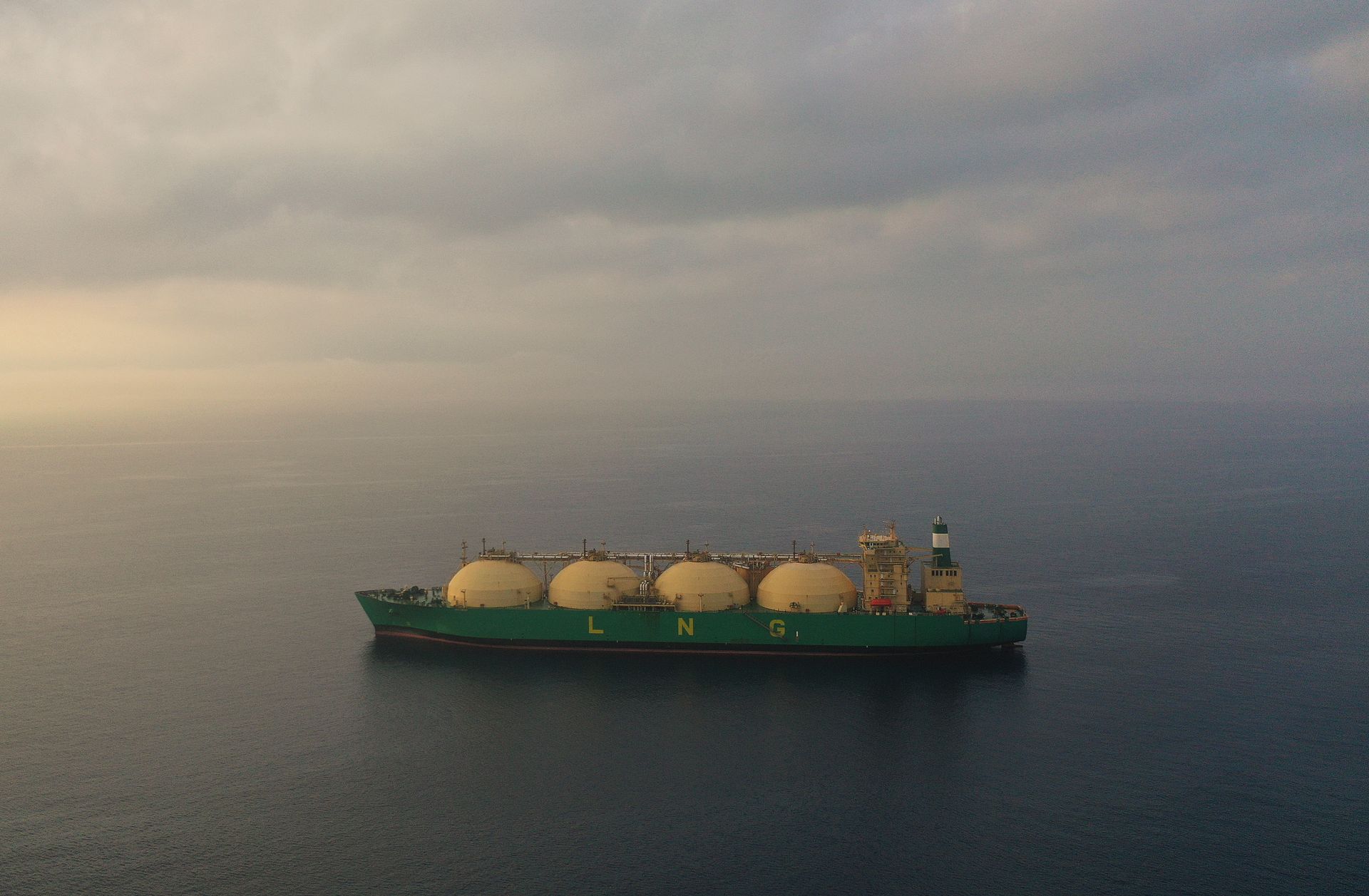
Up to six of the 15 Arc7 LNG carriers serving Russia's Yamal LNG project may be repaired at Denmark's Fayard shipyard before new EU maritime services restrictions take effect in 2027. Urgewald estimates each vessel has carried an average of 5.3 million metric tons of Russian LNG since the full-scale invasion, worth about 4 billion euros per vessel, or 32 billion euros across the six ships. The article highlights a potential final window for Russia-linked LNG logistics support before sanctions tighten, with implications for Arctic gas exports and European shipyards.
The key market implication is not the headline repair window itself but the compression of a critical maintenance bottleneck into a short pre-ban period. If even a handful of Arc7 hulls re-enter service, the near-term effect is to reduce the probability of an abrupt logistics disruption in Yamal-linked flows, which should cap any immediate winter-risk premium in European gas and LNG freight. The more important second-order effect is that specialized Arctic LNG shipping capacity becomes progressively less fungible: once EU services are off-limits, replacement maintenance will need to migrate to fewer, more geopolitically exposed yards, increasing downtime risk and insurance friction over the next 12-24 months.
For energy markets, this is mildly bearish for European spot LNG and winter volatility, but the magnitude is more about optionality than volume. A few repaired vessels can keep export continuity intact long enough to preserve Russia’s ability to monetize existing upstream infrastructure, which delays the kind of forced supply erosion that would otherwise show up in 2026-2027. That argues for lower realized volatility in TTF relative to the event risk implied by sanctions headlines, while leaving the structural medium-term thesis unchanged: sanctions tightening should gradually raise transport costs, reduce utilization, and squeeze netback economics for Russia’s Arctic gas chain.
The contrarian read is that the market may be overestimating how much this kind of servicing changes the strategic picture. The real choke point is not one Danish yard, but the combination of Arctic-class vessel scarcity, insurance/compliance constraints, and limited substitute maintenance capacity. That means the durable trade is not a binary long/short on one shipyard story, but a longer-duration fade of Russian LNG logistics optionality and a relative beneficiary trade in non-Russian LNG supply chains and European regasification/import infrastructure.
Catalyst timing matters: the next 1-3 months are about repair decisions and any enforcement signaling from Denmark/EU; 6-18 months is when reduced maintenance access should begin to hit fleet availability and turnaround times. A reversal would require either an enforcement carve-out, sanctions dilution, or a workaround that shifts servicing outside the EU without materially impairing vessel uptime—any of which would quickly remove the near-term supply constraint narrative.
AI-powered research, real-time alerts, and portfolio analytics for institutional investors.
Request TrialOverall Sentiment
mildly negative
Sentiment Score
-0.20
