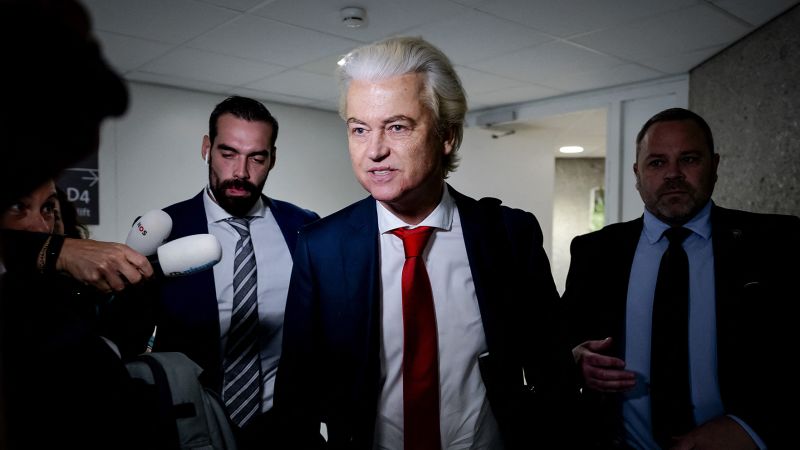
The Dutch government has collapsed after Geert Wilders' Party for Freedom (PVV) withdrew its support over disagreements regarding asylum policy, plunging the country into political uncertainty. Wilders stated his party could not support the coalition's approach, which he deemed insufficiently strict, and opposition leaders are calling for immediate elections. While polls suggest the PVV would remain a leading party if elections were held, its ability to form a new government remains uncertain given the fragmented Dutch political landscape.
The Dutch governing coalition has collapsed following the withdrawal of Geert Wilders' Party for Freedom (PVV) over disagreements on asylum policy, plunging the nation's politics into a state of significant uncertainty. Wilders stated the PVV's decision stemmed from the coalition's refusal to adopt a stricter asylum policy, including proposals to close borders to asylum seekers. This move leaves Prime Minister Dick Schoof's government with a minority of just 51 out of 150 parliamentary seats, prompting opposition calls for immediate elections. Current polling suggests that while the PVV might lose some seats, it could remain the largest party, though its ability to form a new government is not guaranteed due to the fragmented nature of Dutch politics where no single party typically commands a majority. The political instability, marked by a 'moderately negative' sentiment and 'uncertain' tone, follows the November 2023 election where the PVV emerged as the clear winner but Wilders himself did not take a cabinet position in the subsequent coalition agreement.
AI-powered research, real-time alerts, and portfolio analytics for institutional investors.
Request DemoOverall Sentiment
moderately negative
Sentiment Score
-0.50
