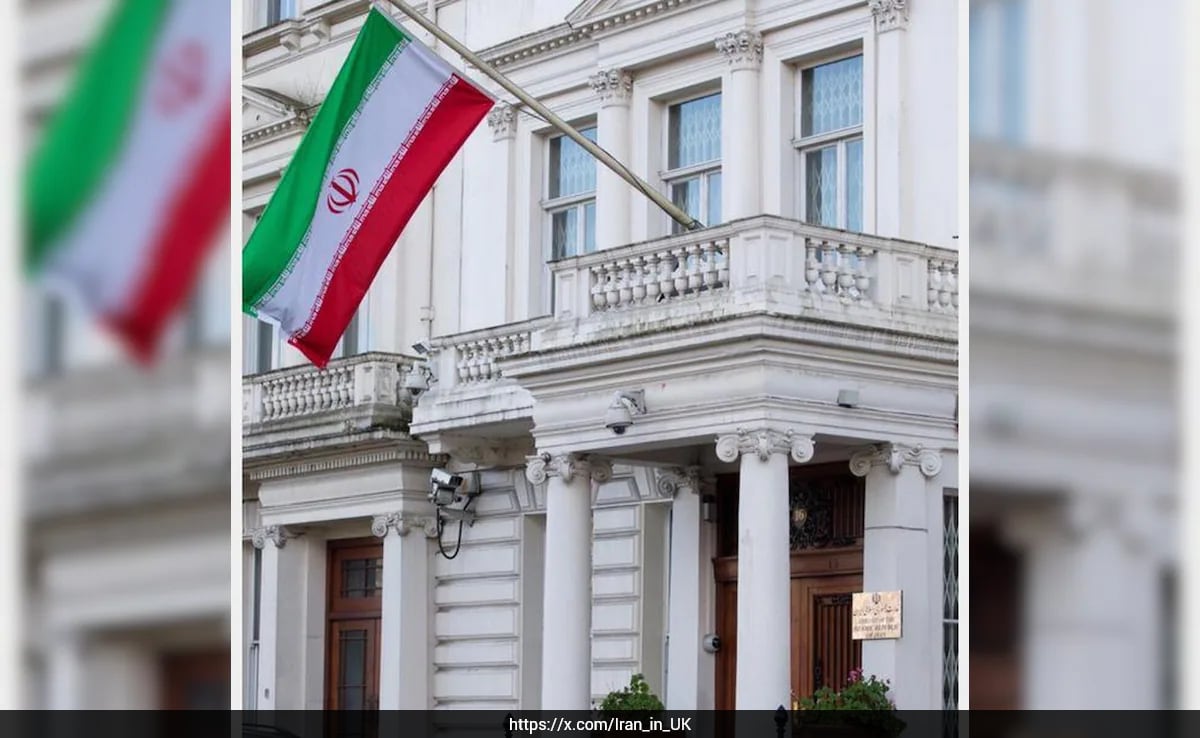
Iran's embassy in the UK is under criticism after a Telegram post reportedly urged Iranians abroad to "sacrifice their lives" for the country, prompting the UK Foreign Office to summon Ambassador Seyed Ali Mousavi and call the message unacceptable. The embassy says the Jan Fada campaign is about patriotism and territorial integrity, not violence. The issue heightens already elevated Iran-related tensions and raises monitoring concerns for British security agencies.
This is not a direct market event, but it is a useful signal that Iran-linked rhetoric risk is rising in the UK at the same time broader geopolitical stress is already elevated. The immediate market effect is likely in the security-intelligence channel rather than in equities: heightened monitoring increases the odds of visa scrutiny, sanctions enforcement, and reputational pressure on any UK-listed or UK-operating entity with material Iran exposure. That tends to widen the discount rate on anything even tangentially sensitive to Middle East compliance risk, especially over the next 1-4 weeks while the story is politically fresh.
The second-order effect is more important than the headline: when governments frame diaspora messaging as potentially radicalizing, they create a lower threshold for future intervention. That raises tail risk for embassy-linked comms, charitable networks, and intermediaries that depend on cross-border payments or community outreach, even if the current episode is mostly symbolic. If authorities decide to broaden the lens, the fastest transmission would be tighter compliance reviews from banks, payments processors, and telecom/social platforms handling Iran-adjacent traffic; the slow burn is a gradual increase in operational friction for any UK entity with exposure to Iranian nationals, students, or remittance flows.
The contrarian view is that the market may overestimate the chance of immediate policy escalation. Most governments prefer visible diplomatic signaling over costly structural action unless there is a direct domestic security incident, so the probability-weighted impact on public equities is low unless this mutates into a sanctions or legal enforcement case. The better trade is to focus on optionality around tail outcomes rather than directionality on broad risk assets: this is a headline-driven, not earnings-driven, event.
For consumer/defensive names, the impact is essentially nil; the only reason to watch a stock like MRU.TO is if broader risk-off sentiment hits the whole market, not because of direct fundamental linkage. The real watch item is whether UK authorities use this as a pretext to broaden surveillance or restrict activity around Iranian institutions; that would matter for security services, compliance vendors, and any bank with Middle East correspondent exposure.
AI-powered research, real-time alerts, and portfolio analytics for institutional investors.
Request DemoOverall Sentiment
mildly negative
Sentiment Score
-0.35
Ticker Sentiment
