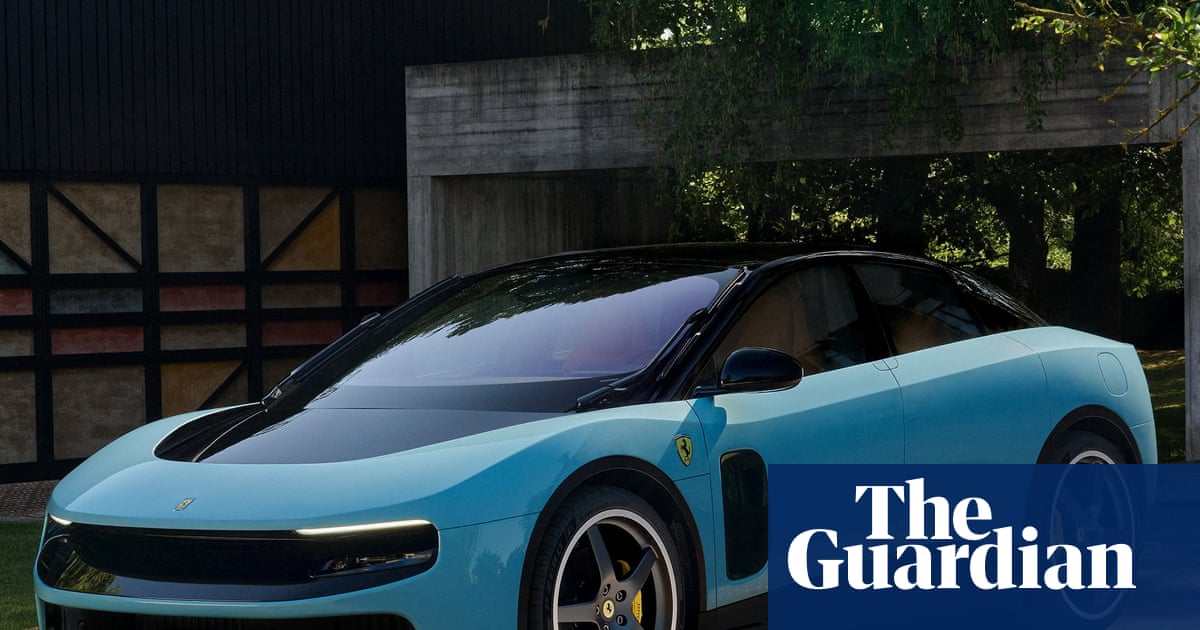
Ferrari’s first electric vehicle, the €550,000 Luce, is drawing backlash from investors and online critics, with the shares down 8% this week. The model is Ferrari’s first EV, second four-door car, and first five-seater, but its Apple-like minimalist design and higher-riding silhouette have sparked comparisons to the Nissan Leaf and concern among traditional fans. Despite the controversy, management is positioning the car as a polarizing move to broaden the brand’s appeal and attract new ultra-wealthy buyers.
The immediate read-through is not about the car itself but about brand elasticity: Ferrari is testing how far it can stretch from an object of status to an object of adoption without breaking the scarcity premium that supports its valuation. The market’s negative reaction suggests investors are worrying about canonical dilution more than near-term unit economics, but that concern may be overdone if the product remains limited-volume and margin-accretive. The bigger issue is that this launch broadens Ferrari’s addressable demand pool beyond pure enthusiast buyers, which can quietly improve backlog resilience through cycles. Second-order, the EV architecture is strategically important because it reduces the engineering penalty for future derivatives. Once the platform is sunk, Ferrari can sequence more models with lower incremental capex and faster product cadence, which matters more to long-duration equity value than one controversial launch. The competitive implication is that legacy luxury OEMs still lack a credible way to make EVs feel exclusive; that leaves room for Ferrari to own the ultra-luxury EV niche before the broader field catches up. The risk is timing: sentiment can stay negative for weeks, but the fundamental test is order quality over the next several months and whether the company can keep waiting lists intact in Europe, China, and the Middle East. A sharper downside scenario would be any signal that Ferrari is chasing growth volume or lowering scarcity discipline, because that would pressure both pricing power and multiples. Conversely, if management confirms the model is supply-constrained and mostly additive to the portfolio, this backlash should fade as a headline issue. The contrarian view is that the market may be underestimating how many wealthy buyers want a quieter, tech-forward Ferrari as a third or fourth car, especially in China where EV acceptance is structurally higher. If that buyer cohort shows up, the negative social-media reaction becomes a feature rather than a bug: polarizing launches can expand the funnel without cannibalizing the core. The trade is less about immediate fan sentiment and more about whether Ferrari can monetize novelty while preserving exclusivity.
AI-powered research, real-time alerts, and portfolio analytics for institutional investors.
Request DemoOverall Sentiment
mildly negative
Sentiment Score
-0.15
Ticker Sentiment
