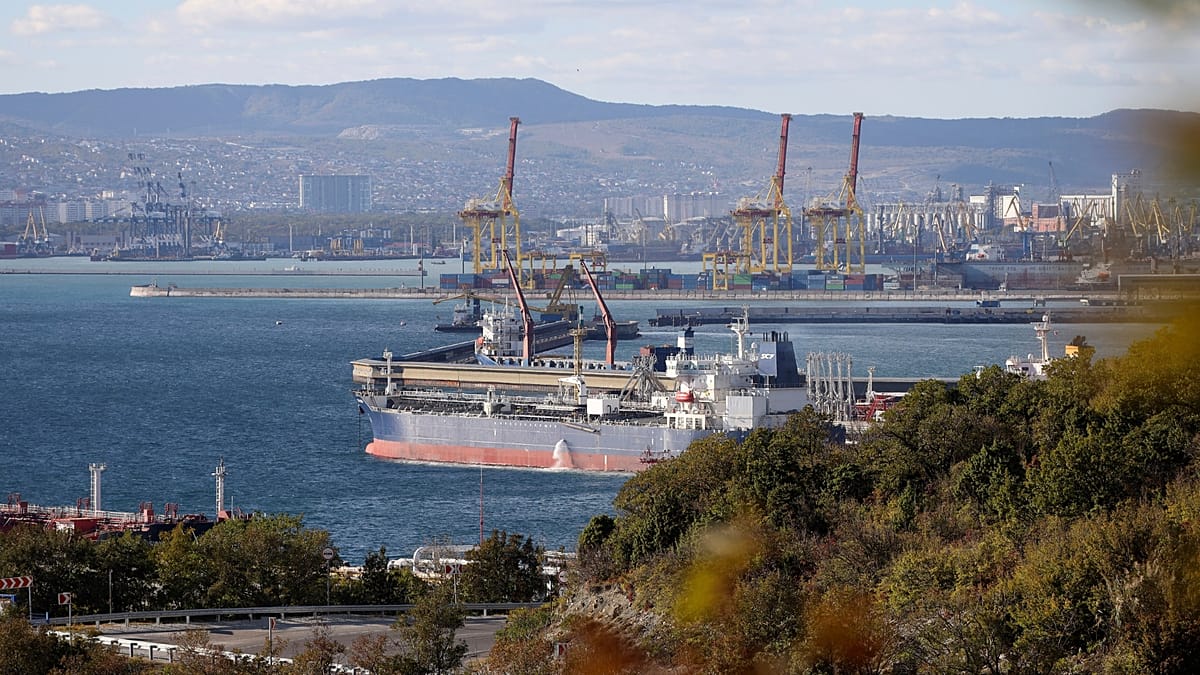
Two sanctioned oil tankers linked to Russia's so‑called 'shadow fleet' — the Gambia‑flagged Kairos and the Virat — exploded and caught fire in the Black Sea 28 and 35 nautical miles off Turkey, respectively; crews (25 on Kairos, 20 on Virat) were rescued and causes remain under investigation, with Turkish authorities citing an "external impact" and not ruling out mines or a targeted attack. Both vessels are on international sanctions lists (US, EU, UK, Switzerland, Canada) used to obscure Russian crude flows, raising near‑term shipping safety, insurance and environmental risk in the Black Sea; while direct global oil supply disruption appears limited so far, the incident heightens geopolitical and operational risk for traders, insurers and logistics providers and merits monitoring for escalation.
Market Structure: Disruption to two sanctioned Black Sea tankers tightens an already stressed seaborne Russian crude logistics chain and should lift spot tanker freight (TC) rates and short-haul tanker utilization. Publicly listed large crude tanker owners with modern fleets (e.g., FRO, EURN) gain pricing power if sanction-evasion tonnage is sidelined; small unlisted “shadow” owners lose. Brent/dated crude is likely to gap +1–3% in days on risk-premium repricing; a larger escalation could add 5–10%.
Risk Assessment: Tail risks include a Bosporus partial closure, minefields causing sustained route closures, or NATO-Turkey intervention that materially curtails Black Sea exports — low-probability but 10–30% upside to oil and freight if realized. Immediate (0–7 days): volatility spike and safe-haven flows; short-term (weeks–months): higher insurance/re‑routing costs and rising TC rates; long-term (quarters): structural shift toward premium for Western-compliant tonnage and higher reinsurance pricing. Hidden dependency: higher freight incentivizes more ship-to-ship opacity, prolonging sanctions evasion and legal/regulatory clampdowns.
Trade Implications: Tactical: buy short-dated Brent exposure (BNO or 1–3 month Brent futures) for a 1–3% portfolio allocation; take 1–2% long positions in listed tanker operators FRO and EURN, targeting +20–35% upside on a 3–6 month horizon. Hedging: buy 3-month Brent 2–4% OTM call spreads rather than naked calls; consider 1% long in LMT/NOC as geopolitical defense hedge. Avoid smaller TC-exposed names domiciled in sanction-risk registries and reduce any RUB exposure by 1–3%.
Contrarian Angles: Consensus may overstate long-term supply loss — two vessels are marginal vs global tonnage, and past Strait disruptions (2019) produced <6‑week oil moves. If no escalation in 10–14 days, oil/freight reverts and volatility collapses; this favors short-dated premium sales (sell 2–4 week call spreads) and trimming tanker longs at +20–30%. Unintended consequence: accelerated consolidation benefits large compliant owners; owning those is a multi-quarter structural call.
AI-powered research, real-time alerts, and portfolio analytics for institutional investors.
Request DemoOverall Sentiment
moderately negative
Sentiment Score
-0.40
