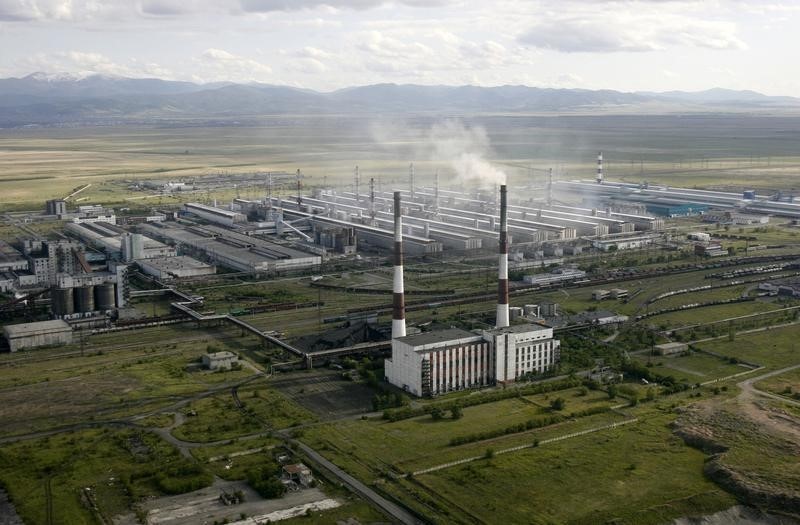
Ukraine launched a second drone strike this month on PhosAgro’s Apatit fertilizer complex in northwest Russia, damaging a high-pressure sulfuric acid pipeline and injuring five workers. The attack adds to disruption in a market already stressed by the effective closure of the Strait of Hormuz, which has helped double global fertilizer prices since the Middle East war began. The article points to elevated risk for agricultural commodities, global food security, and price volatility across the fertilizer complex.
The market implication is not just higher fertilizer prices; it is a renewed scarcity premium across the entire ag-input stack. The second-order winner is anyone with inventories, low-cost nitrogen exposure, or contracted feedstock access, while the loser set extends beyond the named producer to downstream farmers, grain merchandisers, and food processors that cannot fully pass through input costs in one quarter. The biggest risk is that repeated infrastructure strikes turn what would have been a transitory geopolitical spike into a rolling supply shock that keeps forward curves backwardated and forces users to overbuy inventories.
This also raises the odds of policy distortion. When fertilizer becomes a food-security issue, governments tend to respond with export restrictions, subsidy programs, or strategic stockpiling, which can create sharp dislocations between spot and deferred prices. That is especially relevant over the next 1-3 months: the trade is less about end-demand destruction and more about margin compression at the farm level, which tends to hit planting decisions with a lag and then show up later in grain prices and acreage shifts.
The contrarian point is that the market may be overestimating the permanence of the price move if the physical disruption remains contained. If the damaged plant is repaired quickly and no broader logistics chokepoints emerge, a lot of the current risk premium could bleed out within weeks, especially if traders are already positioned for a prolonged shortage. But the asymmetric tail is still to the upside because every additional strike increases the probability of export curbs, insurance repricing, and precautionary hoarding, all of which extend the shock well beyond the initial site damage.
AI-powered research, real-time alerts, and portfolio analytics for institutional investors.
Request DemoOverall Sentiment
moderately negative
Sentiment Score
-0.45
