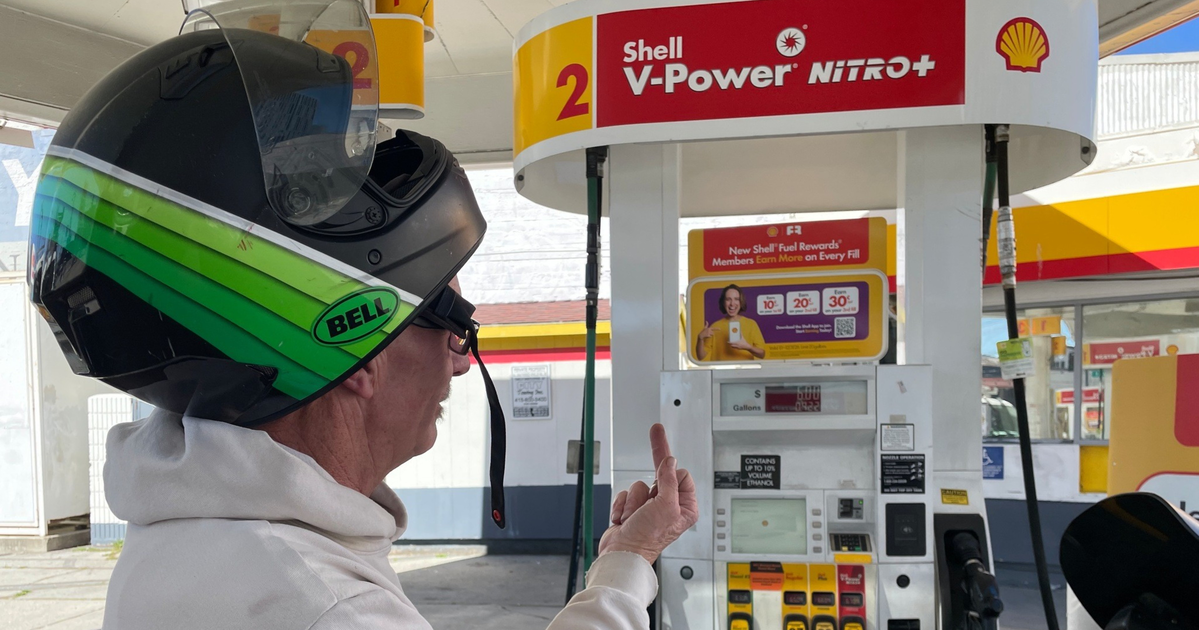
Gasoline prices have surged with some San Francisco pumps reaching $6.50-$6.70/gal while the California average is $5.33 and San Francisco $5.59; the U.S. national average rose to $3.57/gal from $2.99 a week earlier and $2.90 a month ago (AAA). Consumers report changed behavior (shorter trips, more transit), local station markups of roughly $1.50/gal driven by a costly supplier contract, and the site is slated for redevelopment by Allrise Capital, limiting near-term supply relief.
Urban gas-price outliers are not random — they’re the product of spatial economics (prime curb visibility + captive commuter flows) combined with locked supply contracts and owner incentives tied to near-term cash flow and redevelopment optionality. That creates persistent price dispersion: a handful of “last stop” pumps can sustain $1–1.50/gal markups without broad demand erosion, because the marginal customer values avoiding being stranded more than an extra dollar.
On a macro level, geopolitically driven wholesale volatility raises the waterline for retail prices, but pass-through is uneven and creates concentrated counterparty risks (local suppliers, franchise contracts) that can amplify earnings volatility at branded retail operators even as upstream cash flow improves. That divergence presents regulatory and reputational tail risks for brand owners in dense urban markets if public or municipal actors push back — an asymmetric downside for retailers despite a benign headline on higher oil prices.
Behavioral shifts will show up fast: sustained pump prices above ~$5.25/gal for 3+ months typically drives a 2–5% drop in urban gasoline volumes and a measurable modal-shift toward transit, bike-share and shorter-trip consumption patterns. Over 6–24 months, expect durable winners in transit services and lower-cost EV segments and losers in urban convenience retail and small owner-operators exposed to fuel costs or fixed-route service contracts. Monitor city-level pump-price dispersion and redevelopment timelines as leading indicators of localized scarcity and margin persistence.
AI-powered research, real-time alerts, and portfolio analytics for institutional investors.
Overall Sentiment
mildly negative
Sentiment Score
-0.35
Ticker Sentiment
