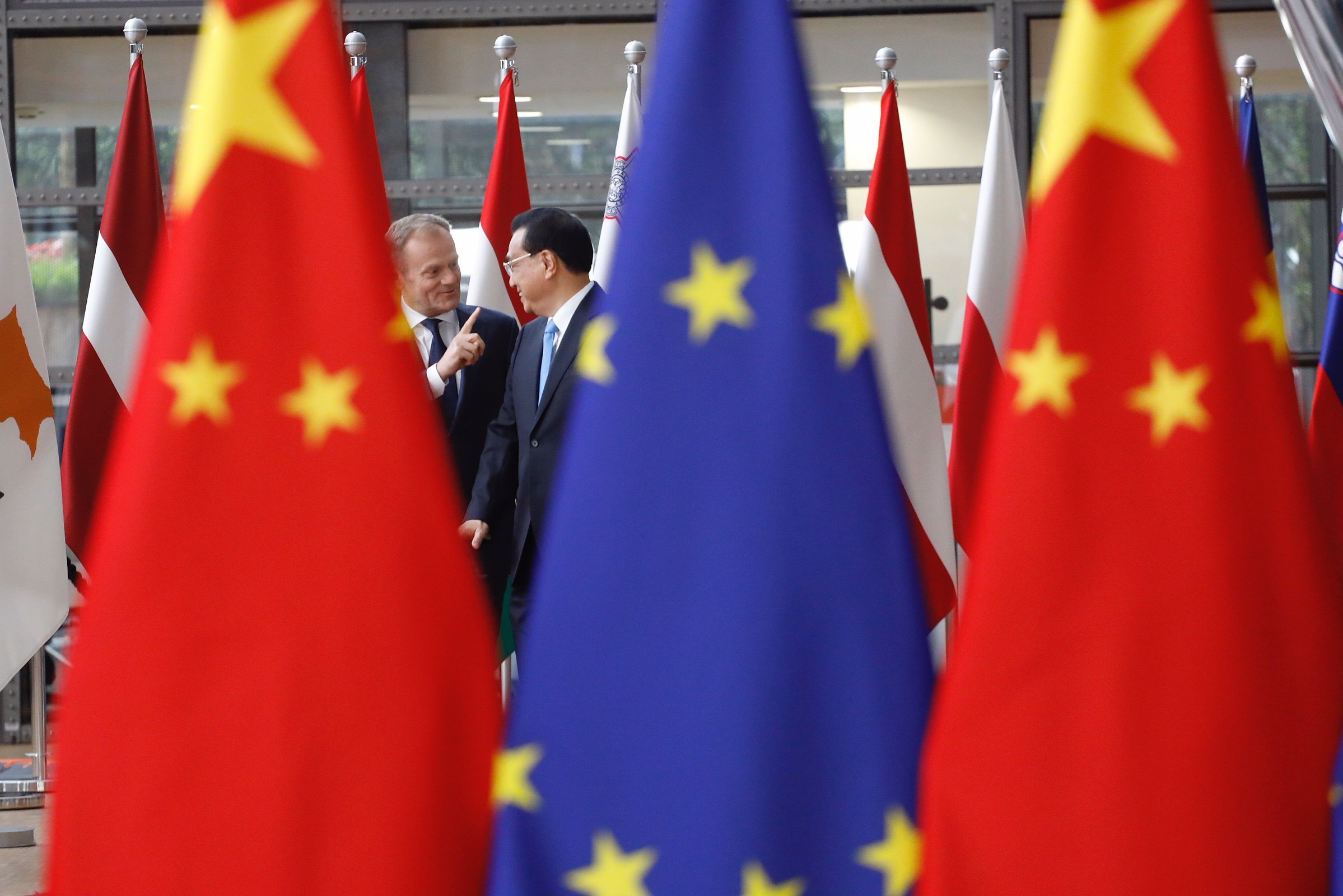
China’s new Regulation 834 takes effect immediately and gives authorities broad powers to investigate companies or individuals seen as interfering with supply chains, including decisions to stop supplying Chinese customers or exit China-related supply chains. The European Union Chamber of Commerce in China warns the vague provisions increase business risk and could conflict with EU due diligence rules that require firms to map and audit supply chains. The measure adds another layer of geopolitical and regulatory risk to global trade flows and could affect multinational operations in China.
This is less about a single compliance headline and more about Beijing weaponizing ambiguity to raise the option value of staying embedded in China supply chains. The immediate losers are multinationals with China-dependent procurement, but the bigger second-order effect is on firms whose business model requires data extraction, third-party audits, or rapid supplier switching; those are now all potential legal touchpoints. The practical consequence is a higher cost of capital for China exposure, because investors will now discount not just tariff/export-control risk but also employee-level legal and mobility risk.
The competitive edge shifts toward firms with dual-sourcing, regionalized footprints, and low China revenue concentration. Semiconductor equipment, industrial automation, and consumer electronics are likely to see the most pressure because they rely on detailed supplier mapping and have the least flexibility to stop collecting data; paradoxically, the more sophisticated the compliance stack, the more visible the target on the company’s back. Over 6-18 months, this should accelerate Mexico/ASEAN/India diversification, but the transition will be messy and margin-dilutive before it becomes de-risking.
The key catalyst is implementation: if authorities start applying exit bans or forcing disclosures, the market will quickly re-rate China risk premia in European industrials and US multinationals. The real tail risk is not fines, but executive detention or supply chain data requests that create a chilling effect on due diligence and board-level decision-making. That could trigger a self-reinforcing pullback in new China commitments even without formal enforcement, because general counsels will default to over-compliance.
The contrarian point is that the headline may overstate near-term trade disruption. China also needs functioning supply chains and foreign know-how, so enforcement may be selective, aimed at signaling rather than mass prosecution. If implementation remains uneven for 1-2 quarters, the best trades may be in volatility and dispersion, not blunt China beta shorts.
AI-powered research, real-time alerts, and portfolio analytics for institutional investors.
Request TrialOverall Sentiment
mildly negative
Sentiment Score
-0.40
