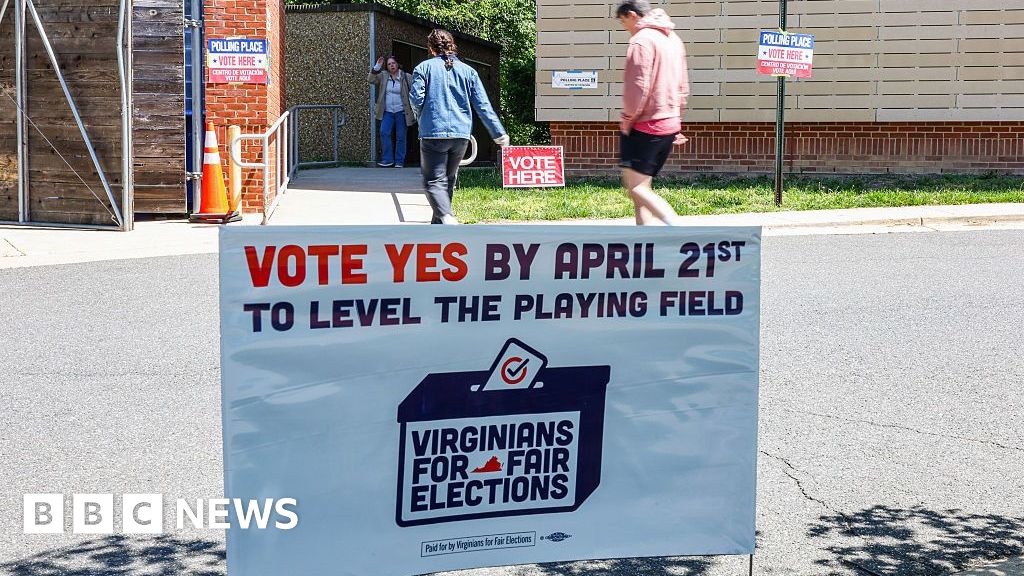
Virginia voters approved a redistricting measure that could help Democrats flip as many as four House seats and potentially raise their hold in the state from 6 of 11 seats to as many as 10. The move is part of a broader mid-decade redistricting race, with Texas, California, North Carolina, Missouri and Utah also changing maps to gain partisan advantage. The immediate market impact is limited, but the outcome could materially affect control of the U.S. House in the November midterms and the policy agenda in Washington.
The immediate market read-through is not about ideology; it is about seat math and legislative durability. Mid-decade map changes increase the probability that the House majority is decided by a handful of artificially engineered districts rather than broad national vote share, which raises the volatility of policy outcomes across taxes, healthcare, antitrust, and budget process. That uncertainty tends to compress the value of long-duration “policy beta” and favors sectors that can self-fund through either administration: large-cap defense, utilities with regulated revenue, and select healthcare names with limited legislative sensitivity.
The second-order effect is that the redistricting arms race increases the odds of a narrow, confrontational Congress even if one party wins the chamber. A razor-thin majority raises the chance of shutdowns, debt-limit brinkmanship, and last-minute continuing resolutions, which historically widen front-end Treasury volatility and support optionality around rates. It also shifts lobbying budgets toward state-level political operations, benefiting consultants, data vendors, and legal firms with election-law expertise while making state ballot initiatives a more important source of incremental demand than federal campaign spending alone.
Consensus may be underestimating how reversible this is: the map advantage matters most if turnout and legal challenges do not dilute it. Court intervention, voter backlash to overt gerrymandering, or a late-cycle macro shock that overwhelms district engineering can neutralize the edge over a 1-3 month horizon. The cleaner trade is not a directional bet on one party, but a volatility bet on governance dysfunction and a relative-value basket tilted toward companies whose earnings are least exposed to federal appropriations and regulatory whiplash.
AI-powered research, real-time alerts, and portfolio analytics for institutional investors.
Request TrialOverall Sentiment
neutral
Sentiment Score
0.10
