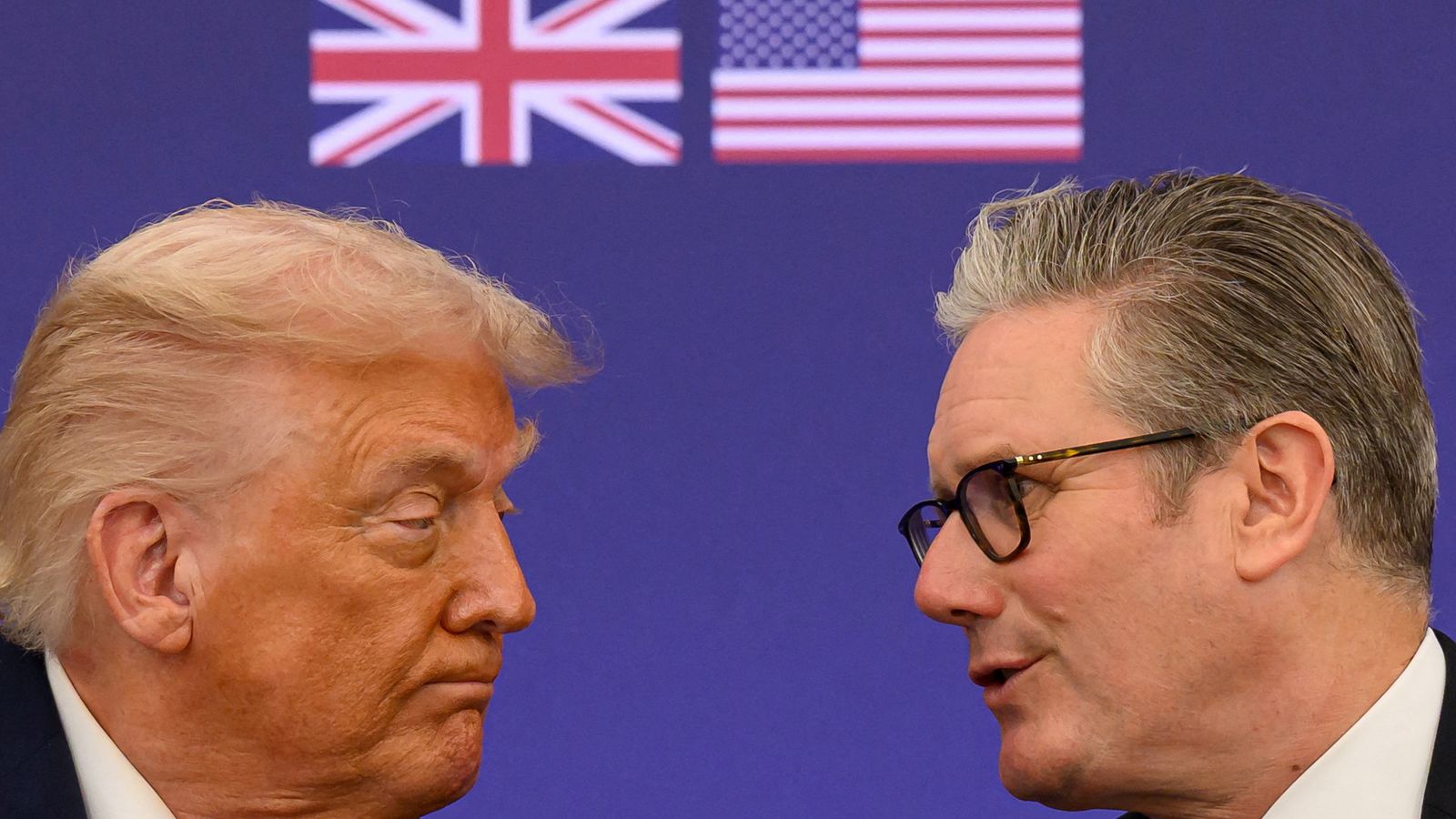
UK Prime Minister Keir Starmer is facing a sustained diplomatic strain with US President Donald Trump over military cooperation and the use of Diego Garcia, defending continued intelligence-sharing and joint operations (US planes operating from British bases; UK jets intercepting drones/missiles) while insisting any UK action on Iran have a lawful basis and a viable plan. The piece situates the current rift in a historical pattern—Suez, Vietnam, Grenada, Iraq—underscoring elevated geopolitical risk and policy uncertainty that could widen risk premia and affect assets sensitive to Anglo‑US defense coordination and geopolitical shocks.
Market structure: Geopolitical friction between the UK and US elevates demand for defense, intelligence services, and energy security products while pressuring travel, tourism and UK-centric consumer sectors. Expect a near-term 5–15% bid in large-cap defense primes (Lockheed NOC/LMT/RTX; BAE.L in UK) as emergency orders and spares are prioritized, with margin upside from supply constraints in electronics/missiles.
Risk assessment: Tail risks include a wider Middle East escalation (low probability, high impact) that could push Brent +$20–30/bbl and US 10y yields lower on safe-haven flows; immediate volatility will last days, elevated risk premia for weeks–months, and permanent defence budget uplifts over quarters–years if policy hardens. Hidden dependencies: UK-US procurement alignment, basing rights (Diego Garcia) and intelligence-sharing continuity are binary catalysts that can flip pricing power quickly.
Trade implications: Buy defense and energy vs short travel/leisure and GBP; volatility-sensitive plays (3–6m call spreads on LMT/RTX and 3m Brent call options) capture asymmetric upside while capping premium. Cross-asset: expect GBP weakness vs USD (0.5–3% range), stronger gold (GLD) as a 1–3% portfolio hedge and wider corporate bond spreads in UK financials if political friction deepens.
Contrarian view: The market may be overpricing a permanent UK-US rupture; historical parallels (Suez, post-Iraq) show relationships re-normalize within 6–18 months, which would unwind defense rallies by 15–30%. Trade with size discipline: scale into positions over 2–6 weeks, take profits on 15–25% moves and use 8–12% stops to avoid mean-reversion losses.
AI-powered research, real-time alerts, and portfolio analytics for institutional investors.
Request TrialOverall Sentiment
mildly negative
Sentiment Score
-0.25
