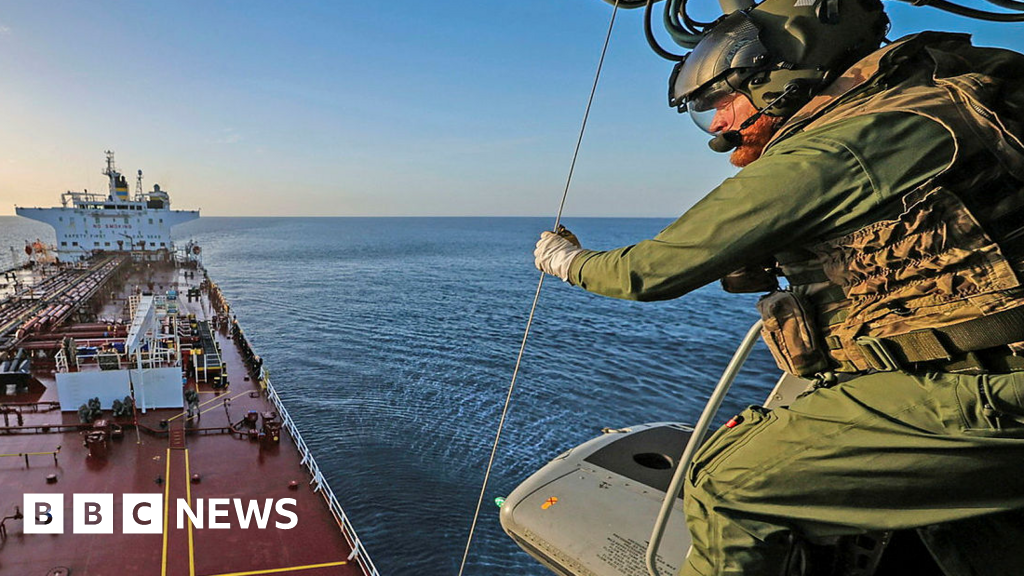
UK forces boarded the sanctioned Russian oil tanker Smyrtos in the English Channel in a six-hour first-of-its-kind operation, detaining the vessel and monitoring it off England's south coast. The action targets Russia's shadow fleet, which the MoD says carries 75% of sanctioned Russian oil and helps fund Moscow's war effort, reinforcing the UK's sanctions enforcement and defense posture. The move is politically supportive of Ukraine and could tighten scrutiny on Russian oil shipping, but the immediate market impact is likely confined to energy/shipping sentiment rather than broad markets.
This is less about one tanker and more about a regime shift in enforcement: once a G7 navy proves it can lawfully interdict a sanctions-evasion vessel in international waters, the expected cost of using the shadow fleet rises materially. The first-order effect is on Russian crude logistics, but the second-order effect is on every intermediary that monetizes ambiguity — flags of convenience, ship managers, smaller P&I insurers, and brokers that still touch sanctioned barrels. That should widen the discount on “non-compliant” export routes and force more cargoes into the narrow set of higher-quality, easier-to-police counterparties.
For energy markets, the bigger signal is not immediate lost barrels but higher friction and longer voyage times. Even a modest increase in detention risk can add days of delay, raise insurance premia, and make ship-to-ship transfer chains less efficient; that tends to steepen prompt physical differentials before it moves headline Brent. The effect is asymmetric: seaborne Russian exports can be rerouted, but the marginal buyer will increasingly demand a steeper discount, which pressures Kremlin netbacks rather than necessarily eliminating supply.
The counterpoint is that enforcement can also be catalytic for adaptation. A more aggressive UK/French posture may push the shadow fleet further offshore, into darker AIS behavior and more opaque ownership structures, reducing transparency rather than volumes. Over a 1-3 month horizon, watch for retaliation via legal challenges, diplomatic pressure, or selective maritime harassment; over 6-12 months, the real risk is policy fatigue if interdictions become politically costly or operationally stretched.
From a trading perspective, this favors relative expressions over outright oil beta: sanctions-enforcement is supportive for crude differentials and Western maritime-security beneficiaries, but not necessarily for broad energy equities if the move stays contained. The cleanest read-through is higher optionality on geopolitical escalation and modestly tighter physical balances, with the largest upside in logistics/security names and in options that monetize sudden interruption risk rather than slow trend moves.
AI-powered research, real-time alerts, and portfolio analytics for institutional investors.
Request DemoOverall Sentiment
mildly positive
Sentiment Score
0.15
