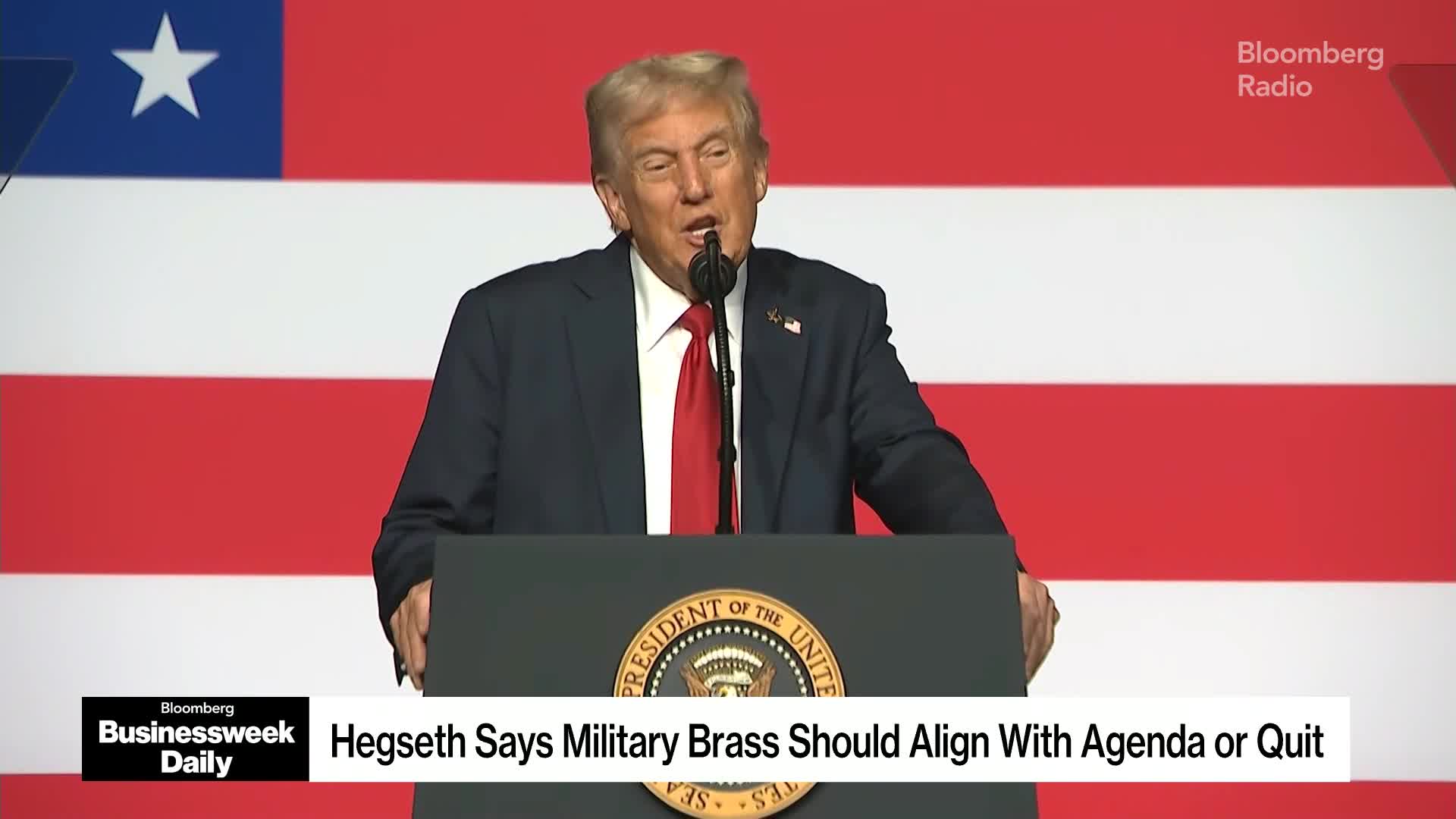
President Donald Trump informed top military brass at Marine Corps Base Quantico that the U.S. faces an 'invasion from within,' utilizing a highly unusual gathering of global officers for a largely political address. He emphasized border security and the need to combat 'woke' culture, framing these as critical domestic threats. This speech signals a focus on internal issues, diverging from traditional military defense topics and potentially indicating future policy priorities.
Former President Donald Trump's address to top military officers at Marine Corps Base Quantico signals a potential strategic pivot in U.S. national security priorities. By framing the primary threat as an "invasion from within" and emphasizing border security and cultural issues, Trump is indicating a policy direction that would shift focus and resources from traditional foreign defense commitments toward domestic matters. The characterization of the event as a "highly unusual" and "largely political speech" underscores a potential departure from conventional civil-military norms. While the immediate market impact is neutral, this rhetoric, if translated into future policy, could have significant long-term implications for the defense sector, international relations, and domestic government spending priorities. The speech directly contrasts spending on defending foreign borders with the perceived need to handle internal enemies, a theme that could reshape fiscal allocations within the defense budget.
AI-powered research, real-time alerts, and portfolio analytics for institutional investors.
Request DemoOverall Sentiment
neutral
Sentiment Score
0.00
