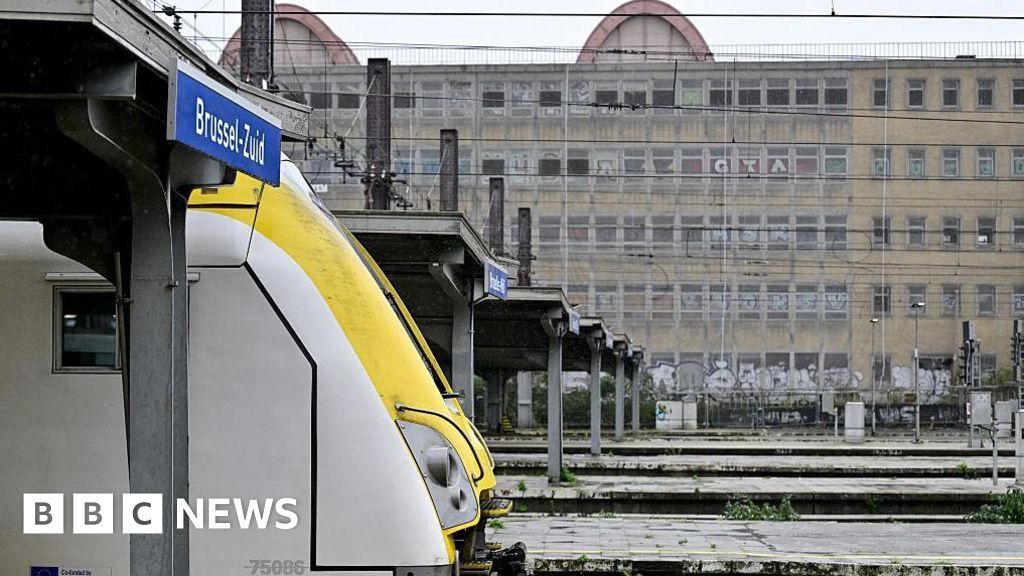
Belgium faces a three-day national strike in response to Prime Minister Bart De Wever's austerity measures aimed at reducing a 4.5% of GDP budget deficit and 104.7% of GDP public debt, with unions protesting changes to labour laws, unemployment benefits and pensions. The rolling action—trains and Eurostar disruption on Monday, public services on Tuesday and a full general strike on Wednesday—will see SNCB capacity reduced, major cancellations including all departures at Bruxelles‑Zaventem and Charleroi airports, and broad public transport interruptions, posing short‑term disruption risks to travel, logistics and domestic economic activity while increasing political uncertainty around Belgium’s fiscal consolidation.
Market structure: The strike temporarily reallocates short-haul passenger flows and urgent freight to alternate hubs (AMS, CDG) and road freight, creating 48–72h capacity constraints for Belgian logistics and a 1–3% near-term hit to retail footfall in urban centres. Belgian banks and insurers (high domestic sovereign holdings) face compressed capital and mark-to-market risk; expect intra-day and 1–2 week volatility spikes in BEL20 and KBC/AGS-equivalents of 5–12%. European travel & airport operators see idiosyncratic volume shifts but limited structural demand destruction.
Risk assessment: Tail risks include a multi-week rolling strike that forces fiscal concessions and triggers a 30–50bp sovereign spread widening or an S&P/Fitch watch; a banking funding shock is a plausible low-probability, high-impact event if spreads exceed +50bp. Time horizons: immediate (days) = operational/logistics losses and elevated dispersion; short (weeks) = credit spread repricing and earnings hits for travel/logistics; long (quarters) = political uncertainty raising structural borrowing costs by +20–40bp if reforms stall. Hidden dependencies include pharma/auto just-in-time suppliers in Belgium and counterparty exposures within Belgian banks.
Trade implications: Tactical plays favour short-duration, volatility-exposed instruments: buy Belgian sovereign protection if 10y OLO–Bund spread >+20bp; hedge BEL20 via short-dated puts; short mid-cap Belgian banks via put spreads to limit premium. Rotate modest exposure into resilient European logistics names with pricing power (target 1–2% allocation) and use FX to hedge euro downside (1-month puts) triggered by spread moves or 4% index drops.
Contrarian angles: The market often overshoots — historical Belgian strikes tend to compress within 3–10 trading days with max sovereign spread moves <50bp; a rapid policy reversal (limited concessions) would snap back bonds and bank stocks. The consensus underprices the option that austerity is resumed aggressively post-strike, which would be bullish for long-dated government paper; therefore stagger protective buys and sell into any immediate overshoot.
AI-powered research, real-time alerts, and portfolio analytics for institutional investors.
Request DemoOverall Sentiment
moderately negative
Sentiment Score
-0.45
