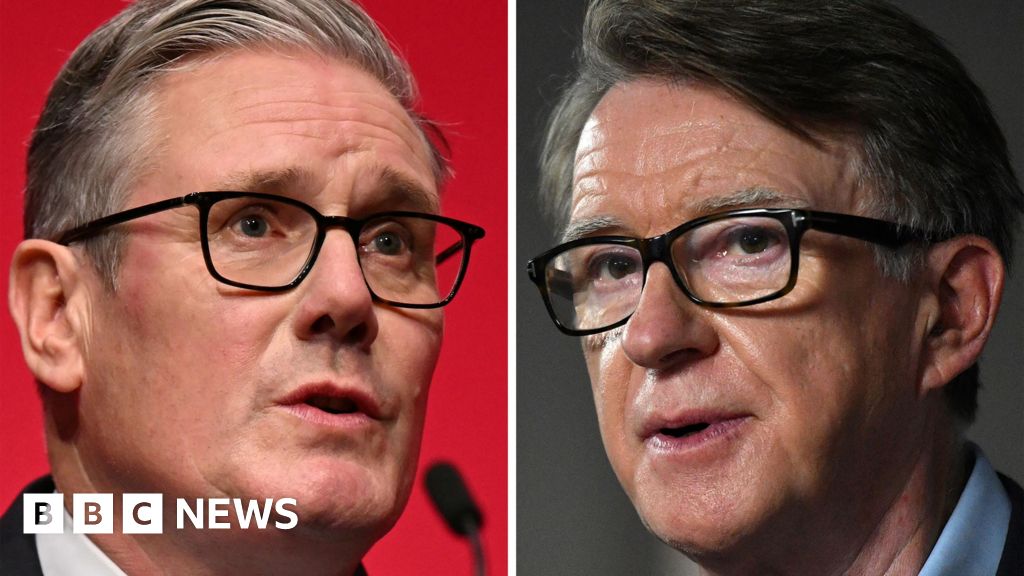
The Mandelson vetting controversy has escalated into a political crisis for Sir Keir Starmer, with the government effectively removing Sir Olly Robbins, the most senior civil servant in the Foreign Office. Starmer is expected to address Parliament, likely on Monday, about what he knew and when, after claims he was unaware of the vetting outcome. The article points to growing pressure within Labour and the opposition, but it is primarily a domestic political and governance issue rather than a direct market event.
This is a governance shock, not a policy shock, and markets usually underestimate how quickly it propagates from personnel to execution. The immediate loser is the government’s ability to control the narrative ahead of Parliament: once the story becomes “who knew what and when,” every policy lane gets slower, more defensive, and more leak-prone. That matters because weak internal coordination tends to raise the probability of future missteps in appointments, procurement, and regulatory decisions, which is more relevant for UK domestically exposed equities than the headline politics alone suggests.
The second-order effect is on the civil service / ministerial interface: a high-profile removal signals that process failures can now be punished retroactively, which should increase caution across departments. In practice, that can delay decisions on planning, infrastructure, defense, and public-sector contracts by weeks, not months, but those weeks are enough to push timing-sensitive award cycles and damp near-term sentiment in UK small/mid caps with government revenue exposure. The broader loser is any asset that trades on policy visibility—especially UK rate-sensitive assets if this feeds a fresh round of leadership speculation and headline volatility.
The contrarian view is that the market may overprice the durability of the scandal. Unless this broadens into documentary evidence that directly implicates the PM, the investment effect should fade into a short-lived volatility event rather than a regime change. The cleaner read is not “government collapse,” but “execution discount”: investors should expect a modest widening in the governance risk premium for UK domestic equities, while internationally diversified UK large caps and exporters should be relatively insulated.
Timing matters: the next 3-5 trading days are about headline gamma around parliamentary statements and leaks; the next 1-3 months depend on whether the issue metastasizes into a broader cabinet credibility problem. If it does, the trade is not a blanket UK short, but a rotation away from domestic policy beta into defensive earnings quality and global revenue streams.
AI-powered research, real-time alerts, and portfolio analytics for institutional investors.
Request DemoOverall Sentiment
moderately negative
Sentiment Score
-0.35
