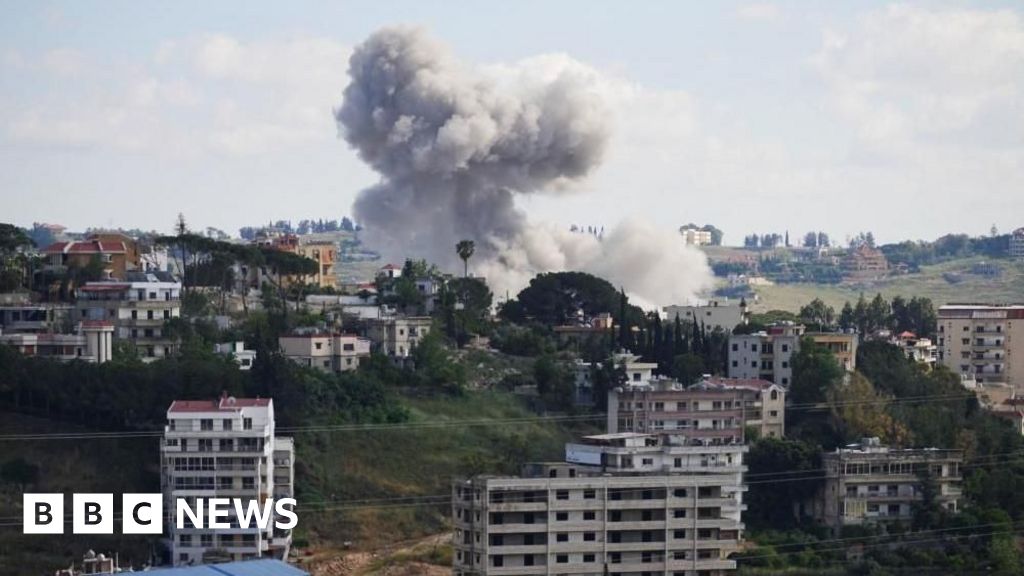
Israel said it will intensify strikes against Hezbollah, with the IDF launching a wave of attacks across Lebanon, including the Bekaa Valley and other areas. Netanyahu said the campaign has eliminated over 600 militants, while more than 400 people in Lebanon have reportedly been killed since the ceasefire period began and over 1 million have been displaced. The escalation raises the risk of a wider regional conflict and could pressure Middle East risk assets, energy markets, and broader sentiment.
This is a classic escalation regime shift, not just another airstrike cycle. The market should price a higher probability of a broader Lebanon theater, which raises the expected value of tail hedges across EM risk, regional sovereign credit, and global energy freight rather than just local equities. The first-order move may be in oil and defense names, but the second-order effect is a persistent risk premium in any asset class tied to Red Sea / Eastern Med logistics and Middle East sovereign funding costs.
The most important signal is that the marginal escalation path is now political as much as military: once leadership frames the campaign as open-ended, de-escalation becomes less likely absent a diplomatic off-ramp from Washington or a credible ceasefire package. That means the market’s time horizon should shift from days to months. If the conflict broadens to infrastructure in Beirut or Syrian transit nodes, expect a sharper impairment to Lebanese banking/FX stability and to regional reconstruction spend, while defense procurement and missile-intercept demand remain structurally elevated.
Contrarianly, the immediate market reaction may overestimate contagion into global macro unless energy infrastructure is directly hit. Hezbollah’s response set may still be asymmetric and limited by inventory constraints, which can keep headline risk high while actual physical disruption stays contained. That creates a useful setup: volatility is likely underpriced relative to event probability, but spot commodity exposure may be less compelling than convexity via options or relative-value trades tied to defense versus airlines, EM debt, and freight.
The cleanest trade expression is to own protection against a regional spillover while avoiding outright beta to the conflict narrative. The best upside comes if the confrontation forces a broader diplomatic reset; the worst case is a sequencing of incremental strikes that keeps markets nervous for weeks without a clean resolution, which tends to bleed short-vol positions and weaken local credit first before equities. In other words, the right risk is tail convexity, not directional certainty.
AI-powered research, real-time alerts, and portfolio analytics for institutional investors.
Request DemoOverall Sentiment
strongly negative
Sentiment Score
-0.80
