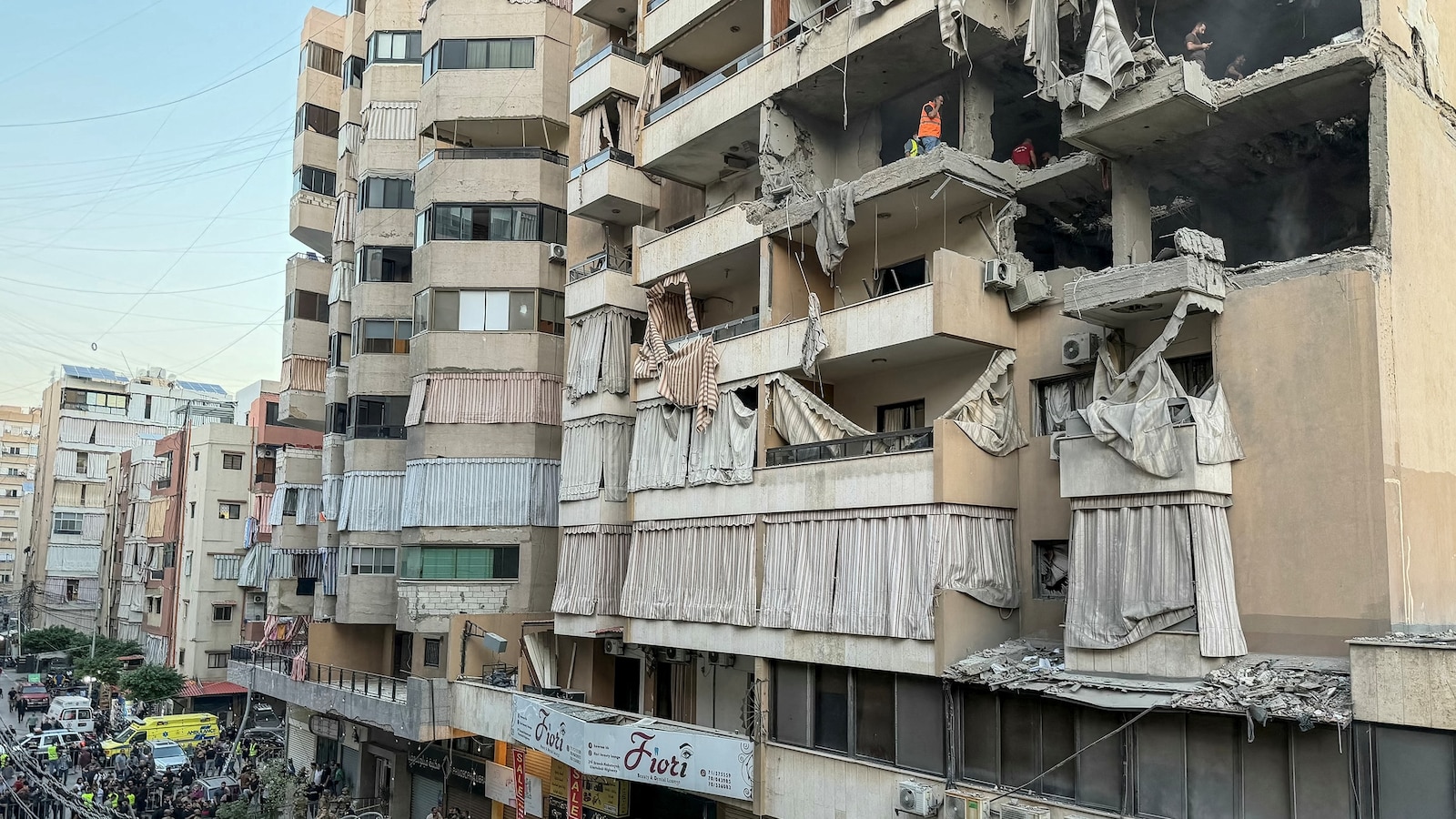
A fragile ceasefire in Gaza is broadly holding with Israeli forces pulled back to a designated 'yellow line', but renewed Israeli strikes killed dozens last week after an alleged Hamas ceasefire violation; three deceased hostages remain in Gaza amid ongoing prisoner and body exchanges. Separately, an Israeli airstrike in southern Beirut killed Hezbollah chief of staff Haitham Ali Tabataba'i and — according to Lebanon's health ministry — left five dead and 28 injured, while the IDF reported striking three fighters near the Gaza yellow line; these developments raise the risk of broader regional escalation and consequent market responses in defense, regional emerging-market assets and safe-haven instruments.
Market structure: Defense primes (LMT, RTX, GD, NOC) are the immediate beneficiaries as governments de-risk procurement timelines and can exercise pricing power on missile/air-defence contracts; expect order-book visibility and >5% upside potential in 3–12 months if escalation persists. Regional EM equities, Israeli equity/sovereign exposure (EIS, local banks) and tourism/airlines will be direct losers from risk-premium widening; oil and marine insurance-led shipping cost shocks tighten supply chains and raise commodity prices. Cross-asset: risk-off should push gold and USTs higher (10Y yield down 20–40bp in acute moves) and strengthen the USD versus regional FX, while oil could spike $5–12/bl on a broader Hezbollah/Iran involvement.
Risk assessment: Tail risk is asymmetric — a wider regional war could lift Brent >$90 (+15–30%) and trigger a 7–12% S&P drawdown over weeks. Immediate window (days): sharp volatility and flight-to-safety; short-term (weeks–months): rerating of defense capex and EM credit spreads; long-term (quarters+): potential permanent repricing of regional risk premiums and defense budgets. Hidden dependencies include shipping rerouting, insurance premiums, and semiconductor/precision manufacturing lead times that can bottleneck deliveries. Catalysts that would accelerate escalation are US direct strikes, Iranian retaliation, or major hostage-exchange breakdowns within 7–30 days.
Trade implications: Tactical long exposure to defense stocks/ETFs and convex gold/UST positions is warranted within 48–72 hours, sized 2–4% each for tactical portfolios; use 3–6 month call spreads on LMT/RTX to cap capital. Relative-value: short EIS or EEM vs long GLD/TLT to capture risk-off; buy 30–90 day put spreads on EEM or EMB (EM credit) if EMBIG widens >50bp. Entry: act now for hedges, add to defense/inflation-hedge positions on confirmed escalation for 1–12 month hold; de-risk if VIX <18 and 10Y >4.0%.
Contrarian angles: Consensus may overpay defense equities on headline risk — if ceasefire holds for 30 days expect 6–12% mean reversion; consider shorting recent jumpers on 4–8% conviction after a 30-day calm. Historical parallels (2014 Gaza/2019 skirmishes) show spikes in oil/gold and temporary EM underperformance that mean-reverted in 1–3 months absent Iran escalation. Unintended consequences: persistent higher insurance/shipping costs and trade frictions can slow global growth and hurt cyclicals even if military escalation remains limited.
AI-powered research, real-time alerts, and portfolio analytics for institutional investors.
Request DemoOverall Sentiment
strongly negative
Sentiment Score
-0.60
