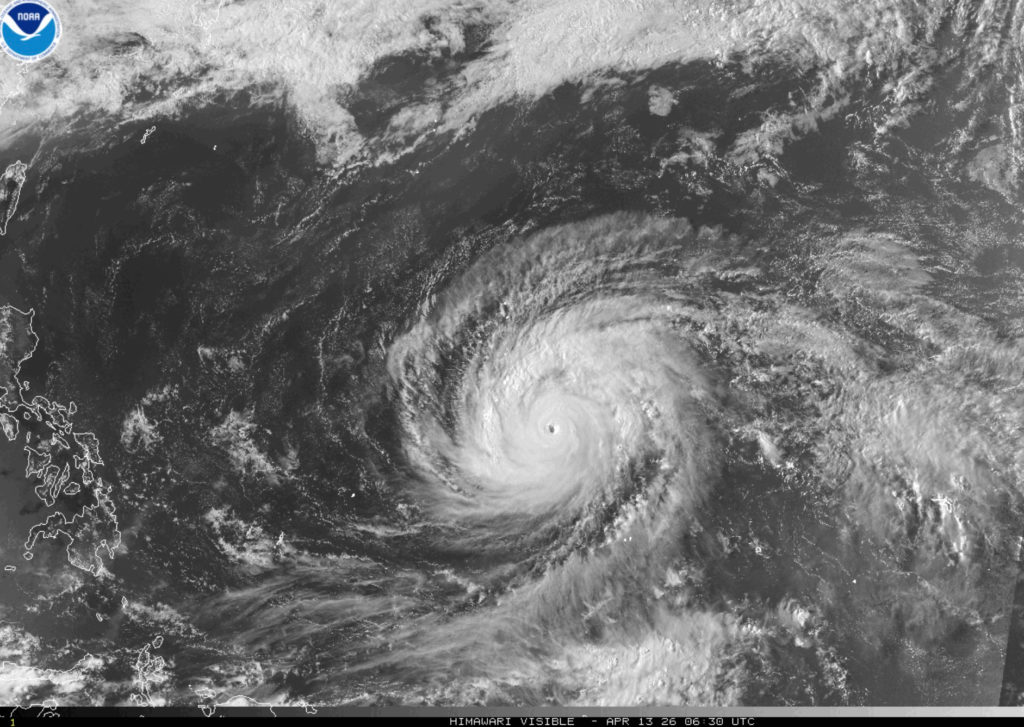
Super Typhoon Sinlaku is forecast to pass over or near Tinian and Saipan late Tuesday as a Category 4 or 5 storm, with sustained winds of 173 mph and risks of widespread flooding, destructive winds, and prolonged power outages. Guam is already seeing heavy rain and gusts up to 60 mph, while emergency disaster declarations have been approved for Guam and the Northern Mariana Islands and FEMA has deployed nearly 100 staff plus other federal personnel. The event poses meaningful disruption risk to critical U.S. military infrastructure in the Pacific, though the broader market impact should remain localized.
The market implication is not the storm itself; it is the clustering of operational fragility around a thinly supplied logistics node. Guam and Saipan are small in absolute economic terms, but they sit on critical Pacific defense and transport infrastructure, so any multi-day outage can create disproportionate knock-on effects in military readiness, emergency logistics, and repair spending. The first-order macro impact is modest, but the second-order effect is a forced reprioritization of maintenance, fuel, generators, and telecom resilience across other island bases and coastal facilities. The more interesting setup is in defense contractors, utilities, and industrial suppliers with exposure to hardening infrastructure rather than clean-up alone. If power restoration is slow, the incremental spend shifts toward transformers, switchgear, backup generation, temporary communications, and engineering services—areas where margins can improve because urgency lowers procurement discipline. The downside is for local tourism and small-cap regional exposure, but that is mostly uninvestable; the tradeable angle is in companies that benefit from post-event resilience capex across federal and military budgets. The fiscal backdrop matters: disaster response funding is still available, but repeated events in strategically sensitive territories increase the probability of supplemental appropriations and deferred maintenance funding later in the year. Consensus likely underestimates how quickly a single severe event can accelerate procurement cycles at DoD and DHS, especially if the base network experiences any fuel, runway, or telecom disruption. The contrarian risk is that if the storm tracks just offshore and restoration is fast, the “resilience spend” thesis fades within days, so this is a catalyst-driven trade rather than a durable thematic until damage assessments are clearer.
AI-powered research, real-time alerts, and portfolio analytics for institutional investors.
Request DemoOverall Sentiment
moderately negative
Sentiment Score
-0.45
