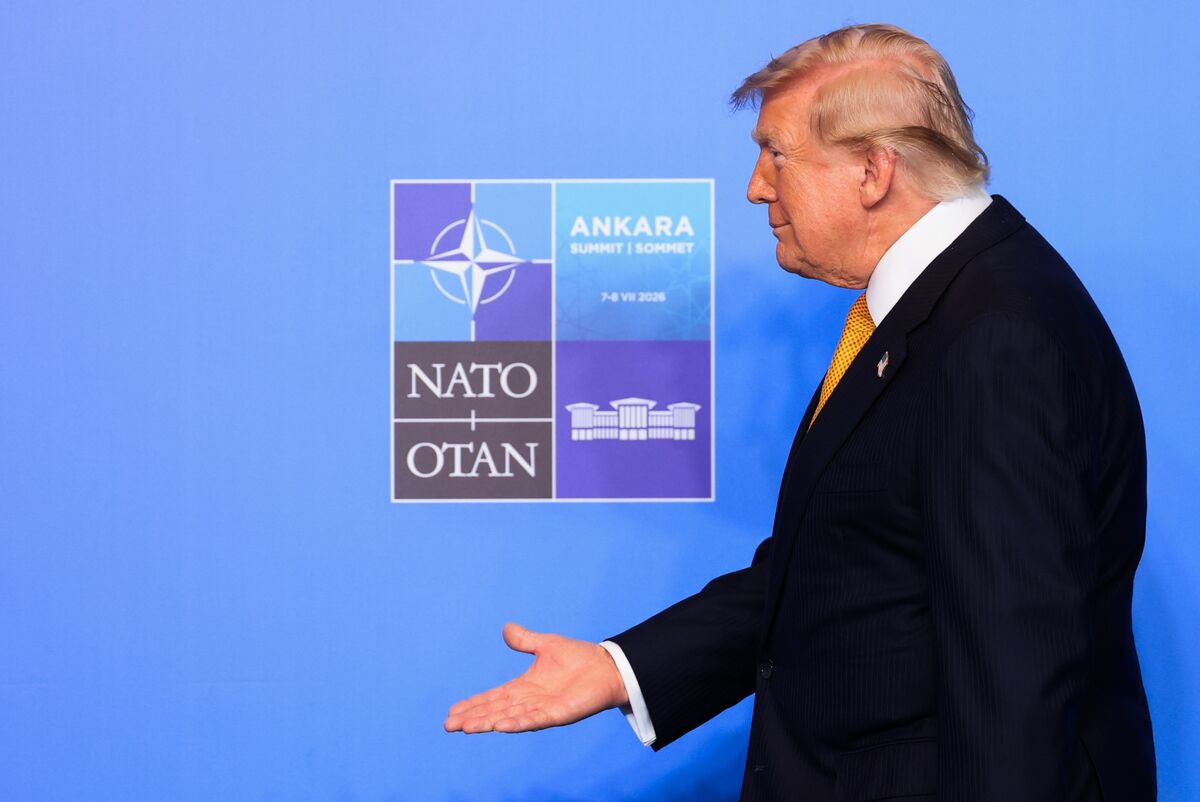
At NATO’s closed-door session, Donald Trump spent much of his time pressing allies over Iran, saying the US is no longer pursuing regime change and renewing warnings tied to Europe’s stance. He also highlighted Europe’s migration challenge and complained that European partners have not supported the US sufficiently in its Iran-related conflict. While no concrete policy numbers were announced, the rhetoric increases geopolitical uncertainty around Iran and potential downstream spillovers for European risk sentiment.
This is less a direct geopolitical catalyst than a signal that U.S. policy toward Iran and Europe is becoming more transactional and less predictable. The immediate market effect is likely limited, but the option value of surprise rises: that usually supports a modest geopolitical premium in crude, a bid for U.S. defense primes, and a discount for European risk assets tied to stable transatlantic coordination.
The second-order issue is sanction sequencing. If Washington leans harder on Iran without a broad allied front, compliance costs and supply-chain friction rise for European refiners, shippers, and industrials with Middle East exposure, while U.S. energy and defense names capture the relative benefit. The bigger macro channel is not war probability; it is cross-Atlantic policy friction, which can pressure the euro and keep European cyclicals underperforming on any escalation in rhetoric.
Contrarianly, the market may be treating this as pure noise when the more important signal is bargaining leverage. Closed-door pressure on Europe often precedes actual asks on NATO spending, sanctions enforcement, and migration cooperation; that creates a 1-3 month window where headlines can repeatedly reprice defense, energy, and FX without a clean directional trend. If no concrete policy follows within 2-4 weeks, the trade likely fades; if sanctions or burden-sharing measures appear, the theme can persist for months.
AI-powered research, real-time alerts, and portfolio analytics for institutional investors.
Overall Sentiment
mildly negative
Sentiment Score
-0.25
