
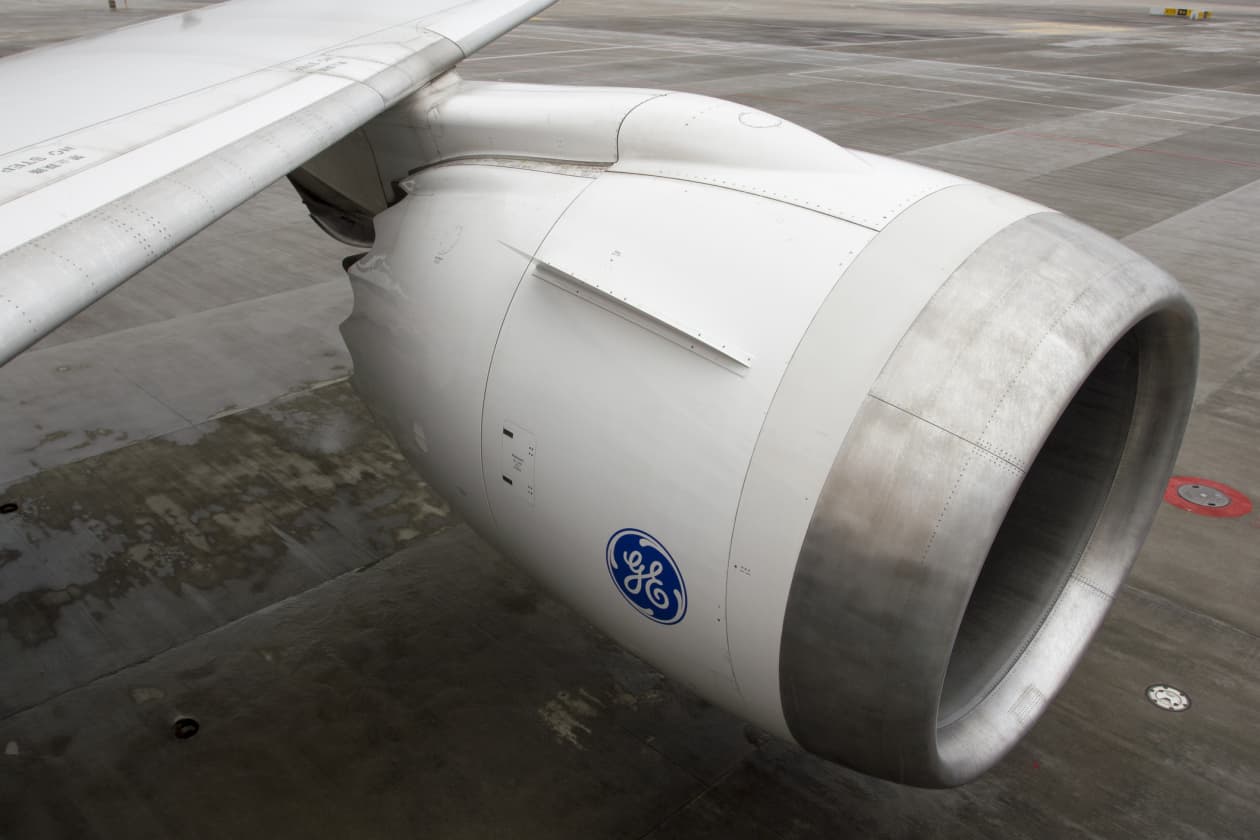
GE Aerospace lifted its full-year profit outlook, but shares fell as its booming order growth showed signs of cooling from the very rapid pace seen in prior quarters. The guidance change contrasts with the company’s prior reluctance to raise forecasts due to uncertainty around fuel prices and the potential impact on air-travel demand amid the Iran conflict.
The market is reacting less to the higher profit outlook than to the signal embedded in the order cadence: this franchise is still compounding, but the slope of the backlog build is normalizing. That matters because GE is now priced more like a quality industrial compounder than a reopening cyclical, so any hint that bookings are no longer accelerating can compress the multiple even when earnings estimates move up. In the near term, the stock can stay under pressure if investors conclude the order pace peak is behind it.
The better read is that the core business is shifting from headline order growth to conversion quality. For GE, sustained free cash flow and aftermarket mix are what matter over the next 6-12 months; a slower order tape is only a real problem if it precedes weaker engine utilization, deferred deliveries, or softer spare-parts demand. That would also spill over to peers with similar exposure to aviation capex and MRO, especially RTX/Pratt and Safran, where sentiment can de-rate if the entire engine cycle looks less tight.
Contrarian view: consensus may be over-penalizing a normalization that was always likely after several strong quarters. A guidance raise tells you management still sees enough pricing and mix support to offset any moderation in bookings, which argues against shorting the name outright unless the next print shows a second consecutive deceleration in orders and services. The thesis breaks if the next quarter’s backlog conversion, FCF, or margin guide fails to improve despite the higher earnings outlook.
AI-powered research, real-time alerts, and portfolio analytics for institutional investors.
Overall Sentiment
mildly negative
Sentiment Score
-0.15
Ticker Sentiment
