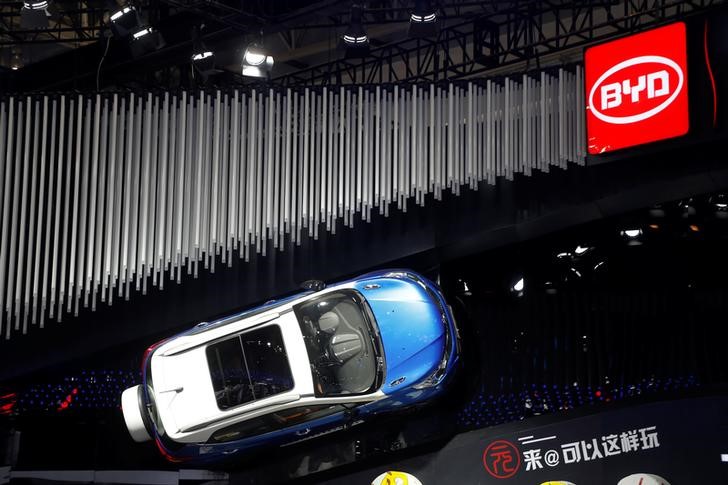
Morgan Stanley says Chinese auto demand may be near a floor, but a meaningful recovery is unlikely before late summer. The bank estimates Q2 passenger vehicle wholesale volumes at 6.7 million to 6.9 million units, down 3% to 5% year over year, an improvement from Q1's 8% decline. It flagged BYD and Geely as relatively well positioned, while warning that July remains seasonally soft and premium brands face intensifying competition.
The key setup is not a broad auto rebound; it is a rotation within Chinese auto exposure from premium to value and from weak OEMs to those with stronger software/EV ecosystems. If the channel really is stabilizing, the first beneficiaries are suppliers and large-volume names with pricing power over batteries, power electronics, and software stacks — not the most cyclically levered luxury brands. That means the market may be underestimating how much of any second-half improvement gets captured upstream rather than at the OEM equity level.
For XPEV, the story is event-driven because the equity is now more dependent on launch cadence and execution credibility than on sector beta. That creates a convex setup: upside can be sharp if a new model lands well or policy support extends into late summer, but the downside remains asymmetric if delivery momentum disappoints even modestly. The important second-order effect is that AI and platform-enabled auto names can temporarily out-absorb capital from legacy automakers, which can keep valuation dispersion wide even if the macro data improve.
A notable contrarian point is that the market may be too willing to price a demand floor before inventory and incentive channels fully normalize. June can look better on paper due to promotions and policy pulls, but that often front-loads demand and leaves July soft; the real test is whether August/September orders hold without extra subsidy intensity. If they do not, this becomes less a cyclical bottom and more a prolonged margin compression regime, especially for brands without strong ADAS differentiation or residual-value support.
AAPL is the incidental loser here because sentiment is rotating into AI/industrial names with clearer near-term catalysts, which can keep pressure on mega-cap tech leadership even if fundamentals are unchanged. The broader risk is positioning: a crowded consensus around AI beneficiaries and a crowded skepticism toward autos can make the first positive surprise in Chinese vehicle data disproportionately explosive, but only for the names with the cleanest operating leverage and best execution record.
AI-powered research, real-time alerts, and portfolio analytics for institutional investors.
Request DemoOverall Sentiment
mildly negative
Sentiment Score
-0.15
Ticker Sentiment
