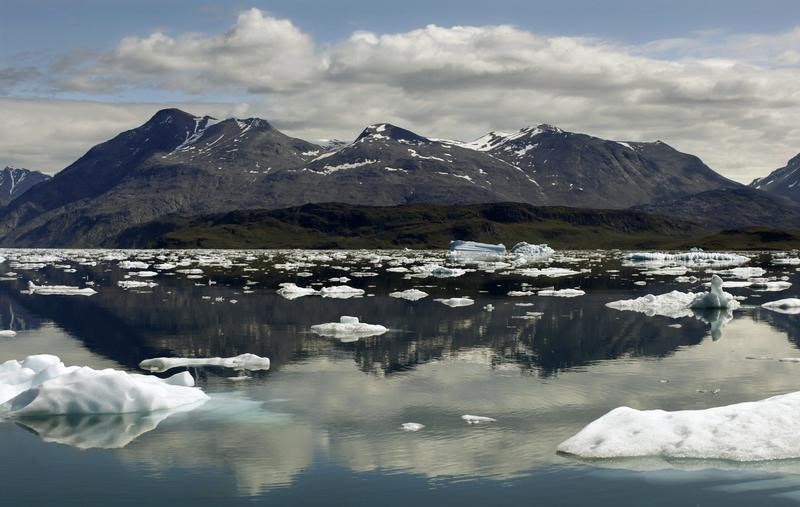
Japan is preparing to send a delegation to Greenland this summer to assess potential rare earth extraction, with officials from METI, trading companies, and Japan Organization for Metals and Energy Security expected to participate. The move reflects Japan’s effort to diversify access to critical minerals used in EVs, wind turbines, electronics, and defense equipment amid concentrated global supply chains. The article is mostly strategic and policy-oriented, with limited immediate market impact.
This is less a Greenland-specific story than a broader signal that critical-mineral security is moving from policy rhetoric to balance-sheet reality. A credible Japanese push into Arctic supply would likely pressure the market to re-rate non-China rare-earth assets with permitting optionality, even before ounces are drilled, because strategic buyers tend to pay for jurisdictional diversification long before projects reach meaningful production. The second-order effect is that capital may rotate toward the “tooling and infrastructure” layer of the supply chain — processing, separation, logistics, and enabling equipment — where time-to-revenue is shorter than for miners.
The most important beneficiary is not necessarily the eventual mine operator, but the ecosystem that helps de-risk early-stage supply: engineering, automation, advanced manufacturing, and compute-heavy optimization. That’s where the link to SMCI and APP matters at the margin: if sovereign procurement and industrial policy accelerate mine-development cycles, data/compute demand rises for simulation, design, remote ops, and supply-chain planning, while AI-driven workflows become embedded in resource allocation. The market usually underprices how much of a critical-mineral campaign is actually a software and industrial digitization story.
Consensus will likely focus on “more supply,” but the near-term constraint is processing, not rock. Even if Greenland proves attractive, the path to meaningful output is multi-year and politically noisy, so the first tradeable reaction is in adjacent names with existing capacity or industrial leverage rather than pure exploration beta. The risk is that diplomatic friction, permitting delays, or local opposition turn this into a headline cycle only; if that happens, the opportunity is in fading the most levered speculation rather than chasing it.
Over 6-18 months, the key catalyst is whether Japan translates this into offtake MOUs, JV structures, or financing support. Those would signal a genuine strategic stack-up and could create a multiple expansion in the rare-earth complex despite limited near-term volume changes. If no concrete structures emerge by late summer, the trade becomes a sentiment fade.
AI-powered research, real-time alerts, and portfolio analytics for institutional investors.
Request DemoOverall Sentiment
mildly positive
Sentiment Score
0.15
Ticker Sentiment
