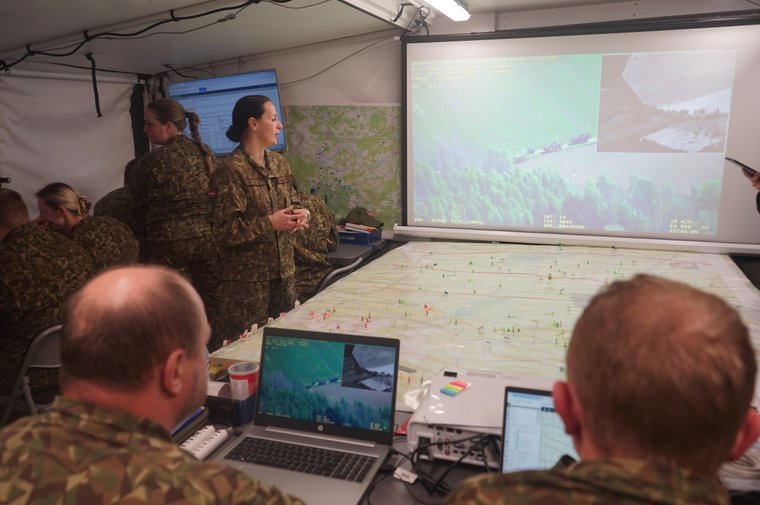
NATO’s Crystal Arrow 2026 and Spring Warrior exercises in Latvia will involve more than 4,700 soldiers and roughly 800 pieces of equipment, including an evaluation of uncrewed systems. The drills underscore NATO’s shift in concepts of operations based on lessons learned from Ukraine, with a focus on conventional warfare and defensive operations. The article is largely factual and has limited near-term market impact beyond the defense and autonomy space.
This is less a near-term demand shock than an institutionalization of wartime learning: NATO is validating a doctrine shift toward cheap, attritable systems that can be rapidly fielded, networked, and sacrificed in volume. The commercial implication is that the highest-beta beneficiaries are not the prime contractors selling exquisite platforms, but the firms enabling autonomy stacks, secure comms, edge compute, EO/IR, and jamming-resilient control links. That mix tends to compress procurement cycles and broaden the supplier base, which favors mid-cap electronics and software-heavy names over legacy platform integrators.
Second-order winner sets are in the electronic warfare and counter-UAS ecosystem. As uncrewed usage scales, defensive countermeasures usually grow faster than the offensive fleet because every drone purchase creates a matching need for detection, classification, and defeat. That dynamic can lift budget share for sensors, RF systems, and expendables even if headline defense spending is flat; the supply chain implication is higher demand for semiconductors, specialized antennas, and ruggedized embedded systems with multi-quarter lead times.
The key contrarian point is that the market may overestimate the durability of a simple "drones up, legacy defense down" trade. In practice, militaries rarely replace armor and artillery; they layer drones on top, which supports a broader defense capex cycle rather than a binary substitution. The real risk is procurement slippage: if these exercises do not translate into funded orders within 6-18 months, the market could fade the thematic premium quickly, especially for smaller pure-plays with thin order books.
AI-powered research, real-time alerts, and portfolio analytics for institutional investors.
Request DemoOverall Sentiment
neutral
Sentiment Score
0.05
