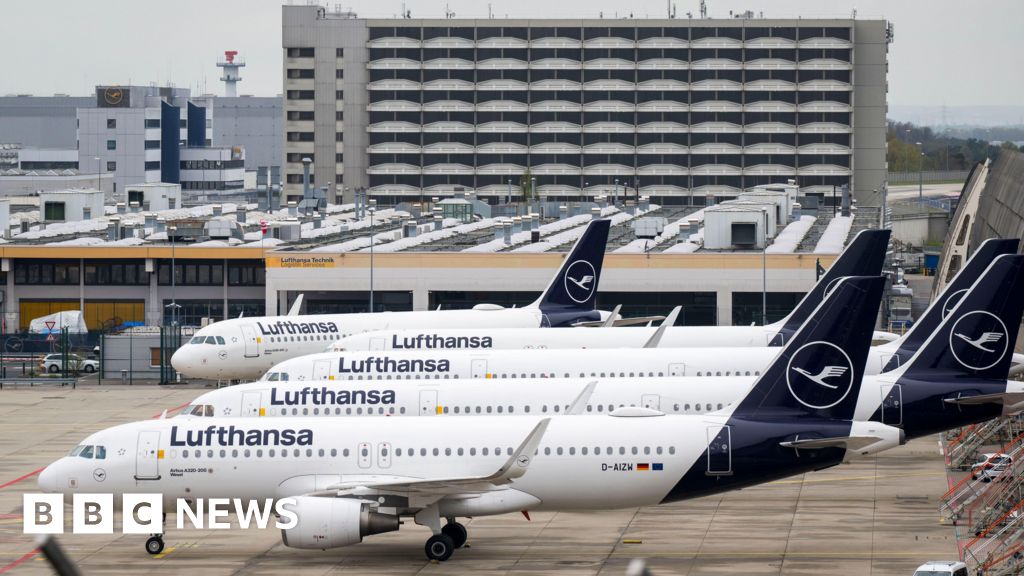
Lufthansa is cutting 20,000 short-haul summer flights as jet fuel prices have doubled since the start of the US-Israel war with Iran, making many routes unprofitable. The airline says the cuts will save about 40,000 metric tons of jet fuel, but it is also trimming its European network and retiring 27 CityLine aircraft amid higher kerosene costs and labor disputes. The article points to broader pressure on European airlines and travelers, with further ticket increases and cancellations possible if fuel disruptions persist.
The first-order read is obvious: higher jet fuel acts like an immediate tax on European short-haul capacity, but the second-order effect is more interesting — it likely accelerates rationalization of structurally weak point-to-point flying and widens the moat for the largest network carriers with long-haul mix and better hedging. Airlines with limited pricing power and high labor rigidity will be forced to shrink capacity faster than demand falls, which supports near-term fare inflation even as load factors soften. That dynamic is usually good for the strongest balance sheets and bad for the marginal operators that rely on dense summer utilization to absorb fixed costs.
The market is probably underestimating how quickly this can spill into adjacent travel names. If short-haul connectivity deteriorates, hotels and airport retailers in secondary European cities see a double hit: fewer arrivals and weaker same-day business travel. Meanwhile, cargo belly capacity tightens as passenger schedules are trimmed, which can transiently improve air freight yields but also raises costs for time-sensitive supply chains and e-commerce shippers.
From a timing perspective, this is a weeks-to-months catalyst, not a years-long thesis unless Hormuz-related disruption persists. The key reversal variable is not just geopolitics; it is whether governments and airlines can source alternative jet fuel barrels fast enough to normalize refining spreads and whether fuel hedges blunt the next two quarters. If supply fear fades but carriers have already cut capacity, the industry could briefly enjoy better yields before consumer demand elasticity shows up in bookings.
Consensus may be too focused on airline pain and not enough on the subsidy to pricing power across the sector. The bigger asymmetry is that weaker carriers are being forced to remove seats before the peak season, which can leave the remaining schedule tighter than demand would otherwise justify. That is supportive for the strongest network airlines and for airport/slot-constrained assets, while the weaker low-cost and regional operators face an earnings downgrade cycle that can persist into the autumn shoulder season.
AI-powered research, real-time alerts, and portfolio analytics for institutional investors.
Request TrialOverall Sentiment
moderately negative
Sentiment Score
-0.45
