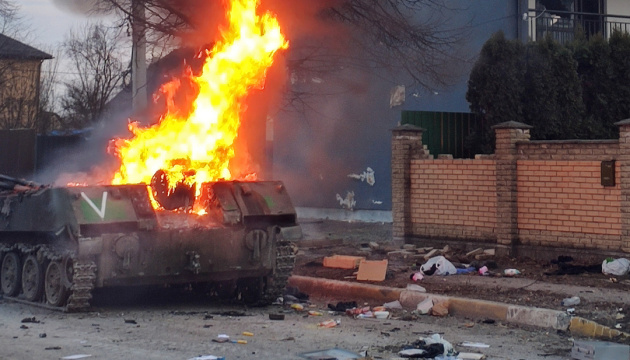
The General Staff of the Ukrainian Armed Forces reported Russia has suffered approximately 1,244,560 casualties from Feb. 24, 2022 to Feb. 6, 2026, including 720 killed or wounded in the past 24 hours. Ukrainian forces claim destruction of 11,648 (+6) tanks, 24,007 (+11) armored fighting vehicles, 37,014 (+39) artillery systems, 1,637 (+1) multiple rocket launchers, and notable losses in air and support systems (435 warplanes, 347 helicopters, 125,920 (+826) tactical UAS and 77,311 (+162) vehicles and fuel trucks); figures are being continuously updated. Persistent attrition at these levels sustains regional risk premia and keeps focus on defense supply chains and investor sentiment toward emerging-market and energy-exposed assets.
Market structure: Sustained high attrition (720 casualties/day; >1.24M total) signals persistent demand for heavy weapons, munitions, tactical drones and logistics vehicles. Winners: large U.S. primes (LMT, RTX, GD, NOC, LHX) and specialized munitions/materials producers (OLN, NUE) who gain pricing power and backlog visibility; losers: Russian-facing suppliers, commercial aerospace (BA) and travel names exposed to risk-off. Cross-asset: expect near-term oil/gas volatility (spikes >$10/barrel on escalations), USD safe-haven flows, EUR and regional sovereign spreads widening, and elevated equity option implied vol for defense/energy names.
Risk assessment: Tail risks include NATO direct engagement or broad energy embargoes that could send Brent >$120/barrel and trigger a global growth shock; cyberattacks on logistics could squeeze supply chains. Immediate (days) = commodity/FX spikes and risk-off; short term (weeks–months) = firming defense order books and order flow; long term (years) = a sustained rearmament cycle but procurement delays and inflation risks. Hidden dependencies: U.S. supplemental aid votes, semiconductor/ammo inputs, and European winter gas inventories are binary catalysts.
Trade implications: Lean overweight defense primes (1–2% positions) funded by trimming cyclical industrials and commercial aerospace; add selective materials (OLN, NUE) and a modest energy futures/options position (Brent). Use 6–9 month calls on primes to capture contract awards, 3-month Brent call spreads to express commodity spikes, and a small S&P put-spread as escalation insurance. Entry: buy on pullbacks >5%; exit/trim on >20% outperformance or if U.S. funding stalls.
Contrarian angles: Consensus may overpay large primes—mid/small-cap specialists with priced-in backlogs trading <8x EV/EBITDA could rerate if execution proven. If conflict stabilizes, oil and defense equities could retrace 15–30%—overbought positioning creates mean-reversion trades. Unintended consequence: higher defense capex raises inflation and interest-rate risk; reduce duration exposure if rearmament proves long-lived.
AI-powered research, real-time alerts, and portfolio analytics for institutional investors.
Request DemoOverall Sentiment
moderately negative
Sentiment Score
-0.40
