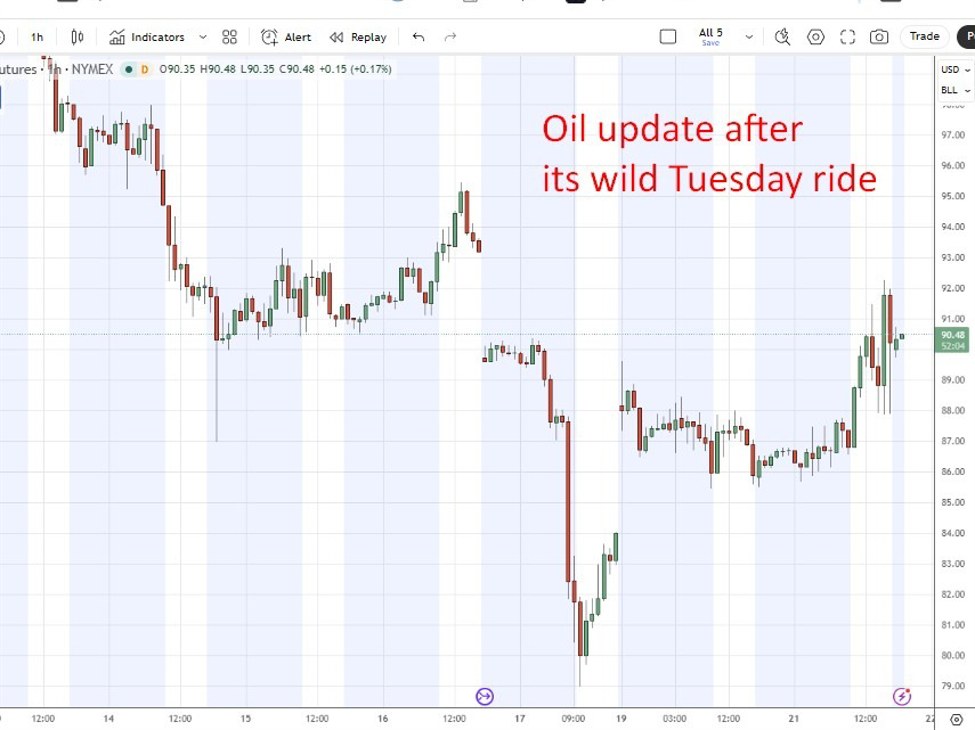
More than 30 countries will meet in London to advance military plans for reopening the Strait of Hormuz, with talks focused on capabilities, command structures, and deployment logistics. The proposed mission would only proceed after a sustainable ceasefire, highlighting elevated geopolitical and shipping-disruption risk around a critical energy chokepoint. The multinational coordination underscores the strategic importance of Hormuz to global oil and trade flows.
The market implication is less about an immediate reopening than about the probability-weighted removal of the worst tail: a multi-week closure scenario becomes harder to price when a coalition is actively designing the security architecture. That should compress the geopolitical risk premium in front-month energy, but only modestly unless there is visible on-the-water deployment; the first-order effect is likely a fade in implied volatility rather than a clean directional move in spot crude.
The bigger second-order winner is not producers but the logistics stack that benefits from any restoration of route certainty: tanker operators, marine insurers, and port/terminal names with exposure to rerouting normalization. If the mission is framed as contingent on a sustainable ceasefire, the setup also lengthens the window where shipping inventories remain precautionary, supporting charter rates and insurance pricing even before barrels move. By contrast, airlines, chemicals, and other energy-intensive cyclicals get a near-term relief bid if oil vol mean-reverts, but only if the corridor narrative stops escalating.
A key risk is that the coalition planning itself can be read by adversaries as escalation, increasing the chance of asymmetric retaliation before any deployment. That means the highest-probability market path over days is choppy risk-on/risk-off around headlines, while the more important catalyst sits 2-8 weeks out: whether there are concrete rules of engagement and force composition. If talks stall or the ceasefire proves fragile, the market will quickly reprice the closure tail and push crude vol back up.
Consensus may be underestimating how asymmetric the options setup is: spot can drift lower on de-risking, but a failed mission or renewed strikes can gap energy and shipping exposure sharply higher. The better expression is volatility rather than outright beta, because the coalition’s existence reduces the odds of a true supply shock while preserving meaningful downside if diplomacy fails. In that regime, short-dated hedges are likely to decay unless tied to a clear trigger.
AI-powered research, real-time alerts, and portfolio analytics for institutional investors.
Request TrialOverall Sentiment
mildly negative
Sentiment Score
-0.15
