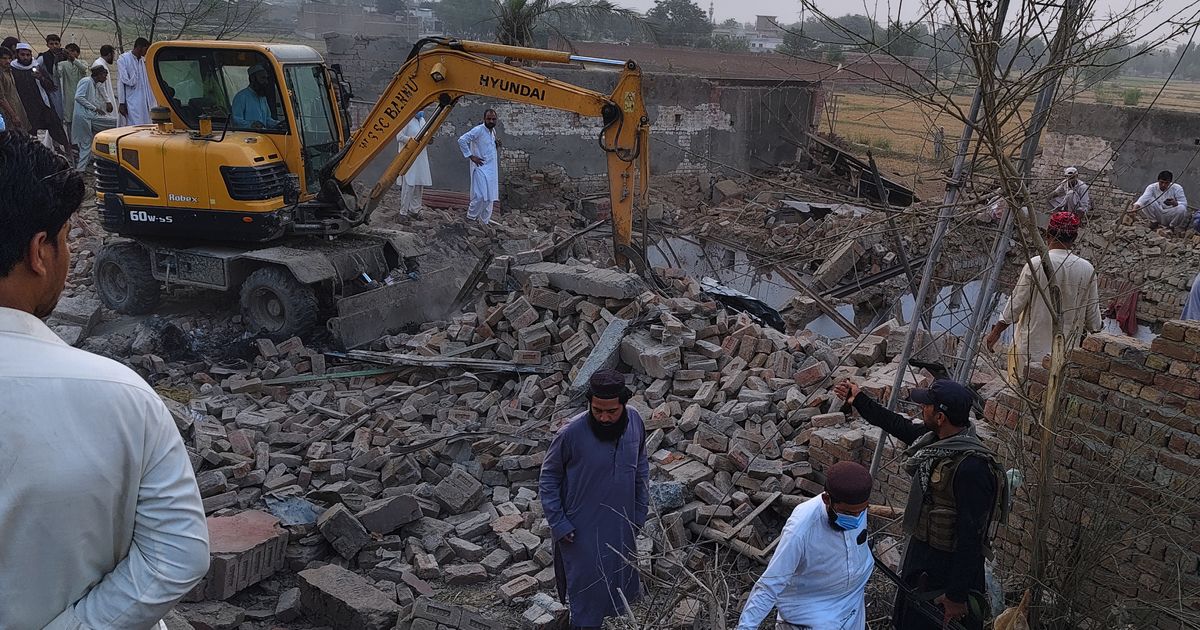
A suicide attack on a police post in northwest Pakistan killed 14 officers and wounded 3 more, with a breakaway militant group claiming responsibility. The incident underscores rising militant violence in Pakistan and ongoing cross-border tensions with Afghanistan, including repeated clashes since late February. The event is a localized security shock but has broader implications for regional stability and defense risk.
This is not a one-off local security event; it is another datapoint that Pakistan’s internal security premium is becoming persistent rather than episodic. The second-order effect is a higher probability of broader counterinsurgency spending, emergency procurement, and a longer drag on provincial investment in Khyber Pakhtunkhwa and adjacent transport corridors, which are already the weak links in Pakistan’s logistics network. Over a 1-3 month horizon, the market impact is mainly through sovereign risk perception, FX pressure, and a wider spread for Pakistan-linked credit, not through any single listed name.
The more important catalyst is retaliatory escalation along the Pakistan-Afghanistan frontier. If Islamabad responds with sustained cross-border strikes or tighter border controls, the near-term winners are domestic security contractors and arms suppliers, while the losers are freight operators, informal trade, and any business exposed to transit flows through Torkham/Bannu-adjacent routes. Over 3-12 months, persistent violence raises the odds of delayed IMF implementation, weaker tax collection, and higher domestic borrowing needs — a classic negative loop for local equities and the PKR.
The consensus may be underpricing how quickly these incidents can morph from security headlines into macro stress. The risk is not just more attacks, but a policy overreaction that disrupts trade with Afghanistan and complicates already fragile external financing, which can widen Pakistan CDS and pressure eurobonds even if the headline attack frequency stays contained. Conversely, if the current crackdown is paired with credible de-escalation with Kabul and uninterrupted IMF disbursements, the market can fade the event risk within weeks — but that requires a cleaner policy response than Pakistan has typically delivered.
For global portfolios, this is a short-duration risk-off signal for frontier/EM exposure rather than a broad EM selloff. The best expression is to avoid adding Pakistan risk until the next IMF review and border-security data confirm stabilization; the second-best is to use any bounce in Pakistan sovereign paper to reduce exposure. On the positive side, defense and surveillance beneficiaries in regional supply chains may see incremental orders, but this is too idiosyncratic to justify chasing without a clearer procurement signal.
AI-powered research, real-time alerts, and portfolio analytics for institutional investors.
Request DemoOverall Sentiment
extremely negative
Sentiment Score
-0.85
