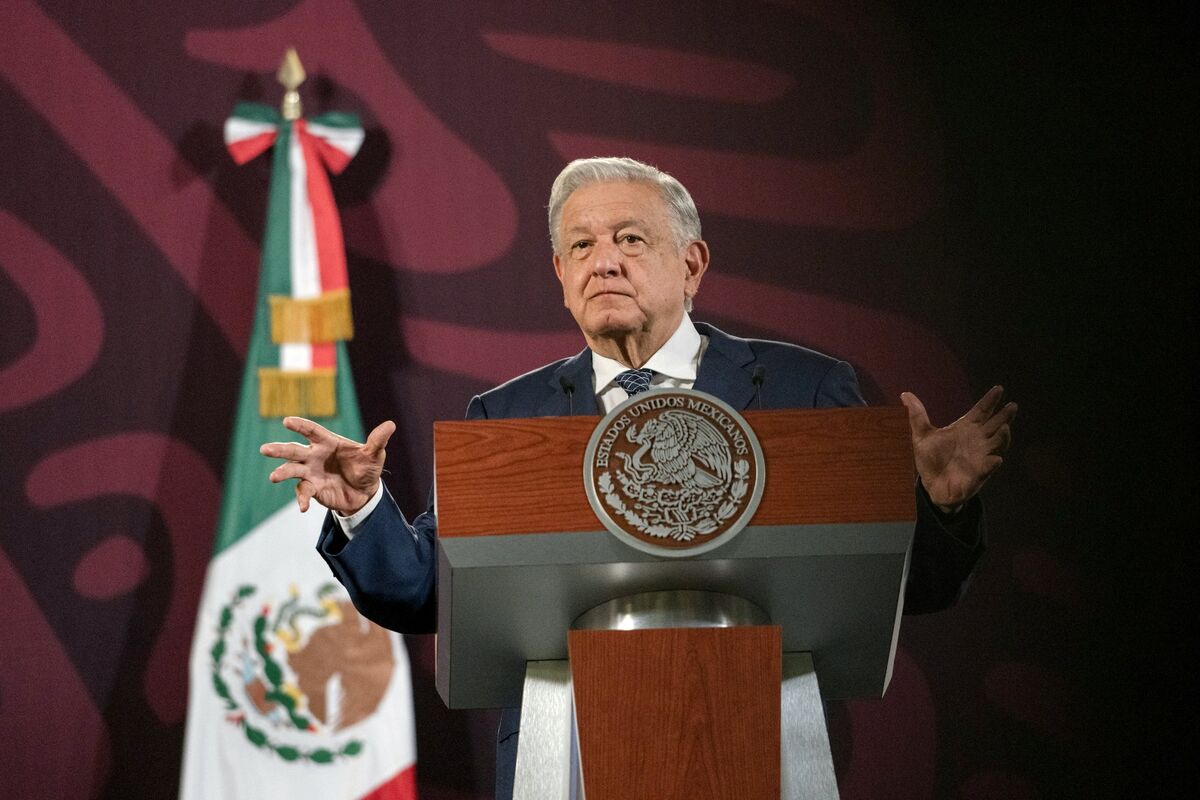
Former Mexican president Andrés Manuel López Obrador resurfaced in a near-50 minute YouTube video to promote a book on indigenous ancestry, defend his administration's record on reducing inequality and poverty, and criticize predecessors' 'neoliberal' policies. He announced his decision to retire from politics and live at his family's country home, framing it as a step to avoid feeling 'irreplaceable.' The appearance is notable for political narrative and legacy-setting in Mexico but contains no fiscal or economic data likely to materially move markets.
Market structure: AMLO’s low-key reappearance and stated retirement reduces an acute tail of leader-centric uncertainty but preserves policy continuity risk (energy nationalism, strong social spending). Winners in the short run are Mexico-sensitive equity ETF flows and peso carry trades if implied volatility compresses; losers are domestic private-energy and telecom firms that rely on liberalization hopes. Competitive dynamics: lower probability of near-term structural reform preserves incumbent state-owned pricing power (Pemex/CFE de‑facto advantage), constraining market share gains for private rivals over the next 6–18 months. Risk assessment: immediate market impact is minimal (days) but conditional tail risks are material — e.g., AMLO reasserts influence or a successor doubles down on intervention, causing a >200bp move in 10y MXN sovereign yields and >6% MXN shock. Short term (weeks–months) watch for polling shifts or cabinet appointments that can move flows; long term (quarters–years) fiscal strain from sustained social spending could widen credit spreads 50–150bp. Hidden dependencies include Pemex bond amortizations, FX reserve levels and US rate differentials; catalysts are formal candidate selection, major court rulings, or sovereign rating action. Trade implications: tactical sized exposure (2–3% risk) to EWW (iShares MSCI Mexico) for 1–3 month mean reversion if MXN implied vol falls >10% and flows return; stop-loss at -6%. Consider selective long MXN forwards or short USD/MXN options (4–8 week tenor) if spot weakens >1% vs peers, targeting 1–3% return. Hedge or reduce exposures to Mexican private energy contractors and regulated utilities by trimming 10–25% if political headlines indicate renewed state favoritism within 30–90 days; increase allocation to short-duration MXN sovereigns if 2y yield spikes >25bp. Contrarian angles: consensus may under-price intra-Morena succession fights — AMLO’s retreat can precipitate factionalism that raises volatility, not lowers it; this is a plausible underappreciated risk for 2024–25. Markets may be underestimating fiscal pressures from continued social programs — if Mexican 10y spreads move +75bp vs UST, equity upside could reverse quickly. Historical parallels: mid-cycle leader retreats (Brazil 2016, 2018 Mexico) produced transient calm then renewed volatility; therefore size positions defensively and favor liquid instruments and clear stop thresholds.
AI-powered research, real-time alerts, and portfolio analytics for institutional investors.
Request DemoOverall Sentiment
neutral
Sentiment Score
0.00
