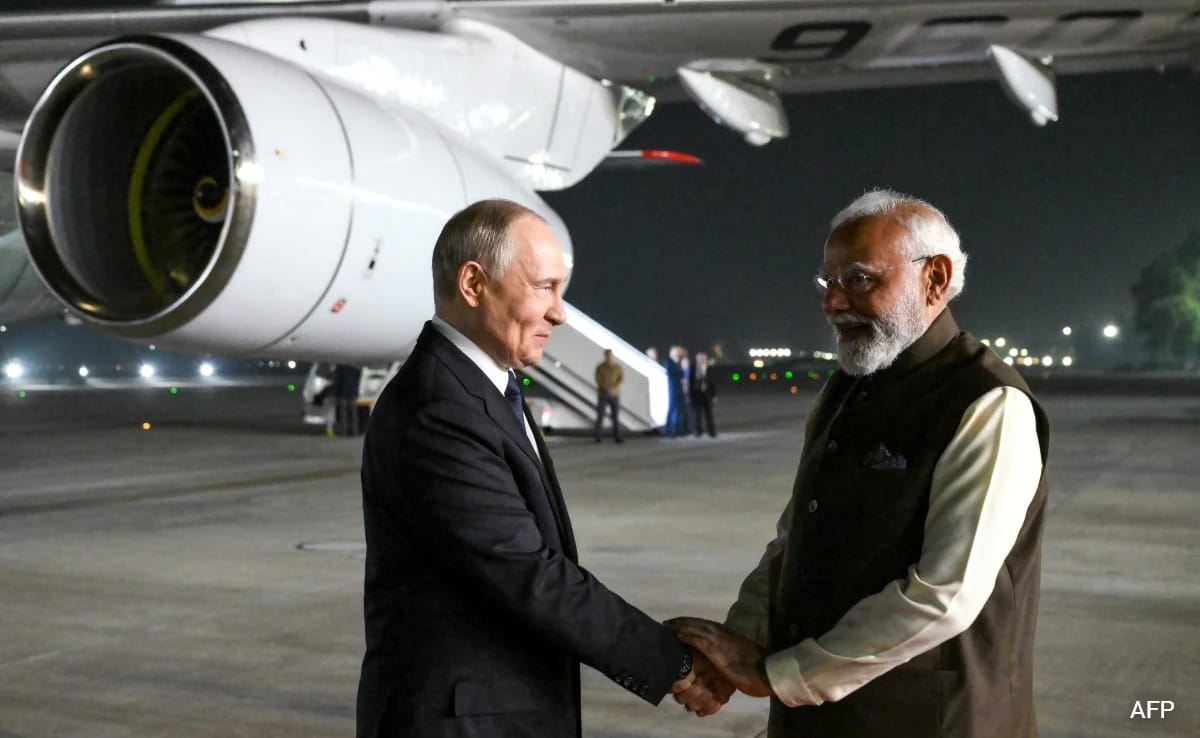
President Vladimir Putin used a state visit to India to push back against US pressure over Indian purchases of Russian energy, noting the US itself buys Russian nuclear fuel, and insisted Russian oil trade with India is "running smoothly." Bilateral commerce expanded from roughly $13 billion in 2021 to nearly $69 billion in 2024-25, with a target of $100 billion by 2030, although trade cooled to $28.25 billion in April–August 2025 amid a fall in crude imports and punitive 50% US tariffs on Indian goods. The visit aims to expand energy and defence sales and diversify bilateral trade beyond energy, highlighting continued geopolitical friction and potential sectoral shifts for energy, defence, and trade-exposed exporters and importers.
Market structure: India’s continued purchases of discounted Russian crude preserve margin upside for Indian refiners (Reliance Industries RIL.NS, Indian Oil IOC.NS) and increase demand for VLCC tanker capacity; expect 3–9 month incremental crude flows to India to support refining margins by ~$2–$6/bbl versus global benchmarks if seaborne Russian volumes remain ~0.5–1.0 mbd into India. Conversely, Indian exporters facing a punitive 50% US tariff will see export volumes and FX receipts pressured, compressing near-term growth for apparel/textile and some electronics exporters.
Risk assessment: Tail risks include US escalation to secondary sanctions or insurance bans on Russian crude shipments (20–30% probability over 6–12 months) which would abruptly curtail flows and spike tanker rates then drop Indian refiners’ cheap-feed advantage. Short-term (days–weeks) volatility will hinge on announcements from the India visit; medium-term (3–12 months) outcomes depend on concrete purchase/supply mechanisms and banking/payment workarounds.
Trade implications: Direct trades favor long Indian refiners and selective tanker owners; consider barrier-limited option structures to capture announced-deal rallies while limiting downside from sanction shocks. Hedge with long-dated puts on India-exposure ETFs or short positions in export-oriented Indian small caps that are most affected by US tariffs; size and horizon must reflect a 20–30% event tail.
Contrarian angles: The market underestimates operational frictions (insurance, payment, crude quality) that could cap flows—this argues against outright, unhedged long Russian energy supply plays. Historical parallel: 2019 Venezuela flows showed discounts can persist but logistical/insurance frictions limit sustainable volume growth; expect episodic spikes in tanker rates rather than a smooth secular uplift.
AI-powered research, real-time alerts, and portfolio analytics for institutional investors.
Request DemoOverall Sentiment
neutral
Sentiment Score
-0.10
