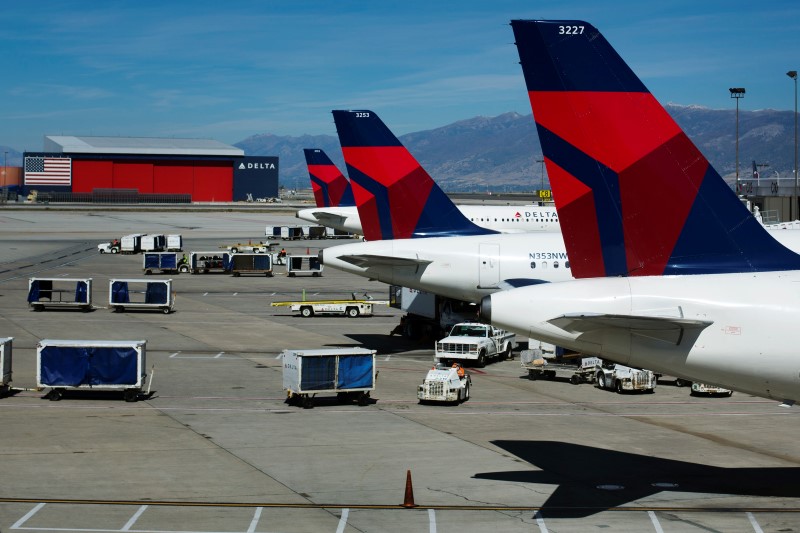
U.S. futures were slightly lower (Dow -25 pts / -0.1%, S&P 500 -5 pts / -0.1%, Nasdaq 100 -43 pts / -0.2%) as oil held above $100/barrel amid Middle East tensions. Delta said EPS will remain within prior guidance on strong revenue despite higher fuel costs, and Frontier rose >1% after saying Q1 EPS will be above expectations despite surging fuel and storm impacts. Honeywell warned Middle East fighting is blocking shipments and will hit Q1 revenue recognition, pressuring its shares, while Chevron and Exxon ticked higher on elevated oil prices. Nvidia remains a focus after CEO Jensen Huang projected $1 trillion in AI chip sales by end-2027 (vs $500B this year).
The dominant transmission mechanism today is oil-driven margin stress cascading into travel and industrial revenue timing. A sustained crude print above $100/bbl widens jet-fuel cracks and insurance/premia for Middle East routes within days, which favors carriers with firm hedges, diversified ancillary yield and scale in maintenance/ground ops; smaller ultra-low-cost operators remain the most exposed to short-term margin compression and weather-driven disruptions.
For industrials, restricted shipping into the Middle East is not just a revenue timing issue — it increases working-capital needs and forces order re-routing that hits multi-quarter margin recognition and backlog visibility. Competitors with local assembly or larger regional inventories can convert lost OEM shipments into near-term share gains, while service businesses (aftermarket, MRO) will pick up activity but with longer cash conversion cycles.
On semiconductors, the AI hardware story is asymmetric: upside requires multi-year enterprise capex acceleration and memory/PSU supply to stay tight, while downside comes from a two-quarter procurement reset as customers re-rate ROI after initial deployments. Near-term analyst days will move sentiment; durable thesis requires measurable traction in OEM bookings, hyperscaler purchase cadence and sustained selling-price power over the next 12–36 months.
Key catalysts that would reverse current directional bets are rapid diplomatic de‑escalation or a meaningful drop in Brent below the $85–90 range (weeks), a weather normalization restoring ULCC capacity (days–weeks), or tangible signs of decelerating hyperscaler spend (quarters). Position sizing should reflect elevated event risk and asymmetric payoff windows across days, months and years.
AI-powered research, real-time alerts, and portfolio analytics for institutional investors.
Request DemoOverall Sentiment
mixed
Sentiment Score
0.00
Ticker Sentiment
