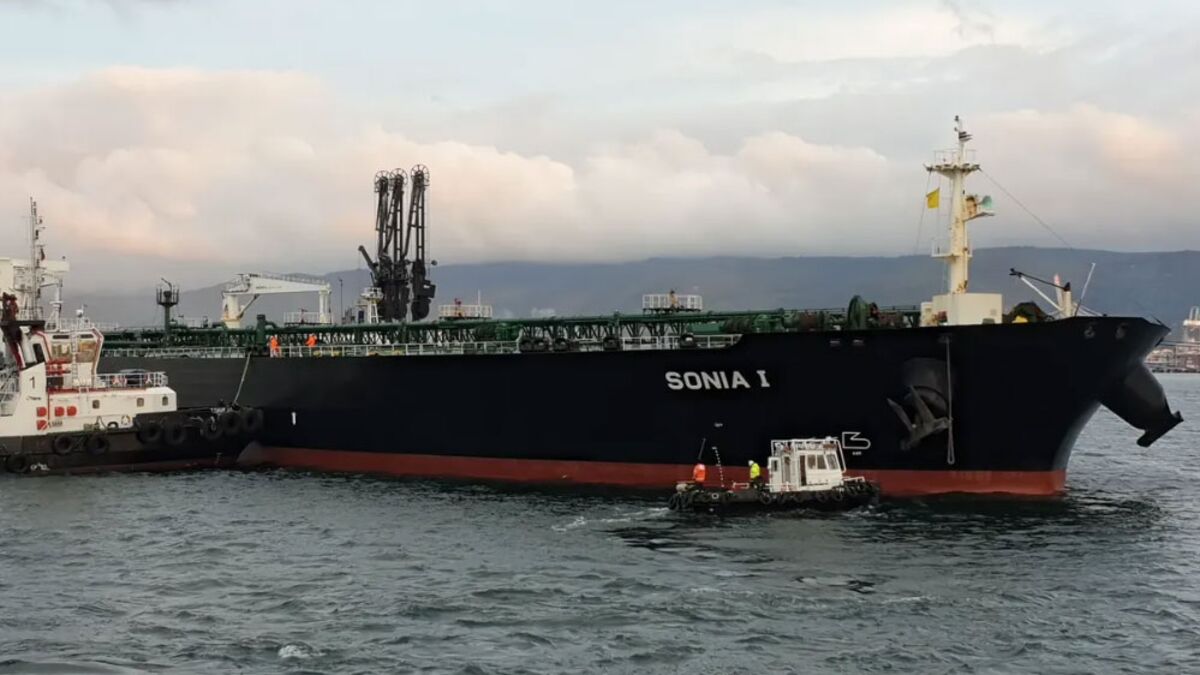
A third fully loaded Iran-linked crude tanker has crossed the US blockade line and is heading toward Asia, with the Suezmax Sonia I carrying about 1 million barrels. The cargo appears destined for Singapore, signaling potential near-term oil flows into Asian markets ahead of a planned ceasefire signing that would allow Tehran to sell oil immediately. The development is geopolitically sensitive and could modestly pressure oil market sentiment by increasing perceived supply risk and sanction-enforcement uncertainty.
This is less about one tanker and more about the market’s fast repricing of shadow supply becoming conditionally legal. The key second-order effect is timing: crude that was previously discounted for sanction risk can now clear into Asia at closer-to-market prices, which pressures benchmark differentials before it necessarily moves headline Brent much. The first losers are the middlemen: floating storage, sanction-bypass logistics, and regional refiners that had been arbitraging uncertainty; their edge compresses as compliance risk fades and cargo optionality improves.
The more important read-through is to tanker and freight markets. If enforcement softens, long-haul ton-mile demand into Asia rises only modestly at first, but the reactivation of previously stranded barrels can still crowd spot availability and lower rates for non-sanctioned routes, especially if other producers try to defend share. That creates a bearish impulse for clean-tanker equities and a potentially bullish one for Asian refiners that can source cheaper feedstock with less headline risk.
Catalyst risk is asymmetric over days, not months. A ceasefire sign-off or explicit carve-out can trigger a rapid normalization in flows; a breakdown or renewed interdiction could just as quickly snap the market back to sanctions scarcity and lift prompt crude. The contrarian point is that the market may be overestimating the volume impact near term: infrastructure, insurance, payment rails, and buyers’ compliance processes are the bottlenecks, so the first wave is more about discount compression than a flood of incremental barrels.
The cleanest trade is relative value, not a directional oil macro bet. Expect weaker crude transport economics for compliant fleets if sanctioned barrels normalize, while Asian buyers with flexible refinery systems gain margin optionality. The downside tail for oil prices is limited unless multiple cargoes clear consistently and quickly; until then, the bigger move may be in basis, freight, and refining spreads rather than outright Brent.
AI-powered research, real-time alerts, and portfolio analytics for institutional investors.
Request DemoOverall Sentiment
mildly negative
Sentiment Score
-0.15
