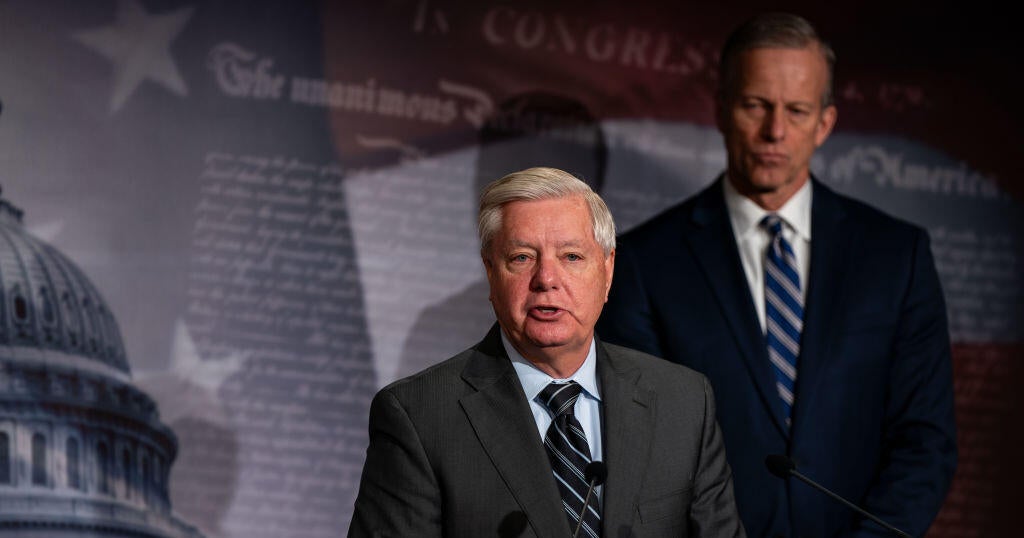
Senate Republicans unveiled a budget resolution to advance reconciliation funding for ICE and parts of Customs and Border Protection, with the final bill expected to total about $70 billion and cover 3.5 years of immigration enforcement. The move is meant to bypass Democratic opposition and keep DHS funding moving, but House passage remains uncertain as some Republicans want add-ons and broader DHS funding is still stalled. The article is policy-focused with limited direct market implications, though it could affect defense/security-adjacent spending expectations.
The market implication is less about the headline dollar amount and more about duration: a multi-year, pre-committed funding stream reduces appropriations volatility for the enforcement complex and makes hiring, contracting, detention capacity, and technology spend more financeable. That favors the ecosystem around border enforcement rather than just the nominal beneficiary, because agencies with visibility can sign longer-dated vendor contracts and accelerate procurement that has been on hold during funding uncertainty.
Second-order winners are the outsourced operators and equipment providers that monetize headcount growth and operational intensity, not just the agency itself. If reconciliation survives parliamentarian scrutiny and intra-party add-ons stay limited, the spend likely flows into labor, transport, detention, surveillance, and case-management systems—categories with faster cash conversion than large federal infrastructure programs and less political delay. The main loser is delay-sensitive contractors tied to a broader DHS appropriations reopening; every week of procedural friction pushes out purchase orders and reduces near-term revenue recognition.
The key risk is that this becomes a legislative bargaining chip rather than a clean catalyst. If House add-ons expand the package, or if reconciliation rules force material carve-outs, the path to enactment can slip by weeks to months, which matters for vendors with FY guidance tied to contract award timing. A second-order political risk is that funding visible enforcement without a broader policy compromise could re-ignite litigation and oversight pressure later in the year, capping the durability of the spend even if the initial bill passes.
Consensus may be underestimating how much of this is already priced into the obvious names and overestimating the certainty of a clean pass. The better expression is likely a relative-value basket: own the contract-exposed suppliers that benefit from incremental enforcement intensity, while fading the broader political headline beta in the most crowded obvious beneficiary. If the process derails, the downside should show up first in small-cap vendors and services-heavy names with thin backlog, not in the agencies themselves.
AI-powered research, real-time alerts, and portfolio analytics for institutional investors.
Request TrialOverall Sentiment
neutral
Sentiment Score
-0.05
Ticker Sentiment
