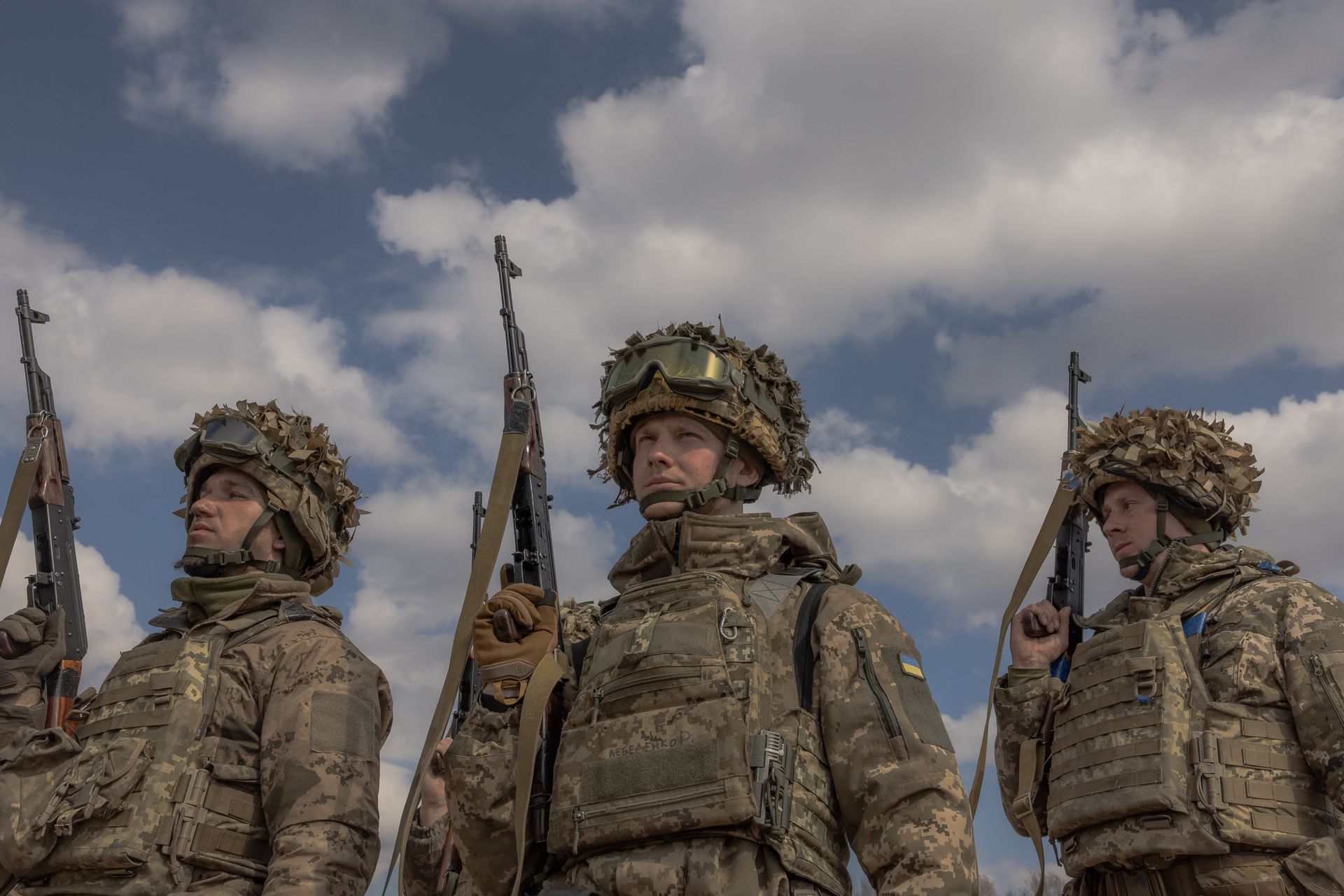
Russia's spring battlefield gains have stalled, with monthly territorial advances down to 672 square kilometers versus 827 in the same period last year, while Ukrainian long-range strikes are intensifying and degrading Russian oil and logistics infrastructure. The article argues Ukraine's drone warfare, deeper strike capability, and improved defensive lines are helping offset manpower disadvantages, though severe risks remain from stretched reserves and mobilization strain. The geopolitical and defense implications are significant, but the direct market impact is broad and mostly through energy, defense, and risk sentiment.
The market implication is not "Ukraine is winning," but that Russia’s cost curve on the battlefield is inflecting while its marginal gains are decelerating. That matters because attritional wars turn on elasticity: if Russia needs ever-higher troop and drone inputs to generate flat or falling territorial gains, the Kremlin is effectively burning capital faster than it is converting it into strategic value. The second-order effect is a widening gap between headline military spending and battlefield productivity, which increases the odds of either fiscal strain, domestic discontent, or a forced re-prioritization away from maximalist objectives over the next 6-18 months.
The more investable read-through is that Ukraine’s edge is migrating from survival to systems advantage. Better deep-strike and kill-chain performance raises the expected loss rate for Russian logistics, air defenses, and rear-area sustainment, which can produce nonlinear degradation even without a breakthrough on the front line. That favors vendors exposed to ISR, drones, EW, secure comms, and battlefield software; it is also a negative for legacy artillery and armor supply chains if drone attrition continues to dominate casualty generation. In other words, the war is becoming a technology procurement contest, not just a manpower contest.
The key risk is that this is still a narrow equilibrium, not a decisive turn. Ukraine’s constraint is manpower depth and rotation capacity; if mobilization friction worsens or drone teams cannot be replenished, the current stability can reverse quickly, especially along the northern border where Russia only needs localized success to create political effects. Russia’s own drone scaling is the biggest near-term counter-catalyst, so any reduction in Ukraine’s electronic warfare or satellite connectivity advantage could compress the timeline from months to weeks. Consensus may be underpricing how fast tactical innovation can decay once either side closes the gap in cheap drones and target acquisition.
AI-powered research, real-time alerts, and portfolio analytics for institutional investors.
Request DemoOverall Sentiment
mildly positive
Sentiment Score
0.25
Ticker Sentiment
