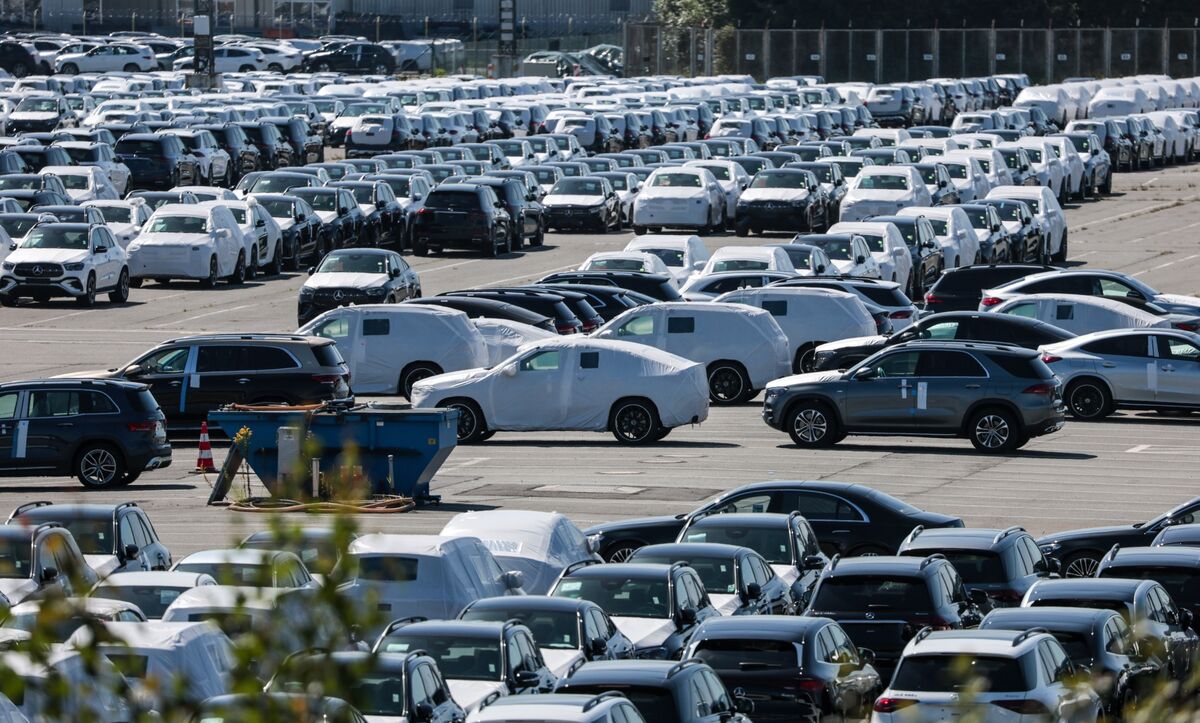
German exports rose 0.9% in May, beating the Bloomberg median forecast for a 0.4% decline and extending growth to a fourth straight month. The key driver was a sharp rebound in shipments to the US, up 23.1% from April, alongside 7.1% growth in exports to China. The data points to improving external demand, which should be modestly supportive for German industrial and export-exposed equities.
The read-through is constructive for German export beta, especially autos, industrial automation, and capital goods, because the incremental driver is external demand while the domestic European cycle is still lackluster. That mix matters: these names are priced on earnings revisions, so even a modest improvement in shipment volumes can produce outsized EPS leverage if fixed-cost absorption improves and inventory write-down risk fades.
Second-order, the strongest beneficiaries may be the suppliers embedded in transatlantic manufacturing and freight rather than the headline exporters themselves. If U.S. demand is firming, the market should see better order visibility for components, logistics, and high-end machinery, but the move is only durable if it shows up in factory orders and PMIs over the next 1-3 months; otherwise this can easily be a restocking or FX-driven head fake.
The contrarian risk is that consensus may over-interpret one data point as a regime shift. A strong print becomes less useful if it reflects pre-tariff buying, temporary inventory normalization, or a one-off improvement in U.S. premium goods demand, and that would reverse quickly if U.S. consumer data rolls over or trade rhetoric worsens. Falsifiers to watch: the next two German export prints, factory orders, EUR/USD strength, and any U.S. tariff escalation.
AI-powered research, real-time alerts, and portfolio analytics for institutional investors.
Request DemoOverall Sentiment
mildly positive
Sentiment Score
0.18
